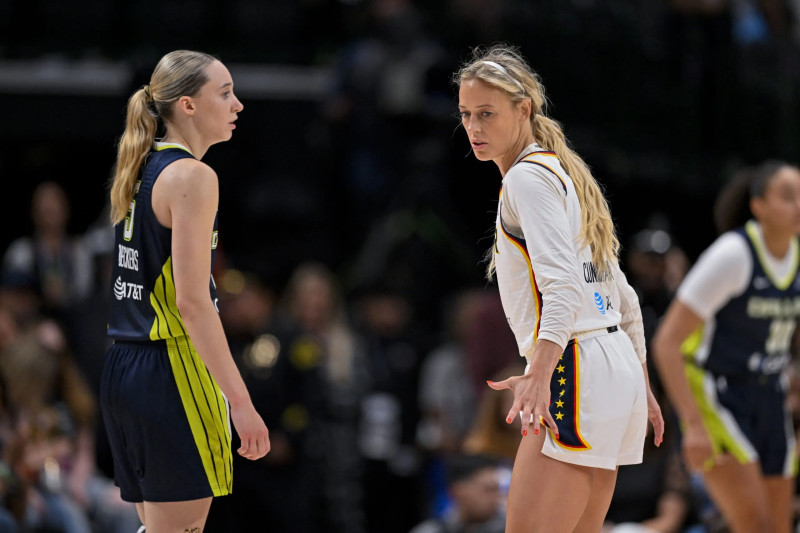
Sophie Cunningham's Rally for Women's Sports Sparks Controversy and Conversation

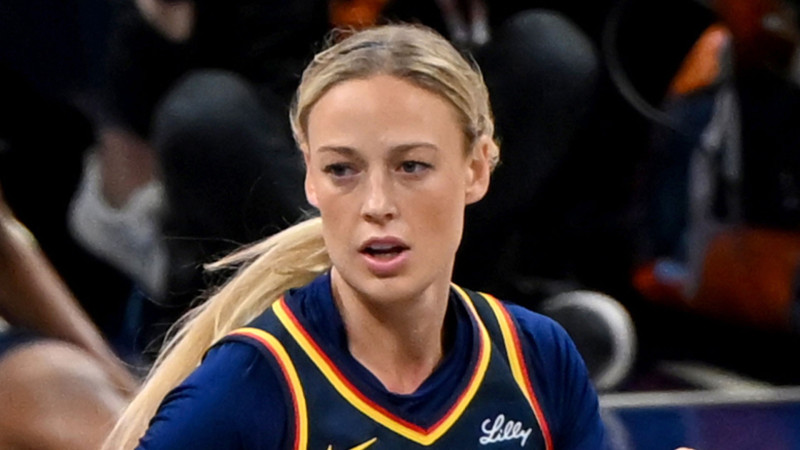
In a sports world increasingly defined by social and political debates, Sophie Cunningham, the Indiana Fever guard, has found herself at the center of a storm. Her recent comments on transgender athletes in women's sports have ignited a firestorm, with rallies and counter-rallies taking place outside WNBA games. The scene outside the Target Center in Minneapolis, where the Indiana Fever faced the Minnesota Lynx, was charged with tension. Supporters of Cunningham's stance on protecting women's sports for biological women clashed with critics, all under the watchful eye of the media and fans.
An Outpouring of Emotions and Viewpoints Surrounding Sophie Cunningham's Comments
The atmosphere was a mix of anger, confusion, and determination. Supporters of Sophie Cunningham held signs and chanted slogans, their voices echoing through the parking lot. "We need to protect women's sports," one supporter shouted, her voice filled with passion. "Trans athletes have an unfair advantage," another added, standing firmly by Cunningham's comments. The supporters were vocal, their presence a testament to the depth of feeling surrounding the issue.
Transgender Debate Brings Out Supporters and Critics
On the other side of the fence, critics were equally vocal. One group held a sign that read, "Trans rights are human rights." Another shouted, "Love is love, and sport should be inclusive." The tension was palpable, but for a moment, everything was silent as a transgender athlete, surrounded by her supporters, stood on a makeshift stage, addressing the crowd. "I'm here to show that we are not a threat, but a part of the community," she declared, her voice steady despite the emotional weight of the situation.
Emma, a 25-year-old transgender athlete, shared her story
Emma, a 25-year-old transgender athlete, shared her story with the crowd, her voice trembling with emotion. She spoke about the challenges and the stigma she faced in her journey to become a professional athlete. "I'm here to show that we are not a threat, but a part of the community," she said. "We deserve a chance to compete, just like everyone else." Her words were met with a mix of cheers and jeers, underscoring the deep divisions within the sports community.
"I think this is a conversation that needs to happen," said a WNBA executive who requested anonymity. "We need to address the issues and find a way to make everyone feel included, whether they are trans athletes or women athletes. This is about understanding and respect." The executive's words echoed the sentiments of many within the WNBA community, who are grappling with the complex issues surrounding transgender athletes in women's sports.
Trans athlete Emma: "I'm here to show that we are not a threat, but a part of the community. We deserve a chance to compete, just like everyone else."
This was the second recent announcement by a former NBA player, Royce White, who has made his intention to join the WNBA draft known, after his comments on transgender athletes. This decision was fueled by the conversation, or controversy, fueled by Sophie Cunningham's recent stance on the issue. White's announcement added another layer of complexity to the already heated debate. For more on Royce White's views and his decision to join the WNBA draft, see his latest interviews and statements.
Sophie Cunningham's comments have reignited the debate on women's sports rallies and the inclusion of transgender athletes, sparking a wave of reactions and counter-reactions. As the conversation continues, the WNBA and its athletes face a critical juncture, where the future of inclusivity and the integrity of women's sports hang in the balance. With emotions running high and viewpoints sharply divided, the question remains: Can the WNBA find a path forward that respects and includes all athletes?
How does this story make you feel?
 Up next · SportsAngel Reese Stifled, Atlanta Dream Crumble as Mystics Continue Winning Streak