USDA Salmonella Jalapeño Meat Alert: A National Health Crisis Unfolds

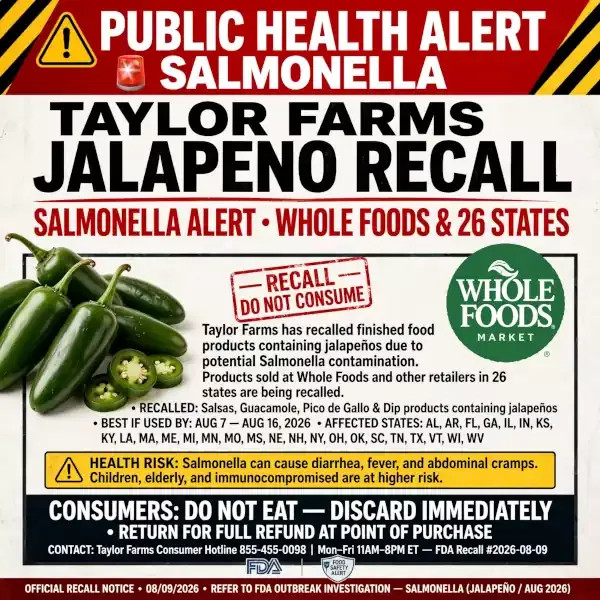
In recent times, the U.S. Department of Agriculture (USDA) has issued a salmonella alert, highlighting a significant public health concern surrounding meat and poultry products contaminated with salmonella [1]. The USDA salmonella jalapeño meat alert affects a wide range of products, sparking widespread concern and prompting immediate actions from federal health authorities. The outbreak, traced back to jalapeños from Sinaloa, Mexico, distributed by Coast Citrus Distributors, has sickened hundreds of people across at least 27 states. The FDA is working closely with federal, state, and local partners on the outbreak investigation [5].
USDA Alerts and Recall Actions
The Food Safety and Inspection Service (FSIS) of the USDA declared a public health alert on August 8, 2026, warning consumers not to eat, serve, or sell recalled fresh jalapeños from Sinaloa, Mexico, distributed by Coast Citrus Distributors. The alert covers meat and poultry products that include FDA-regulated jalapeños, which may be contaminated with salmonella [2]. The USDA has named 18 products across major retailers, including Walmart, Kroger, HEB, and Albertsons, highlighting the extensive reach of this issue. The CDC has identified the outbreak as Salmonella Javiana [9].
Retailers affected by the recall include Kroger, Dillons, HEB, Walmart, Albertsons, Randalls, Tom Thumb, Hannaford, RaceTrac, and Wawa, with the contamination impacting customers in 22 states. The USDA's FSIS expects additional downstream products to be identified as the investigation progresses, underscoring the complexity and severity of the situation.
The jalapeño recall has prompted a broader public health alert for multiple meat and poultry items sold at major grocery and convenience store chains. The contamination source was traced back to jalapeños grown in Sinaloa, Mexico, and distributed by Coast Citrus Distributors, which has agreed to recall the product. The outbreak has already sickened hundreds of people across 27 states, emphasizing the urgent need for public awareness and precautionary measures.
However, there is a counter-argument regarding the efficacy of these recalls. Critics point out that the widespread distribution of contaminated products makes it challenging to ensure all affected items are removed from store shelves and consumer kitchens. This raises questions about the effectiveness of such recalls and the broader implications for food safety regulations.
The Impact on Public Health and Industry
The USDA salmonella jalapeño meat alert has far-reaching implications for public health and the food industry. With hundreds of people affected and the outbreak spanning multiple states, the health alert serves as a stark reminder of the potential dangers lurking in our food supply. The USDA and CDC are working tirelessly to identify and address the source of the contamination, but the scale of the issue underscores the need for vigilance and proactive measures.
"The public health alert seems to be a wake-up call for the food industry to prioritize stringent safety measures and quality control processes. The outbreak is a testament to the interconnectedness of our food supply chain and the critical role of regulatory bodies in ensuring safety," said an expert from the CDC [8].
The outbreak investigation of salmonella has prompted immediate actions from major retailers and food service chains. Chipotle Mexican Grill and Qdoba have stopped serving affected jalapeño peppers, removing the product from their stores to mitigate the risks. This proactive measure demonstrates the industry's commitment to public safety and highlights the collaborative efforts between regulatory bodies and food service providers.
The USDA and FDA are working diligently to determine if recalled jalapeños went to grocery stores, emphasizing the need for consumer vigilance. With the outbreak linked to jalapeños grown in Sinaloa, Mexico, and distributed by Coast Citrus Distributors, the situation underscores the global nature of food contamination risks. The ongoing efforts to trace the source and recall affected products aim to prevent further health complications and restore public confidence in food safety.
Consumers are advised to avoid products from the affected distributors and retailers and closely monitor public health alerts for updates. As the investigation progresses, additional downstream products will likely be identified, warranting continued vigilance and adherence to safety guidelines. The data is damning, and the situation highlights the urgency for consumers and the industry to work together to mitigate the risks of foodborne illnesses.
Let's not kid ourselves, the USDA salmonella jalapeño meat alert underscores the profound vulnerabilities within our food supply chain. It's a wake-up call for both consumers and the industry to prioritize safety measures and quality control processes, ensuring that such outbreaks are swiftly identified and addressed. Salmonella contamination is not a new issue, but the extent and reach of this outbreak highlight the need for more robust regulatory frameworks and proactive measures to safeguard public health. As we navigate this crisis, it is essential to learn from past mistakes and implement comprehensive measures to prevent future outbreaks.
In the grand tapestry of food safety crises, this salmonella outbreak echoes the infamous 2008 salmonella contamination linked to jalapeño peppers, which sickened over 1,400 people across the United States. As history repeats itself, it serves as a poignant reminder of the enduring challenges in ensuring a safe food supply.
How does this story make you feel?
 Up next · HealthTaylor Farms Faces Public Health Crisis as USDA Issues Salmonella Alert