Target's Halloween Costume Controversy: A Retailer's Misstep in the Spotlight
In the hall of mirrors that is modern retail, Target has once again found itself in the hot seat, this time over an offensive Halloween costume that stirred a social media firestorm. The latest controversy involves a costume that critics have compared to blackface imagery, adding to the retailer's growing list of missteps.
Target's Recent Apology: Navigating the Minefield of Offense
The Halloween costume controversy at Target has once again put the spotlight on the retailer, who has been grappling with a series of backlashes in recent times. Last year, activists called for a boycott of the company after its decision to walk-back DEI initiatives. The latest incident involves a kid's costume that was pulled from the shelves after social media users criticized it for evoking racist minstrel and blackface imagery.
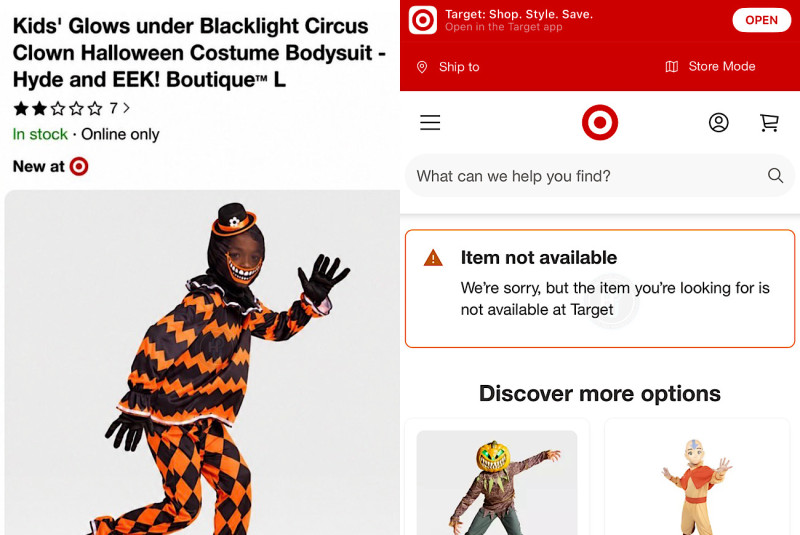
In response, Target issued a statement on the incident, stating, "As a company, we know we got this wrong, and we are deeply sorry. The costume is offensive and should never have been part of our assortment. It is no longer available for sale." The costume in question was the 'Kids' Glow under Blacklight Circus Clown Halloween Costume Bodysuit,' which was manufactured by a Target-owned brand.
Social Media Fury: The Power of Public Outcry
The controversy began when social media users called out the company for the offensive imagery, leading to a wave of criticism that Target couldn't ignore. The 'Kids' Glow under Blacklight Circus Clown Halloween Costume Bodysuit' was pulled from the shelves after the criticism escalated, with social media users accusing the product of leaning into racist imagery.
The retailer has been under fire recently, with social media users calling out the company over the apparent "minstrel" and racist "Blackface" imagery. The costume was marketed as a clown costume, but its resemblance to Jim Crow-era caricatures sparked widespread outrage.
Target's Response: Acknowledging Mistakes and Moving Forward
Target's response to the controversy has been swift, with the company issuing an apology and launching an internal review after removing the controversial costume. The retailer apologized and stated, "As a company, we know we got this wrong, and we are deeply sorry. The costume, which was criticized as resembling racist, Jim Crow-era caricatures, was no longer available for sale. The company's swift response to the controversy is a testament to the power of social media and the importance of public outcry in holding companies accountable.
"We know better and we can do better".
In recent times, Target has faced several controversies, with the latest one involving a Halloween costume that was criticized for its offensive imagery. The controversy has sparked a wave of criticism, with social media users calling out the company for its insensitive choices. However, Target's response to the controversy has been swift, with the company issuing an apology and pulling the costume from its shelves.
Target's Halloween costume controversy serves as a reminder of the importance of diversity, equity, and inclusion in retail. Retailers must be mindful of the messages they send with their products and ensure that they are inclusive and respectful of all communities. Only then can they build a brand that is inclusive and respectful of all communities. Target's Halloween costume controversy is a lesson for retailers that the power of public outcry can never be underestimated.
Target's offensive Halloween costume controversy serves as a cautionary tale, a stark reminder of the complexities that modern retailers must navigate. As Target continues to grapple with the fallout, one can't help but draw a parallel to the historical challenges faced by institutions during periods of social change. Just as the courts wrestled with the intricacies of civil rights legislation in the 1960s, retailers today must navigate the intricacies of representation and respect in a diverse and evolving world.
How does this story make you feel?
 Up next · EntertainmentTarget's Halloween Costume Imbroglio: The Unseen Divide