Target Faces Backlash Over Controversial Halloween Costume
The retail giant has found itself in hot water as a children’s Halloween costume pulls up images reminiscent of a dark past.
Target's Latest Controversy
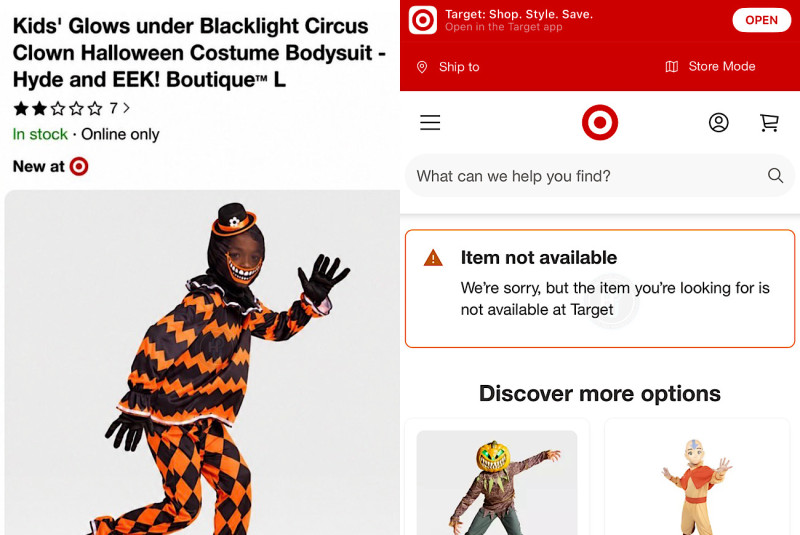
In recent times, Target has faced significant criticism over a Halloween costume that critics say evoked racist stereotypes. The Target Halloween costume in question is a kids’ glows under blacklight circus clown Halloween costume, which features a blackface mask as part of the design. This costume was a part of Target's Halloween collection, which includes a variety of costumes and decorations. The controversy erupted when social media users pointed out the racist and offensive nature of the costume, leading to widespread backlash.
Target's initial response was to apologize for the offensive content and pull the costume from its shelves. The company issued a statement saying, "We sincerely regret that this item was available on our website and in our stores. We have removed it from our assortment and deeply apologize for any offense this may have caused".
Racial Implications and Historical Context
Blackface has a long and painful history in the United States, dating back to the 19th century. It was originally used in minstrel shows, where white performers would paint their faces black to portray African Americans in a derogatory and stereotypical manner. The practice has since been widely condemned as racist and offensive. The appearance of a blackface mask in a Halloween costume sold by a major retailer like Target has reignited debates about racial sensitivity and cultural appropriation.
Critics argue that the distribution of such costumes perpetuates harmful stereotypes and contributes to a culture of racism. Social media users and activists have called on Target to take responsibility for its role in promoting such imagery and to ensure that similar incidents do not happen in the future.
The Impact on Target and Future Steps
The fallout over the Halloween costume has had a tangible impact on Target's stock. The company saw a more than 5% drop in its stock price at its lowest point following the controversy. The incident has highlighted the importance of cultural sensitivity in retail, particularly during times of heightened social awareness. Target has taken steps to address the issue by removing the costume and issuing an apology, but the long-term effects on the brand's image remain to be seen.
"We have removed the costume from our assortment and deeply apologize for any offense this may have caused," Target spokesperson said.
Halloween Costume Controversies
This is not the first time a company has faced backlash over a Halloween costume. In recent years, there have been numerous instances where costumes have been criticized for cultural appropriation, racism, or other forms of insensitivity. These controversies have led to increased scrutiny of retail practices and a greater emphasis on diversity and inclusion in product design. Companies are now more aware of the need to be sensitive to cultural and racial issues when creating and selling Halloween costumes.
Some experts advocate for a broader approach to addressing these issues, suggesting that companies should implement stricter guidelines for product design and conduct thorough reviews before launching any new items. This would help ensure that offensive materials are not inadvertently included in retail offerings.
It is up to retailers like Target to lead the way in creating a more inclusive and respectful retail environment, where products are designed with cultural sensitivity in mind. With social media playing a significant role in highlighting these issues, it is crucial for companies to be proactive in addressing potential controversies and to take swift action when they arise. The next step for Target and other retailers is to continue this crucial work, ensuring that their offerings are respectful and inclusive, and that they contribute positively to the broader conversation about race and representation in retail.
How does this story make you feel?
 Up next · EntertainmentTarget Puts on a Costume Controversy