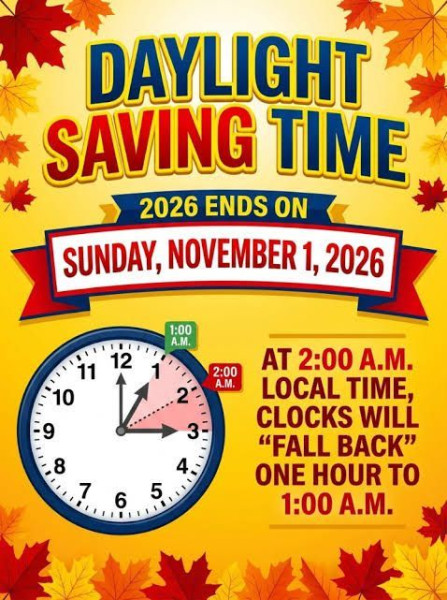
Daylight saving time ends Nov. 1, 2026
On Nov. 1, 2026, most U.S. states will set clocks back one hour, ending daylight saving time and beginning standard time for fall and winter.
Key points
- Daylight saving time ends on Nov. 1, 2026, for most U.S. states including North Carolina, South Carolina, Iowa, Pennsylvania, California, and Michigan.
- Federal law sets the end on the first Sunday in November and the start on the second Sunday in March.
- States can exempt themselves from daylight saving time by state law.
- Legislative efforts to make daylight saving time permanent have stalled in Congress.
- The annual change is debated, with concerns about increased deer collisions on roads.
Daylight saving time ends on November 1, 2026, for residents of most U.S. states, including North Carolina, South Carolina, Iowa, Pennsylvania, California, and Michigan. As the federal schedule dictates, clocks will fall back one hour before the new week begins, marking the transition to standard time for the fall and winter months.
The change is set by federal law, which establishes that daylight saving time begins on the second Sunday in March and ends on the first Sunday in November. While most of the country observes this shift, current federal law allows states to exempt themselves from observing daylight saving time by state law.
Legislative efforts to alter this schedule have stalled. A bill that could make daylight saving time permanent has not seen much movement in Congress since the summer. The annual adjustment continues to spark debate, with some noting that the time change raises the risk of hitting deer on the road.
Your questions, answered
When does daylight saving time end in the U.S. in 2026?
It ends on November 1, 2026, for most U.S. states.
Can states choose not to observe daylight saving time?
Yes, federal law allows states to exempt themselves from observing daylight saving time by state law.
How does this story make you feel?
Topics
 Up next · PoliticsDr. Annie Andrews and Darline Graham: A Tight Senate Race in South Carolina