Democratic Stronghold: Benson Wins Michigan Governor's Race

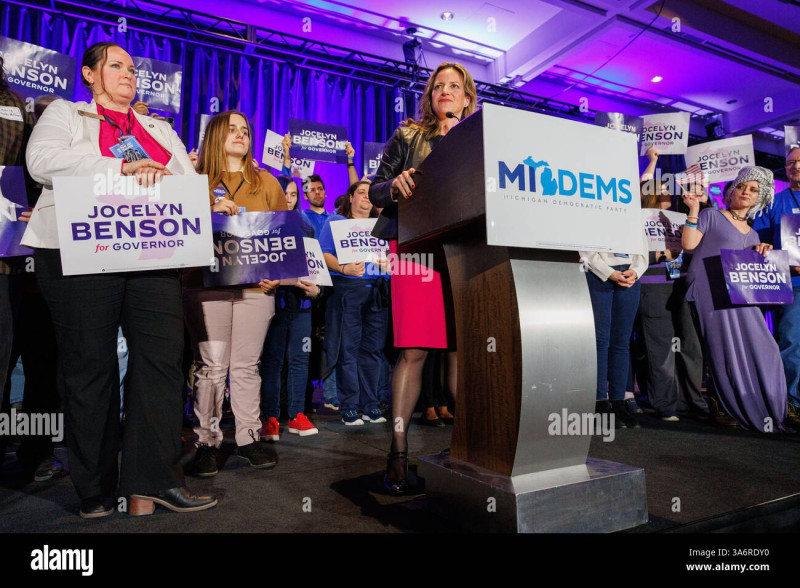
In the fluorescent glare of the press conference room, Michigan Secretary of State Jocelyn Benson stood tall, her eyes reflecting the eagerness of a nation watching. Around the room, the hum of phones buzzing in pockets signaled the arrival of breaking news alerts — Benson had secured a decisive victory over Republican candidate John James in the Michigan governor's race. The Democratic stronghold in Michigan has been maintained, keeping the governor's office in blue hands for another four years — and perhaps more importantly, setting the stage for what could be a pivotal shift in the state's political landscape.
Jocelyn Benson's Victorious CampaignIn what was widely anticipated as a closely contested race, Benson secured approximately 55% of the vote, according to unofficial totals,. The win is particularly noteworthy as it underscores a broader trend in Michigan, which has seen its political leadership flip between Republican and Democratic control about every eight years. Benson's victory ensures that the governor's mansion will remain under Democratic control, extending the tenure of Democratic Gov. Gretchen Whitmer, who was barred from running again due to term limits.
Benson's campaign was buoyed by several key factors. Endorsements from high-profile figures, including the incumbent governor, played a significant role in garnering support. The secretary of state herself carried the weight of a seasoned public servant, her experience and dedication to the state's political infrastructure proving to be a decisive asset. — Her victory marks a turning point in Michigan politics, emphasizing the state's role as a critical swing state in future national elections.
In a closely watched race, Benson's triumph is a testament to the strategic importance of Michigan in national politics. As a swing state, Michigan has historically played a pivotal role in presidential elections. Benson's win underscores the state's progressive leanings, which have been a focal point of political analysts and strategists in recent times.
Benson's victory also highlights several broader themes — the enduring power of progressive politics in the state, the significance of term limits in shaping political landscapes, and the ongoing battle between Republican and Democratic candidates in a critical swing state. As the nation continues to grapple with political polarization, Michigan's election serves as a microcosm of the broader struggles and triumphs within the American political arena.
John James's Concession and the Path ForwardIn a concession speech that was both gracious and reflective, John James, the Republican candidate, acknowledged the victory of his Democratic opponent, Jocelyn Benson. “I am proud to have run a campaign that highlighted the issues that matter to Michigan residents, and I look forward to supporting our next governor as she leads the state forward,” James stated.
Benson's 55% victory margin is a significant indicator of the state's political leanings. It suggests a strong preference for Democratic leadership, which could have far-reaching implications for future elections. The state's political landscape has long been a battleground, with Republicans and Democrats vying for control. Benson's win, coupled with the term limits that barred Gretchen Whitmer from re-election, could signal a new era of Democratic dominance in the state.
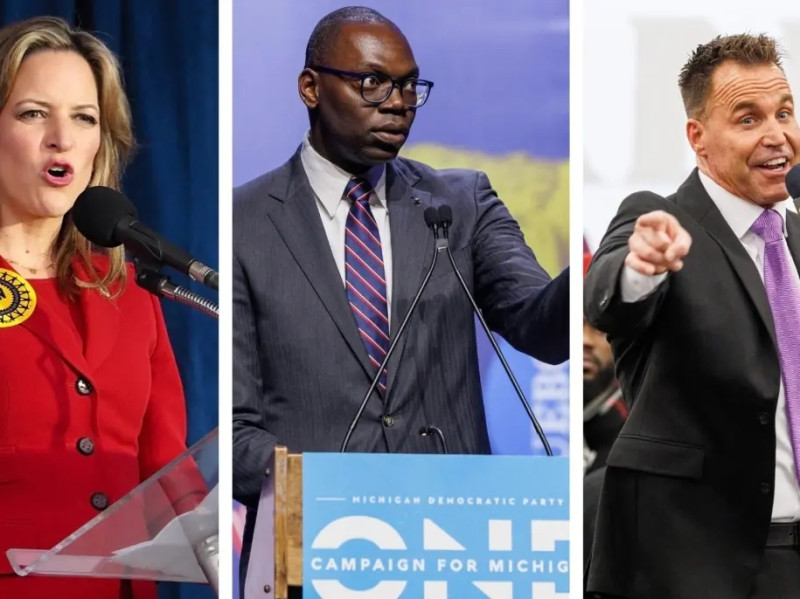
John James, a Republican congressman from Shelby Township, faced an uphill battle from the outset. His campaign focused heavily on key issues such as economic development and education reform. Despite his best efforts, the weight of Democratic endorsements and the incumbent's legacy proved too formidable to overcome. As the dust settles on this hard-fought election, the spotlight shifts to the future of Michigan's governance and its role in the broader political landscape.
James's concession speech was notable for its emphasis on unity and collaboration. “As we move forward, it is crucial that we come together as a state and work towards common goals,” he stated. This call for unity is especially poignant in the wake of a deeply divisive election season, where political rhetoric often overshadows the need for bipartisan cooperation.
State and National ImplicationsBenson's victory carries significant implications both at the state and national levels. — For Michigan, it means a continuation of policies and initiatives that have been championed by the Democratic Party. As the state's new leader, Benson will have the responsibility of addressing critical issues such as infrastructure, healthcare, and education. Her experience as the Secretary of State positions her well to navigate these challenges, leveraging her deep understanding of the state's administrative and political frameworks.
At the national level, the outcome of the Michigan governor's race is a bellwether for the upcoming presidential election. As a swing state, Michigan's political leanings can significantly influence the broader electoral landscape. Benson's win could embolden Democratic candidates in other key states, signaling that progressive policies resonate with a broad segment of the electorate.
— In the broader context of national politics, Michigan's election results are a harbinger of what could be a pivotal shift in the political landscape. The state's political leanings have long been a focal point of national attention, and Benson's victory underscores the enduring power of progressive politics in a state that has traditionally been a battleground .— This election cycle has seen a resurgence of interest in state-level politics, with governors' races garnering unprecedented attention. The outcome in Michigan is a testament to the growing importance of these contests in shaping the nation's political future.
In the aftermath of the election, the spotlight remains firmly on Michigan. The state's political landscape is poised for significant change as Benson prepares to take the reins of governance. Her victory, coupled with the broader implications for national politics, sets the stage for what promises to be a transformative era in Michigan's political history. Yet, as the state looks to the future, the question remains: Will this election mark the beginning of a new chapter in progressive governance, or will the pendulum swing again in the years to come?
— For now, the state of Michigan stands at a crossroads, with the future of its governance hanging in the balance.How does this story make you feel?
 Up next · PoliticsThe Surprising Victory of Beth Helfrich: A Shift in NC Politics