Dow Jones and Stock Markets Plunge: A Landmark Decline
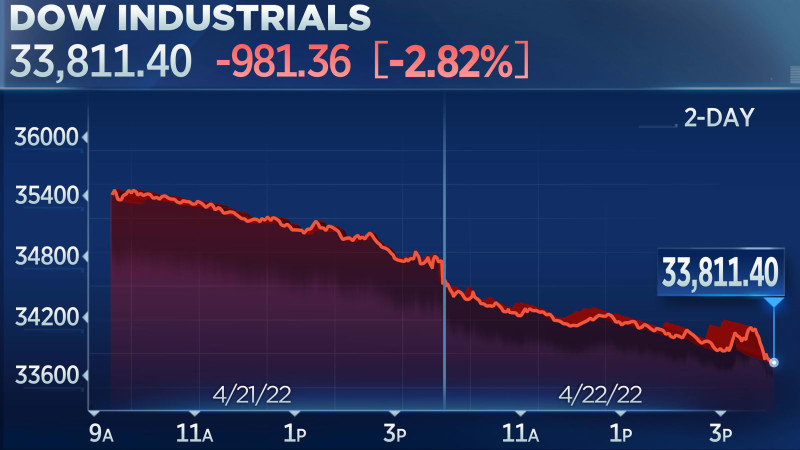
The Dow Jones Industrial Average (DJIA), a barometer of U.S. economic health, has recently plunged into correction territory, sparking widespread concern among investors and financial analysts. The DJIA, which represents 30 leading publicly owned companies in the United States, has fallen more than 10% from its peak, a significant decline that has rattled markets and raised questions about the future economic outlook.
Market Volatility and Investor Sentiment
The Dow Jones' descent into correction territory is part of a broader market trend that has seen major indices, including the S&P 500 and Nasdaq, experience substantial declines. The S&P 500, which tracks 500 leading companies in the U.S. equity markets, has also fallen into correction territory, while the tech-heavy Nasdaq Composite has sunk nearly 5.3%, marking a negative performance for the year. The Nasdaq's decline is particularly notable, given its heavy weighting in technology stocks, which have been volatile in recent times.
The Nasdaq's performance is indicative of broader market volatility, which has been fueled by a combination of economic uncertainty, geopolitical tensions, and shifting market sentiment. Investors are grappling with a complex landscape that includes inflationary pressures, rising interest rates, and geopolitical risks, all of which contribute to the market's volatility. The volatility index, or VIX, a key indicator of market fear, has risen sharply, reflecting the heightened uncertainty and nervousness among investors.
The Dow’s decline is a stark reminder of the market's sensitivity to macroeconomic factors and investor sentiment, which continue to shape the trajectory of global financial markets. However, some experts believe that the current downturn may present opportunities for strategic investment, as market corrections can offer valuable entry points for long-term investors.
The Dow Jones: A Historical Perspective
The Dow Jones Industrial Average, first introduced in 1896, has long been a benchmark for U.S. stock market performance. The index has weathered numerous economic cycles, including the Great Depression, the Dot-com Bubble, and the 2008 financial crisis, each time emerging as a resilient indicator of economic health. The recent decline, while significant, is part of the natural ebb and flow of market cycles, which are characterized by periods of growth and contraction.
Historically, market corrections have often been followed by periods of recovery and growth, as companies adapt to changing economic conditions and investors capitalize on undervalued assets. The current downturn, while challenging, may offer similar opportunities for investment and economic recovery.
The Dow Jones' recent plunge highlights the importance of diversifying investment portfolios to mitigate risk and maximize returns. Investors are increasingly turning to diversified strategies that include a mix of equities, commodities, and alternative assets to navigate the current market volatility.
Experts emphasize the need for a long-term perspective and strategic planning in the face of market fluctuations. "In times of market volatility, it's crucial for investors to stay informed, maintain a diversified portfolio, and avoid making impulsive decisions," says a financial analyst from Investing.com.
— The Dow Jones’ current struggles underscore the market's sensitivity to broader economic trends, investor sentiment, and geopolitical risks, but also point to potential opportunities for those with a long-term investment horizon.
How does this story make you feel?
 Up next · BusinessZscaler Stock Volatility Surges Amid Acquisition Speculation