United Fidelity Bank Collapse: A Financial Earthquake Ripples Through US Banking
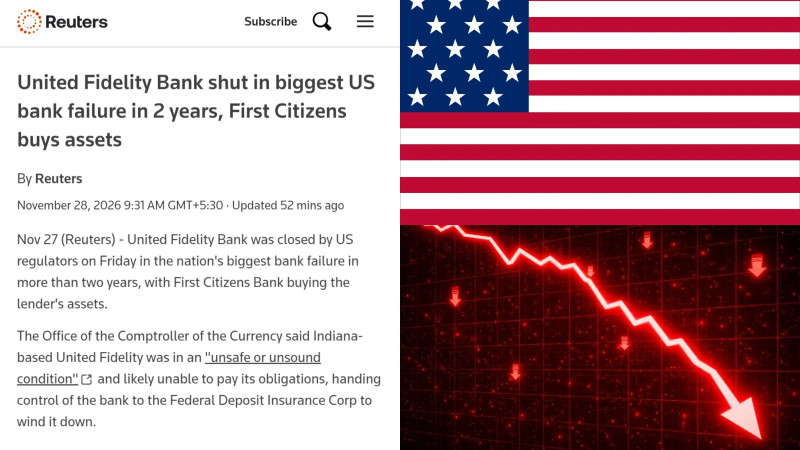
In an unexpected turn of events, the banking world has been shaken by the sudden collapse of United Fidelity Bank, marking the biggest US bank failure in over two years. The federal regulators have swiftly moved to shut down the Indiana-based institution, transferring its $6 billion assets and deposits to First Citizens Bank, a move that has left the industry reeling.
The Fall of a Financial Giant: What Happened to United Fidelity Bank?
The collapse of United Fidelity Bank is a stark reminder of the volatility that can hit even the most established financial institutions. Federal regulators, including the Office of the Comptroller of the Currency (OCC) and the Federal Deposit Insurance Corp. (FDIC), made the decisive move to shut down the bank, citing the bank's inability to meet its financial obligations. This is the biggest bank failure since the collapse of First Republic Bank in 2023.
United Fidelity Bank, based in Evansville, Indiana, was a cornerstone of the local financial landscape. Its collapse is estimated to cost the FDIC around $1.83 billion, making it the priciest failure in recent times. The decision to seize the bank was driven by the concern that it could no longer sustain its operations, a situation that raised alarms about the financial stability of other institutions.
First Citizens Bank Steps In: A Lifeline for Depositors
In a swift response to the crisis, First Citizens Bank has stepped in to take over all deposits and assets of United Fidelity Bank. This move is designed to provide a safety net for the bank's customers, ensuring that their funds are secure and accessible. The takeover by First Citizens, a well-established financial institution, is meant to stabilize the situation and prevent a broader financial crisis.
First Citizens Bank's acquisition of United Fidelity's assets is a significant development. Customers of United Fidelity can breathe a sigh of relief, knowing that their deposits are now under the safekeeping of a stable and reliable institution. The acquisition also underscores the critical role that federal regulators play in maintaining the integrity of the banking system, especially in times of crisis.
Looking Ahead: The Future of the Banking Sector
The collapse of United Fidelity Bank has sent shockwaves through the financial sector, raising questions about the resilience of other banks and the effectiveness of regulatory oversight. The FDIC's handling of the situation, coupled with First Citizens Bank's quick intervention, is a testament to the robust mechanisms in place to manage such crises.
However, the incident also highlights the need for continuous vigilance and proactive measures to safeguard the banking sector. Regulators and financial institutions alike must remain vigilant in monitoring and addressing potential risks. The banking sector's ability to recover from such setbacks will depend on transparency, accountability, and proactive risk management.
Questions arise as to whether the collapse of United Fidelity Bank might be a precursor to broader financial instability. As we navigate through these uncertain times, it is essential to remember that the banking sector's strength lies in its adaptability and resilience.
"The collapse of United Fidelity Bank serves as a stark reminder of the fragility of the financial system. It also underscores the importance of robust regulatory frameworks and swift interventions to mitigate the impact of such failures."
The recent events surrounding United Fidelity Bank's collapse have left the financial world in a state of introspection. It's a wake-up call to all stakeholders, from regulators to depositors, to be more proactive in ensuring the stability of the banking sector. And then - get this - it's a reminder that even the most stable-looking institutions can crumble under the weight of financial stress. It's a sobering thought, but it's also a call to action. We need to be vigilant, we need to be prepared, and we need to ensure that our financial system is resilient enough to weather any storm.
How does this story make you feel?
 Up next · BusinessWhen Does the Stock Market Close Today?