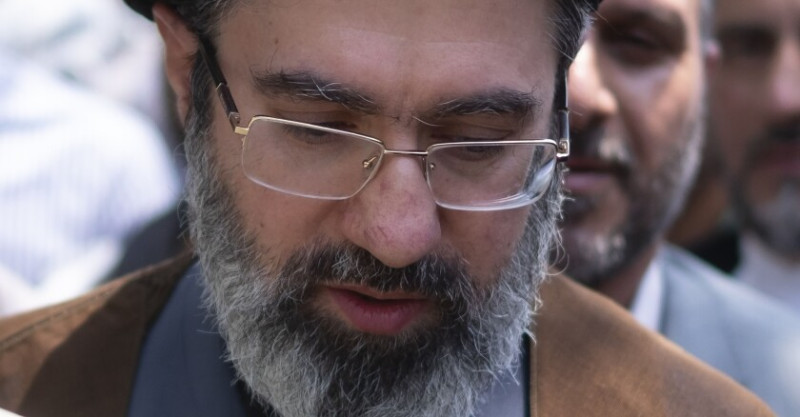
Iran awoke to a new era of leadership as Mojtaba Khamenei ascended to the position of the Islamic Republic's supreme leader, following the tragic death of his father, Ali Khamenei, during the ongoing U.S.-Israeli war on Iran. The elevation of Mojtaba Khamenei to the highest office in the country is a remarkable transition, given his father's long reign and the unprecedented circumstances surrounding the transfer of power.
A Mysterious Figure Ascends to Power
The appointment of Mojtaba Khamenei as the new supreme leader was a carefully orchestrated move by the Iranian regime. As the second son of the late Ali Khamenei, Mojtaba has long been a commanding figure within the Office of the Supreme Leader, though his role was largely behind the scenes. The succession of the slain leader's son is seen as a signal of the Islamic republic's defiance of Israel and the United States, and of continuity during crisis.
Born on September 8, 1969, in Mashhad, Mojtaba Khamenei has been groomed for leadership throughout his life. He is a member of the Khamenei family, a powerful political dynasty in Iran. Prior to his appointment, some media outlets and officials close to centres of power in Iran began referring to Mojtaba Khamenei as "Ayatollah," a senior clerical title. Despite his quiet demeanour, Mojtaba's influence within the Iranian political landscape has been significant, even if not widely publicized.
The selection of Mojtaba Khamenei as the new supreme leader was announced by Iran's Assembly of Experts, the body responsible for appointing the supreme leader. This decision comes at a pivotal moment for Iran, as the country faces an existential war against a combined U.S.-Israeli front seemingly intent on regime change.
Mojtaba Khamenei’s Relationship with Russia
Mojtaba Khamenei's relationship with Russia is a critical aspect of Iran's foreign policy. The new supreme leader has been known to maintain strong ties with Moscow, which has been a steadfast ally of Iran in the face of Western sanctions and political pressure. As Iran navigates the complexities of the ongoing war, Moshiraf's leadership is likely to strengthen the bond between the two countries, potentially altering the geopolitical landscape of the Middle East.
Russia’s support for Iran has been pivotal in recent years, providing both economic and military assistance. The strategic alliance between the two nations has allowed Iran to weather international isolation and maintain its regional influence. With Mojtaba Khamenei at the helm, this partnership is expected to deepen, offering Iran a vital lifeline in its conflict with the U.S. and Israel.
Mojtaba Khamenei’s ascent to power marks a significant shift in Iran's leadership, one that could have far-reaching implications for the country's domestic and foreign policies. As the world watches the unfolding crisis, the new supreme leader's decisions will shape not only Iran's future but also the broader geopolitical dynamics of the Middle East.
The Future of Iran Under Mojtaba Khamenei
Under Mojtaba Khamenei, Iran faces a myriad of challenges, both domestically and internationally. The ongoing war with the U.S. and Israel, coupled with internal political and economic pressures, will test the new supreme leader's resolve and leadership skills.
How will Mojtaba Khamenei navigate these complex issues? Will he continue his father's policies or chart a new course for Iran? The answers to these questions will determine the future trajectory of the Islamic Republic and its place in the global community.
One thing is clear: the Mojtaba Khamenei era has begun, and the world is watching. Think again. Iranian history is on the brink of a new chapter, with Mojtaba Khamenei as the architect of its future. What does this mean for the Middle East and the broader geopolitical landscape?
"The succession of Mojtaba Khamenei marks a significant moment in Iran's history, and signals a potential shift in the country's foreign and domestic policies. His relationship with Russia, in particular, will be a critical factor in shaping Iran's future." - Expert Commentary
How will Mojtaba Khamenei navigate the complexities of his new role in the midst of a war-torn nation? His journey from the shadows to the forefront of Iranian politics is a story of power, diplomacy, and resilience, and it is one that will continue to unfold in the days and years ahead. The succession of the Islamic Republic's third supreme leader marks a pivotal moment in the country’s history, with far-reaching implications for the Middle East and beyond.