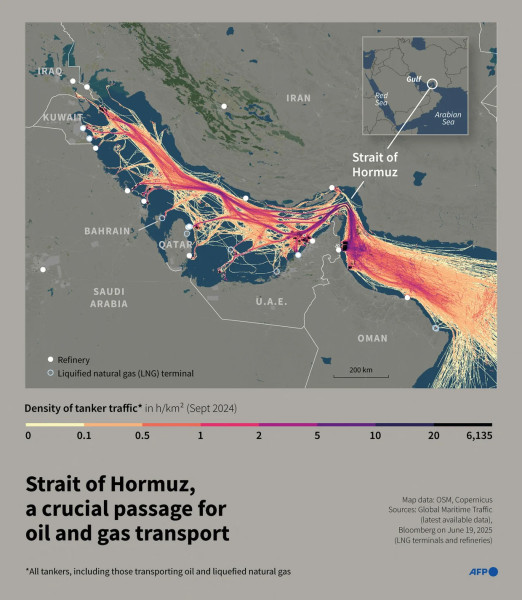
As the world watches the unfolding conflict in the Middle East, the Iran war has brought the Strait of Hormuz back into the global spotlight. The critical waterway, through which 30% of the world's oil passes, has seen shipping disrupted as the conflict intensifies. Brent crude oil prices have soared past $100 a barrel, affecting everything from gasoline prices to geopolitical alliances. With tensions rising, President Trump has called on NATO to step in and safeguard the vital shipping lane, setting the stage for a complex interplay of diplomacy and military strategy.
The Geopolitics of the Strait of Hormuz
The Strait of Hormuz is more than just a narrow waterway between Iran and the Arabian Peninsula; it's a global energy chokepoint. The ongoing conflict has paralyzed the strait, with oil prices responding in kind. The U.S.-Israel conflict with Iran has entered its third week, marking one of the most serious crises in West Asia in decades. The disruption has led to a surge in Brent crude prices, with the benchmark hovering above $105 a barrel. As the conflict intensifies, President Trump has called on NATO to step in and help reopen the strait, warning of consequences for not assisting.
The geopolitical stakes are high. The U.S. has been pressuring its allies to safeguard tanker traffic in the strait, while Iran has hit back against perceived aggression. The situation is further complicated by China's involvement, with Trump urging the country to play a role in reopening the strait. The conflict has also seen Israel launch ground operations in Lebanon, adding another layer of complexity to the crisis.
Oil Prices: The Economic Impact
The economic impact of the conflict is already being felt. Oil prices have been volatile, with Brent crude futures trading at around 0.95% lower on Monday, near $97 a barrel. The price of Brent crude, the international benchmark for crude oil prices, remains above $100 a barrel, and U.S. gas prices continue to rise as the vital shipping lane remains paralyzed by Iran. The conflict has also led to a slide in Murban crude as the disruptions fuel volatility in the oil market.
Trump's pressure on allies to protect the strait has had a mixed effect on oil prices. Initially, oil prices fell as Trump ramped up pressure, but they have since rebounded. The situation remains fluid, with no clear end in sight to the effective closure of the strait. As a result, Brent crude has risen as much as 3%. The situation has led to a sharp reversal in global oil markets, with crude prices close to $83 per barrel at one point.
The Role of NATO and International Allies
President Trump has been vocal about the need for a coalition to reopen the strait. He has called on NATO to provide backup, warning of consequences for the alliance if it fails to act. The situation has also seen Trump urging China to play a role in reopening the strait. The conflict has highlighted the strategic importance of the strait and the need for international cooperation to ensure the free flow of oil.
Here's the thing: The U.S. has been pressuring its allies to safeguard tanker traffic in the strait, but the response has been mixed. Some allies have been cautious, while others have been more receptive to the idea of a coalition. The situation has also seen Israel launch ground operations in Lebanon, adding another layer of complexity to the crisis.
The situation has led to a complex interplay of diplomacy and military strategy, with the U.S. seeking to build a coalition to reopen the strait. The conflict has also highlighted the strategic importance of the strait and the need for international cooperation to ensure the free flow of oil. Look, it's clear that the situation is far from simple, but one thing is certain: the Iran war and the Strait of Hormuz are shaping the geopolitical landscape in ways that will reverberate for years to come.
"Oil is the lifeblood of the global economy, and the Strait of Hormuz is its beating heart." - An expert on Middle East geopolitics