Understanding the Prolonged Tule Fog in California's Central Valley
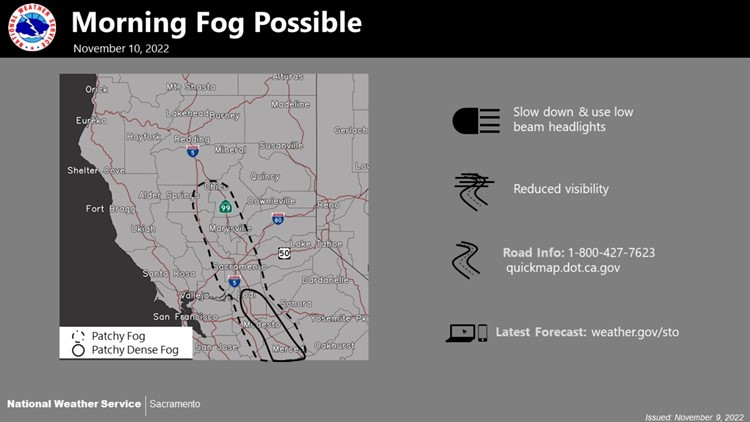
As of December 2025, a thick layer of tule fog has enveloped California's Central Valley, marking an unusually prolonged period of this dense, low-lying fog. This natural phenomenon, known as radiation fog, has been a persistent feature of the region's weather, influencing everything from daily life to travel and agriculture. The National Weather Service (NWS) has been closely monitoring this weather event, which has lasted over three weeks and shows no immediate signs of dissipating, affecting regions from Redding to Sacramento.
The tule fog phenomenon is not new to the Central Valley. It typically forms during the late autumn and winter months when the air near the surface, rich with moisture from evaporation, cools down and the water saturates the air. This process, coupled with calm winds, leads to the accumulation of water droplets, resulting in dense fog clouds near the ground. The unique geography and climate of the Central Valley, characterized by its flat terrain and fertile soil, create ideal conditions for the formation of tule fog.
This year, the tule fog has been particularly dense, stretching over a 400-mile area, from the Central Valley into the Bay Area. This extensive fog cover has led to numerous dense fog advisories, with Sacramento logging nine such advisories in November alone, the highest number since 2005. The prolonged presence of tule fog has been attributed to a combination of moist marine air, calm winds, and clear skies, all of which contribute to the fog's persistence.
While the tule fog brings a picturesque, almost ethereal quality to the landscape, it also poses challenges. Reduced visibility can lead to hazardous driving conditions, prompting authorities to issue travel advisories. Additionally, the prolonged fog cover can impact agricultural activities, as farmers often rely on clear skies for tasks such as harvesting and irrigation. The fog's persistence is also a concern for public health, as it can exacerbate respiratory issues and increase the risk of accidents due to poor visibility.
Looking ahead, the National Weather Service predicts that the tule fog is likely to continue for several more days, possibly up to a week, before conditions may start to improve. The forecast indicates that a broad, persistent, and fairly strong ridge will be centered just northwest of California, bringing very warm conditions except in areas where the tule fog persists. This means that while some regions may experience warmer temperatures, the Central Valley and surrounding areas will remain under the blanket of fog, keeping conditions cold and damp.
How does this story make you feel?
Up next · ScienceTule Fog: A Persistent Phenomenon in California's Central Valley