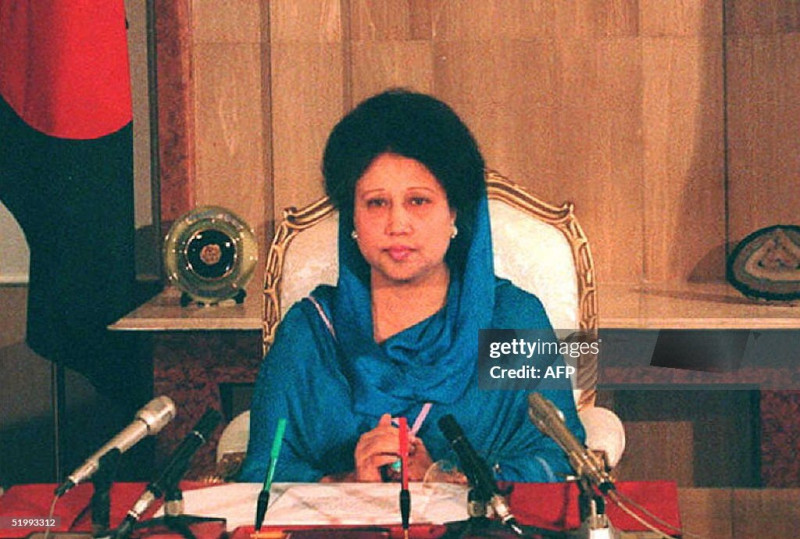
The political landscape of Bangladesh has been profoundly influenced by strong and charismatic leaders, with Khaleda Zia standing out as a pioneering figure. Khaleda Zia, who passed away on December 30, 2025 at the age of 80, was Bangladesh's first female prime minister, serving two terms from 1991 to 1996 and from 2001 to 2006. Her political journey not only marked significant milestones for Bangladesh but also set a precedent for women in leadership roles across the Muslim world.
Born on August 15, 1945, Khaleda Zia's life was a testament to resilience and determination. She rose from being a shy housewife to becoming a powerful political figure, navigating through the tumultuous political landscape of Bangladesh. Her entrance into politics was catalyzed by the assassination of her husband, President Ziaur Rahman, in 1981. This personal tragedy propelled her into public life, where she eventually led the Bangladesh Nationalist Party (BNP) and became a formidable political force.
Khaleda Zia's tenure as prime minister was marked by both achievements and challenges. She presided over a period characterized by natural disasters, economic distress, and civil unrest. Her efforts to restore democracy after the military takeover in the 1980s earned her widespread respect, although her legacy was marred by allegations of corruption. Despite these controversies, her contributions to Bangladeshi politics remain undeniable, shaping the country's modern political history through a mix of power, protest, and perseverance.
One of the defining aspects of Khaleda Zia's political career was her archrivalry with Sheikh Hasina, the leader of the Awami League. Their political feud dominated Bangladesh's political narrative for decades, with each leader's tenure marked by intense competition and ideological differences. This political rivalry was emblematic of the broader struggle for power and influence in Bangladesh, with each leader championing different visions for the country's future.
Khaleda Zia's impact extended beyond her political roles. She was a symbol of hope and inspiration for many, particularly women, who saw in her a beacon of what was possible despite the challenges and obstacles they faced. Her journey from a reluctant political entrant to a seasoned leader showcased her adaptability and strength, earning her a place in the annals of Bangladeshi history.
Khaleda Zia's death marks the end of an era in Bangladeshi politics. Her legacy as a trailblazer and a formidable political figure will continue to inspire future generations. As Bangladesh moves forward, the contributions of Khaleda Zia will be remembered, and her story will serve as a reminder of the power of determination and the impact one individual can have on a nation's trajectory.