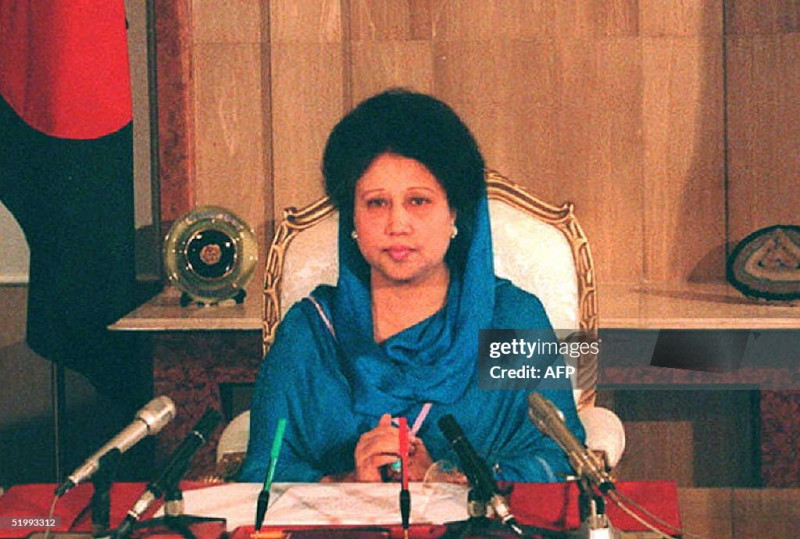
Khaleda Zia, a name synonymous with political leadership in Bangladesh, passed away on December 30, 2025, at the age of 80. The former prime minister of Bangladesh, her legacy is marked by significant milestones and a long-standing political rivalry that shaped the country's political landscape for decades.
Born on August 15, 1946, Khaleda Zia served as the prime minister of Bangladesh from 1991 to 1996 and again from 2001 to 2006. Her tenure was marked by both achievements and challenges, as she navigated a complex political environment. As the first female prime minister of Bangladesh, she also became the second female prime minister in the Muslim world, following Benazir Bhutto of Pakistan.
Khaleda Zia's political career was deeply intertwined with her personal life. She was the widow of Ziaur Rahman, a former president and army commander of Bangladesh. Her husband's assassination in 1981 propelled her into the political arena, where she eventually rose to become the leader of the Bangladesh Nationalist Party (BNP). This tragic event was a turning point that would define her political journey.
Her political rivalry with Sheikh Hasina, the leader of the Awami League, defined Bangladesh's political dynamics for generations. The two leaders traded power, with each serving multiple terms as prime minister. This rivalry was characterized by intense political competition and, at times, significant tensions.
Despite the political turmoil and health challenges she faced in her later years, Khaleda Zia remained a respected figure in Bangladesh. She was known for her resilience and determination, qualities that she exemplified throughout her career. Her passing has been met with widespread mourning, as the nation reflects on her contributions and the legacy she leaves behind.
Khaleda Zia's health had been declining for some time, and she faced multiple illnesses, including advanced cirrhosis of the liver, arthritis, diabetes, and chest complications. Her passing underscores the toll that political leadership and personal tragedy can take on an individual.
Her death has left a profound impact on Bangladesh, with many paying tribute to her leadership and the role she played in the country's political history. As Bangladesh mourns the loss of its first female prime minister, her legacy serves as a reminder of the significant contributions she made to the nation's political and social landscape.