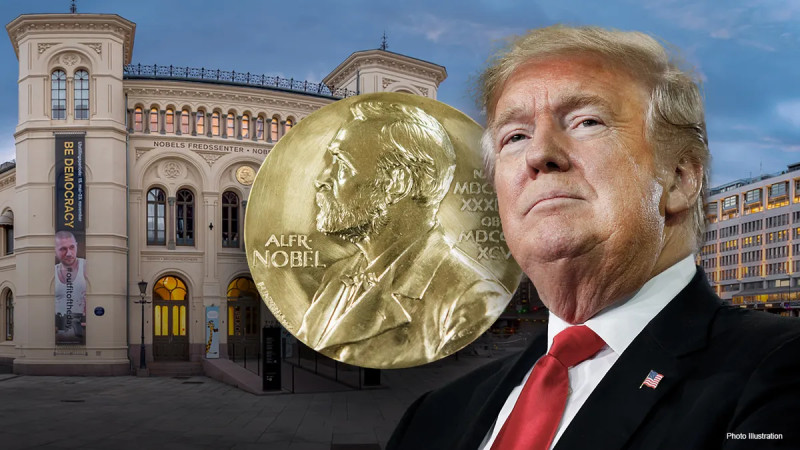
The Nobel Peace Prize has always been a subject of intense scrutiny and debate, and the year 2026 has brought a new layer of intrigue with the involvement of former U.S. President Donald Trump. The latest developments have sparked conversations about the politics surrounding this prestigious award and its symbolism in international diplomacy.
Venezuelan opposition leader María Corina Machado won the 2025 Nobel Peace Prize, an award that has been at the center of recent controversies involving former U.S. President Donald Trump. Machado's decision to present her medal to Trump has raised questions about the significance of the prize and the role it plays in global politics. Machado said she presented Trump with her Nobel Peace Prize medal during their meeting at the White House, highlighting the symbolic importance of the gesture.
The Nobel organization has clarified that Machado cannot legally transfer the prize to Trump, emphasizing that the award is a personal honor and cannot be reallocated. Despite this clarification, the act has sparked discussions on how the peace prize is perceived and its impact on international relations. The organization that oversees the Nobel Peace Prize has stated that the medal remains Machado's personal achievement and cannot be transferred to another individual.
Trump's nomination for the 2026 Nobel Peace Prize has also been a subject of debate. U.S. Representative Anna Paulina Luna formally submitted a nomination to the Nobel Peace Prize Committee, recognizing Trump's contributions to international diplomacy. This move has reignited discussions about the criteria for the award and the political motivations behind such nominations. The discussion comes at a time when global conflicts and cease-fire efforts are at the forefront of foreign policy agendas.
Trump himself has suggested that he deserves a separate Nobel Peace Prize for his alleged role in ending multiple conflicts. This claim has added fuel to the ongoing debate about the peace prize's significance and whether it should be awarded based on perceived diplomatic achievements or more tangible peace efforts. Trump's assertion highlights the contentious nature of the award and the varying interpretations of what constitutes a meaningful contribution to peace.
The House of Representatives has also played a role in this controversy. H.Res.799, introduced in the 119th Congress, recognizes Trump's role as a transformational peacemaker, citing his achievements in international diplomacy as deserving of the Nobel Peace Prize. This resolution underscores the political divide surrounding the award and the differing opinions on Trump's diplomatic contributions. The push to make President Donald Trump the winner of the 2026 Nobel Peace Prize began within hours of Venezuela's Maria Corina Machado winning.
In conclusion, the Nobel Peace Prize controversy involving Donald Trump and María Corina Machado highlights the complex interplay between politics and diplomacy. The award's significance and the criteria for selecting recipients remain topics of intense debate. As the world continues to grapple with global conflicts and the need for peace, the Nobel Peace Prize will undoubtedly remain a focal point in international discourse.