Today’s St. Patrick’s Day Celebrations: Joy, Culture, and Controversy

Today, St. Patrick’s Day is more than just a religious holiday; it has evolved into a vibrant, worldwide celebration of Irish heritage and cultural identity. All around the globe, people of Irish descent and enthusiasts of the Irish spirit are out in force, sporting green attire, enjoying traditional Irish music and feasts, and indulging in the festivities that have become synonymous with the holiday. However, beneath the jubilant surface lies a rich history and a complex interplay of religious and cultural elements that many are unaware of.
St. Patrick’s Day: A Journey from Religious Holiday to Global Phenomenon
Celebrated on March 17, St. Patrick’s Day commemorates the death of Saint Patrick, the foremost patron saint of Ireland. Initially, the day was a religious observance, marked by church services and feasts as a way to honor the saint’s life and legacy. Saint Patrick, whose life dates back to the 5th century, is credited with bringing Christianity to Ireland, where he is revered for his missionary work and his legendary efforts in converting the Irish to Christianity.
Over time, St. Patrick’s Day has evolved into a largely secular holiday, especially in regions outside of Ireland. While religious services are still held, the day has transformed into a global celebration of Irish culture, marked by parades, music, dancing, and, of course, the iconic green attire. The shift from a religious holiday to a cultural celebration is evident in the way people around the world observe the day, often blending traditional Irish customs with modern traditions.
From Green Attire to Parades: Iconic Traditions of St. Patrick’s Day
St. Patrick’s Day is celebrated with a host of iconic traditions, each adding to the unique charm and vibrancy of the holiday. Perhaps the most recognizable tradition is the wearing of green. The color green is deeply rooted in Irish culture and symbolizes the lush landscapes of the Emerald Isle. However, it is worth noting that the tradition of wearing green might stem from the idea that it makes one invisible to leprechauns, mythical creatures of Irish folklore, who are said to pinch anyone not wearing green.
Parades are another hallmark of St. Patrick’s Day celebrations. These grand processions feature marching bands, Irish dancers, and elaborate floats, all showcasing the spirit of Irish culture. The first recorded St. Patrick’s Day parade took place in New York City in 1762, organized by Irish soldiers serving in the British military. Over the years, the tradition has spread to cities worldwide, with major celebrations taking place in Dublin, New York, Boston, and even cities as far-flung as Sydney and Tokyo.
Music and dance are also integral to the festivities. Traditional Irish music, with its lively tunes and infectious rhythms, fills the streets and pubs, while Irish dancers in vibrant costumes perform intricate and energetic dances. The music and dance are not just entertainment; they are a living connection to Ireland’s rich cultural heritage, passed down through generations.
The Irish Diaspora: Global Reach of St. Patrick’s Day
One of the most striking aspects of St. Patrick’s Day is its global reach. While it is celebrated with great fervor in Ireland, the holiday has taken on a life of its own in other parts of the world, particularly in countries with significant Irish diaspora populations. So much so that today, in 2026, we see celebratory events and festivities in every corner of the world.
In the United States, St. Patrick’s Day has become a major cultural event. Cities like New York, Boston, and Chicago host some of the largest and most spectacular parades, attracting millions of participants and spectators each year. Chicago’s famous dyeing of the Chicago River green has become an iconic symbol of the holiday, drawing global attention and millions of spectators.
In Australia, cities like Sydney and Melbourne host vibrant parades and festivals, highlighting the strong Irish heritage and cultural influence in the country, often driven by the Irish community who immigrated to Australia. These celebrations, alongside events in London, Canada, and other parts of the world, showcase the widespread impact and enduring appeal of Irish culture.
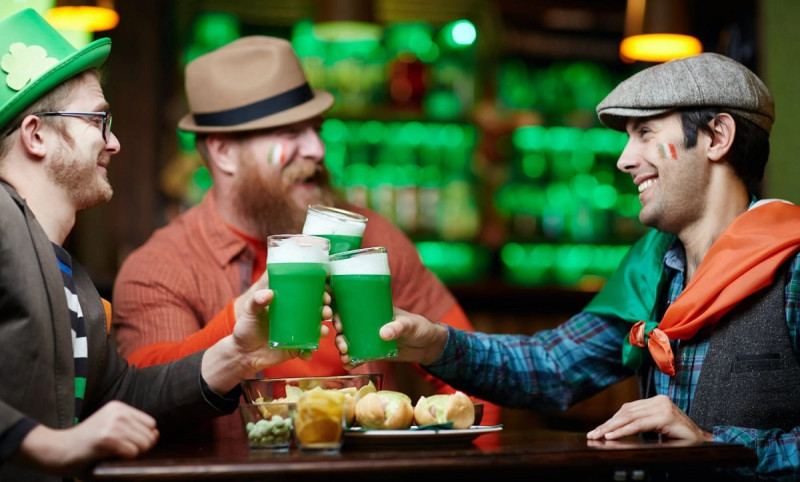
Let’s not kid ourselves, the holiday has also faced criticism for what some believe is a misrepresentation of Irish culture, especially by those who use the day as an excuse for excessive drinking. Critics argue that the commercialization of the holiday, with its emphasis on drinking and revelry, overshadows the true significance of the day and trivializes Irish heritage.
Despite the differing views on the holiday, St. Patrick’s Day remains a day of unity, celebration, and cultural pride. Whether you are Irish or simply enjoy the festivities, there is no denying the enduring appeal of this global celebration, and today, in 2026, the celebrations are more vibrant than ever.
Let us remember that St. Patrick’s Day is, at its core, a celebration of Ireland’s rich cultural heritage and enduring spirit.
How does this story make you feel?
 Up next · EntertainmentHappy St. Patrick's Day 2026: Celebrating Irish Culture and Heritage