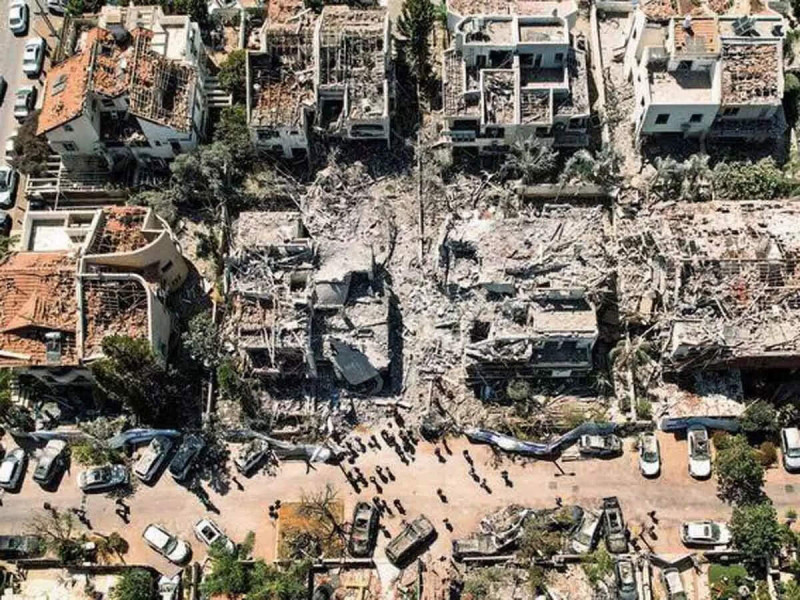
The Iranian attacks on Israel and Qatar are the latest chapters in an escalating war that has roiled the geopolitical landscape . Like a storm brewing across the Persian Gulf, the conflict is not merely a clash of arms, but a power struggle over energy resources, particularly the South Pars gas field, a lifeline for Iran and Qatar .
The Roots of the Conflict: Energy and Power in the Persian Gulf
For decades, the South Pars gas field has been a linchpin in the energy landscape of the Middle East, shared between Iran and Qatar . The recent escalation began when Israel struck the offshore South Pars facilities, a bold move that sent shockwaves through the region . This attack marked a significant point of escalation in the ongoing Iran war, as it was the first reported strike on Iranian energy infrastructure in the Persian Gulf.
Iran's response was swift and decisive. The country launched missile strikes on a major LNG site in Qatar. Qatar's foreign ministry rebuked Israel for its "dangerous and irresponsible" attack on Iran's South Pars facilities. In retaliation, Iran targeted not only Israel but also energy infrastructure in Saudi Arabia, the UAE, and Qatar, further intensifying the conflict .
"This is not just a military conflict; it's a battle over who controls the lifeblood of the modern world," said a senior analyst at the International Energy Agency .
Economic Impact: Energy Prices and Global Markets
The Iranian attacks have sent energy prices soaring, with oil and European natural gas prices surging . The strikes on the Persian Gulf energy facilities have highlighted the vulnerability of global energy supplies, particularly in the LNG sector . The South Pars gas field is not just an energy source; it is a strategic asset that has become a focal point in the broader conflict .
As the conflict continues, the immediate economic impact is clear. The longer-term consequences, however, are more complex. The Iranian attacks have not only disrupted energy supplies but have also raised questions about the stability of the entire Persian Gulf region. The South Pars gas field stands as a symbol of both the region's potential and its fragility, a stark reminder of the high stakes involved in this Iran war.
But looking beyond the immediate fallout, one question looms large: How will this conflict reshape the future of energy in the Middle East, and what new alliances and rivalries will emerge from the ashes of this Iran war?
Military and Strategic Implications: A Shifting Balance of Power
The attacks on the South Pars gas field have strategic implications that extend far beyond energy. For Iran, the South Pars facilities are not just an energy source; they are a symbol of national pride and economic sovereignty. The Israeli strike on South Pars is seen by many as a direct challenge to Iran's sovereignty and a violation of its territorial integrity .
In response, Iran has threatened to strike energy facilities in the Persian Gulf region, a move that could further destabilize the area and draw in more actors. The Iranian attacks on Israel and Qatar are a stark reminder of the potential for escalation in this conflict, with the South Pars gas field as the flashpoint .
Israel, meanwhile, has been accused of using the conflict to assert its dominance in the region. The Israeli air strikes on the South Pars facilities have been condemned by regional powers, including Saudi Arabia and the UAE, who see the conflict as a threat to their own energy interests .
The South Pars gas field is at the heart of this complex web of alliances and rivalries, a strategic asset that has become a pawn in a larger geopolitical game. As the conflict continues, the future of the South Pars gas field and the Persian Gulf region hangs in the balance, with no clear end in sight .
As the South Pars gas field smolders, a question echoes through the Persian Gulf: will this conflict consume the region’s energy lifelines, or will new alliances rise from the ashes, reshaping the geopolitical landscape?