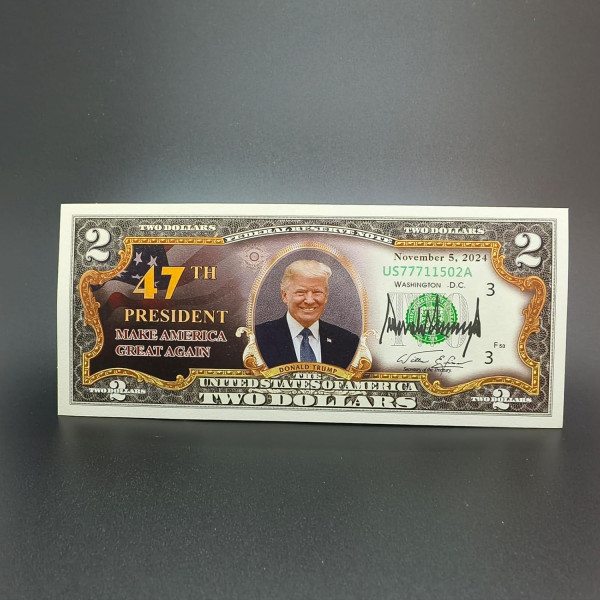
In a move that echoes the bold strokes of a painter redefining a masterpiece, the U.S. Treasury Department has announced that Trump's signature will soon grace the nation's paper currency. This unprecedented decision marks the first time a sitting U.S. president's signature will adorn the dollar bills, a historic change that has sparked both curiosity and debate. The news, first reported by Vanity Fair, signals a significant departure from traditional protocols, inviting questions about the symbolic and practical implications of this shift.
The Genesis and Implications of a Presidential Signature on U.S. Paper Currency
The decision to include Trump's signature on the dollar bills is part of a broader trend where the 45th president has sought to etch his name and likeness into American cultural institutions. This move, however, is particularly notable because it involves a tangible and ubiquitous symbol of American identity—the currency. The first $100 bills featuring Trump's signature, along with that of the U.S. Treasury Secretary, are set to be printed in June, with other denominations following in subsequent months. This initiative follows a long-standing practice where the Treasury Secretary's signature is a standard feature, but adding a president's signature is a monumental change.
Historically, the presence of a signature on U.S. currency has been a marker of authority, trust, and legitimacy. The Treasury Secretary's signature, in particular, serves as a guarantee of the bill's authenticity and value. By adding Trump's signature, the Treasury Department is introducing a new layer of symbolism, one that ties the nation's financial integrity directly to the office of the presidency. This move raises intriguing questions about political symbolism and the enduring legacy of a president's tenure on national identity markers.
The Symbolic Weight of Trump's Signature on U.S. Currency
Symbolically, the inclusion of Trump's signature on the dollar bills can be seen as a self-referential nod to his presidency and a tangible representation of his influence. It is a departure from the usual anonymity of the presidency on U.S. currency, where past presidents' signatures, if featured, were not part of the currency itself. This move could be seen as a bold statement of personal brand or a political gambit, depending on one's perspective. The symbolism extends beyond the currency, potentially influencing how the public perceives the presidency, its power, and its reach.
In an interview with the New York Times, a Treasury official explained that the decision is part of a broader effort to modernize the currency and reflect the current political climate. “This change is not just about adding a name; it’s about signaling a new era in American financial history,” the official stated. The official also noted that the inclusion of Trump’s signature will serve as a reminder to all Americans of the enduring legacy of a presidency that has left an indelible mark on the nation’s cultural and political landscape.
Reactions and Future Ramifications of Trump's Signature on U.S. Dollar Bills
The announcement has elicited a mixed response from the public and political analysts. While some view it as a natural extension of Trump's brand, others see it as a controversial move that could further polarize an already divided nation. Critics argue that the decision blurs the line between personal and institutional authority, potentially undermining the perceived impartiality of the U.S. Treasury. Supporters, on the other hand, see it as a way to honor the current presidency and its impact on American history. This debate underscores the broader conversation about the role of personal branding in politics and its consequences on national symbols.
“This is a significant moment in American history, and the inclusion of Trump's signature on the dollar bills is a testament to the enduring legacy of his presidency,” said a political scientist from a prominent think tank. “It’s a bold move that reflects the current political zeitgeist and will undoubtedly influence how future generations perceive this era,” the expert added.
The question remains: What does the future hold for the dollar bills? Will this decision set a precedent for future presidents, or will it be a one-time exception? Time will tell, but one thing is clear: the signature of Donald Trump will forever be etched in the annals of American history, a tangible reminder of a presidency that has left an indelible mark on the nation’s currency and collective consciousness.
The Impact on American Currency and National Identity
The potential impact of Trump's signature on the dollar bills extends beyond the currency's immediate value. It raises questions about the intersection of personal identity and national symbols, and how such changes might influence public perception. The decision also underscores the evolving nature of American identity, where personal branding and political influence increasingly shape national narratives. One wonders what other symbols of American life might be redefined in the years to come, and how these changes will shape the collective identity of future generations.
As the nation prepares for this historic change, the inclusion of Trump's signature on the dollar bills serves as a reminder of the enduring legacy of a presidency that has left an indelible mark on the nation’s cultural and political landscape. It is a bold move that reflects the current political zeitgeist and will undoubtedly influence how future generations perceive this era.