Pau Cubarsí: The Defender at the Center of a Stormy Football Night
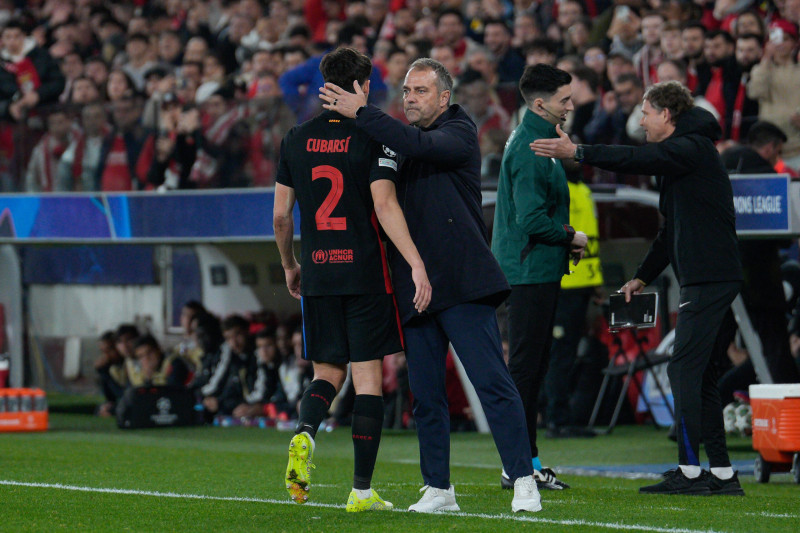
In the world of football, where emotions run high and fortunes can change in an instant, Pau Cubarsí found himself at the center of a pivotal moment during Barcelona's Champions League quarter-final against Atlético Madrid. On a night where the Blaugrana's hopes were dashed by a conspiracy of circumstances, Cubarsi's red card became a turning point that shifted the match's dynamic, leaving the team to face an uphill battle.
Cubarsi's Red Card: A Game-Changing Moment
Cubarsi’s red card, which occurred just before half-time, was a result of a foul on Giuliano Simeone, who was through on goal. The decision to upgrade the initial yellow card to a red was confirmed after a VAR review, which determined that Cubarsi had denied Simeone a clear goal-scoring opportunity. This crucial decision left Barcelona down to 10 men for the rest of the game.
The impact of the red card was immediate. Julián Álvarez, who had been a constant threat, capitalized on the free-kick awarded following the foul. The Argentine striker calmly whipped the ball into the net, giving Atlético a 1-0 lead. This early setback forced Barcelona to alter their strategy, forcing manager Xavi Hernández to adapt to the numerical disadvantage.
The Aftermath: Barcelona Struggles with the Man Down
Following Álvarez's goal, Barcelona struggled to find their rhythm. The absence of Cubarsi, a key defensive player, left the team exposed. Atlético, ever the opportunists, capitalized on this vulnerability. Alexander Sørloth, the Norwegian striker, added a second goal for Atlético in the 70th minute, sealing the deal with a commanding 2-0 lead.
Barcelona, now playing with a man down, found it increasingly difficult to create scoring opportunities. The team's usually resilient defense was stretched thin, and the attacking efforts became disjointed and predictable. Despite their best efforts, Barcelona's offensive play was stifled, and they failed to convert their limited chances into goals.
The Immediate and Long-term Impact of the Red Card
For Barcelona, the loss was a hard blow, but the red card's impact extended beyond the immediate match. With a crucial second leg ahead at the Metropolitano, Barcelona now faces an uphill battle to turn around a two-goal deficit. The team will need to not only overcome the numerical disadvantage but also address the psychological impact of the red card and the subsequent loss.
The incident also raises questions about the team's defensive structure and the bladnce between aggression and caution. Manager Xavi Hernández will have to weigh the pros and cons of his defensive strategy and make necessary adjustments to prevent similar situations in the future. Additionally, the loss of Cubarsi for the next leg poses a significant challenge, as he is a cornerstone of the team's defense.
As Pau Cubarsí walks off the field, he leaves behind a team in disarray and a fan base in shock. The red card was a turning point, a moment that crystallized the drama of the night and underscored the unpredictable nature of football. And then — get this — Alexander Sørloth, the Norwegian goal machine, went on to score the decisive second goal, leaving Barcelona to ponder what might have been if Cubarsi had stayed on the field.
“It was a tough call, but in the modern game, it was a clear red card. Now Barcelona have to deal with the free-kick.” - Albert Gea/Reuters
How does this story make you feel?
 Up next · SportsThe Game-Changing Move: Chuck Martin's Arrival at North Carolina Tar Heels