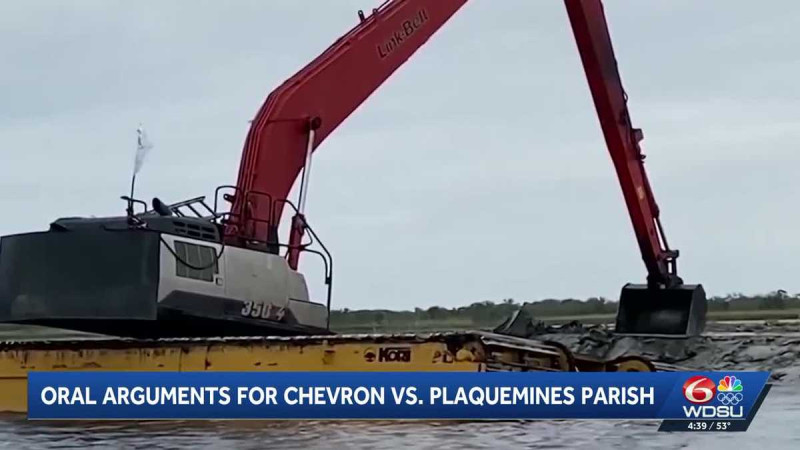
In the heart of New Orleans, a city pulsating with a blend of history and modernity, a Chevron representative stood outside the Supreme Court, eyes fixed on a phone, awaiting the decision that could alter the course of a decades-old dispute. The air was thick with anticipation, as lawyers, journalists, and environmental activists gathered, each drawn to this moment by the potential ripple effect on both corporate liability and environmental law. The case of Chevron USA Inc. v. Plaquemines Parish was not just another legal battle; it was a linchpin in the ongoing saga of environmental justice and corporate responsibility, a narrative that stretches back to the Second World War .
The Roots of the Dispute: Environmental Claims in Plaquemines Parish
The story begins in 2013, when several Louisiana coastal parishes, including Plaquemines and Cameron, filed lawsuits against some of the biggest names in the oil and gas industry. The plaintiffs, including BP America Production Company, Chevron U.S.A. Inc., and Shell Oil Company, were accused of causing significant environmental damage. The lawsuits alleged that oil and gas extraction, as well as refining processes, had led to severe erosion of Louisiana's coastal wetlands. The plaintiffs sought compensation for the ecological devastation and health impacts on the local communities .
The Legal Drama: Chevron's Removal to Federal Court
The legal battle intensified when Chevron invoked a federal statute to remove the case from Louisiana state court to federal court. Chevron argued that the case should be heard in federal court because it implicated the company's role in crude-oil production and refining during World War II, activities conducted under federal authority. The argument hinged on the federal jurisdiction statute, which allows for the removal of cases involving federal questions or actions under federal law. This move was a critical strategic decision by Chevron, as federal courts are often perceived to be more favorable to corporate defendants .
In response, Plaquemines Parish and the other plaintiffs contested the removal, asserting that the case should remain in state court. They argued that the environmental damage claims were rooted in state law and did not constitute federal questions. The dispute thus boiled down to a narrow but consequential legal issue: whether Chevron's actions during World War II provided sufficient grounds for federal jurisdiction over the environmental claims .
The Supreme Court's Unanimous Decision
The Supreme Court's ruling in Chevron USA Inc. v. Plaquemines Parish came as a decisive blow to the plaintiffs. In an 8-0 decision, with Justice Samuel Alito recusing himself due to his ownership of stock in the parent company of one of the defendants, the court ruled in favor of Chevron. The ruling, penned by Justice Clarence Thomas, affirmed Chevron's ability to remove the case to federal court. The decision was a narrow one, focusing solely on the technical legal issue of federal jurisdiction and leaving broader questions about environmental liability and corporate responsibility unaddressed .
"This ruling underscores the importance of federal jurisdiction in cases involving historical federal actions," remarked a seasoned environmental lawyer, who requested anonymity. "It's a significant procedural victory for Chevron and sets a precedent that could influence similar cases in the future." This sentiment was echoed by industry analysts who see the ruling as a major win for oil and gas companies involved in similar legal battles .
Outside the court, the atmosphere was electric. While Chevron's legal team celebrated their victory, environmental activists and local residents expressed frustration and disappointment. One resident of Plaquemines Parish, speaking to the crowd, said, "This isn't just about legal technicalities; it's about our homes, our health, and our environment. We're being left to bear the burden of environmental harm while corporations wriggle out of responsibility."
The Broader Implications
The ruling has far-reaching implications for both environmental law and corporate liability. By affirming Chevron's ability to remove the case to federal court, the Supreme Court has potentially opened the door for other corporations to do the same in similar situations. This could make it more difficult for plaintiffs to hold corporations accountable in state courts, where juries and judges might be more sympathetic to local concerns and environmental damage claims .
What Lies Ahead for Plaquemines Parish?
The decision marks a pivotal moment in the ongoing struggle for environmental justice in Louisiana. While the legal battle may have been decided in favor of Chevron, the fight for environmental restoration and corporate accountability continues. The residents of Plaquemines Parish, along with environmental activists, vow to keep pushing for change, even if it means finding new avenues for legal recourse.
The door to the courtroom closes, leaving behind a sense of uncertainty and a lingering echo of silence. The battle over environmental damage in Plaquemines Parish is far from over, as the community prepares to navigate the complexities of Chevron ruling and the lingering environmental legacy of Chevron.