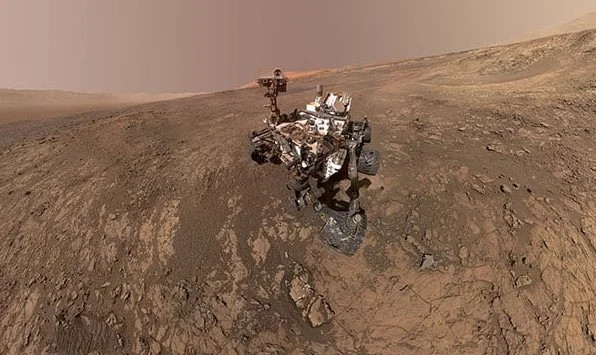
Here's the thing: Mars just got a little bit closer to us. NASA’s Curiosity rover, which has been tirelessly exploring the Red Planet, has uncovered what might be the most exciting discovery yet. After years of analysis, the rover has detected the most diverse collection of organic molecules ever found on Mars, including seven compounds never before seen on the planet. This isn’t just a big deal for Curiosity; it’s a game-changer for our understanding of the possibility of life beyond Earth. Look, sure, we’ve found organic compounds on Mars before, but this time, it’s different. The complexity and diversity of these molecules suggest that the building blocks of life might be more common on Mars than we ever imagined.
The Discovery: What Exactly Did Curiosity Find?
So, what’s the big news? The Curiosity rover, which has been drilling and analyzing Martian rocks, recently hit the jackpot. In a sample taken in 2020, scientists identified 21 carbon-containing molecules, with seven of them being brand new to our Martian chemistry textbooks . Five of these new compounds are particularly intriguing because they’ve never been detected on Mars before, adding a whole new layer to our understanding of the Red Planet’s chemical composition .
A Closer Look: What Are These Organic Compounds?
Okay, so what are these organic compounds, exactly? Well, they’re essentially the same kinds of molecules that make up life as we know it. These compounds are made of carbon and hydrogen, often with other elements like oxygen and nitrogen thrown in the mix. On Earth, they form the basis for all known life forms. On Mars, their presence raises some serious questions. Are these molecules the remnants of ancient life, or are they just the byproducts of non-biological processes? The answer isn’t clear yet, but the mere possibility is enough to send shivers down any scientist’s spine.
The Big Question: Does This Mean Life on Mars?
Here’s where things get really interesting. The presence of these organic compounds on Mars doesn’t necessarily mean there’s life there right now, or that there ever was. But it does open the door to some fascinating possibilities. These molecules, which include chemicals widely considered building blocks for the origin of life on Earth, suggest that the conditions on Mars might have been just right for life to emerge at some point in the past . The fact that these compounds were found in a rock near the planet’s equator adds another layer of intrigue. This region, known as Gale Crater, is believed to have once been a habitat for microbial life, and the latest findings from Curiosity only strengthen that hypothesis.
Now, it’s important to note that this discovery doesn’t answer the question of whether life exists or ever existed on Mars. But it does bring us one step closer to understanding the planet’s history and its potential to support life, however remotely. And that, my friends, is a monumental step forward in the quest to understand our place in the universe.
Finally, take a moment to think about this: Remember the famous line from Carl Sagan, “We are made of star-stuff.” Well, it seems that the stuff of stars might just be a bit closer to home than we thought. If Mars once had the building blocks of life, it raises the tantalizing possibility that life itself might be more common in the universe than we ever imagined. And that, in a nutshell, is the real beauty of Curiosity’s latest discovery.