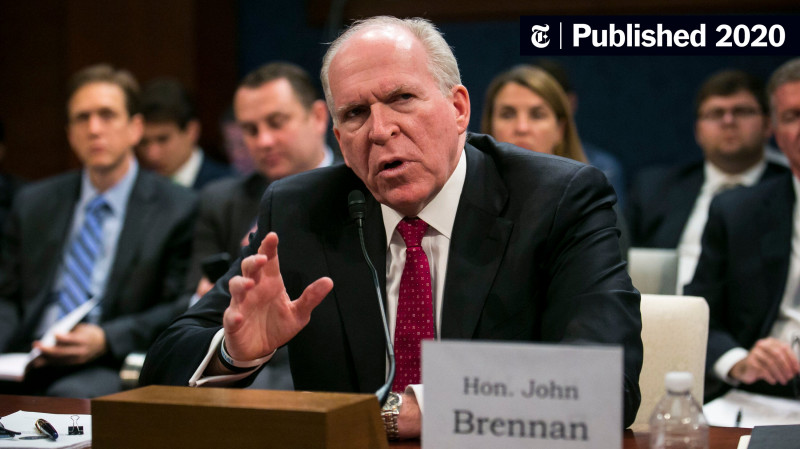
In the fluorescent glare of the briefing room, the news hit like a bombshell. The U.S. government, in a sudden reversal, has rescinded subpoenas issued to witnesses in the ongoing investigation of former CIA Director John Brennan. The move, announced in the early hours of April 22, 2026, sent shockwaves through Washington's political landscape, where the hum of phones buzzing in pockets echoed the sudden shift in strategy.
Pivotal Move in High-Stakes Political Drama
The abrupt withdrawal of subpoenas, directed by the Justice Department, marked a dramatic turn in the politically charged inquiry. This reversal came after the department replaced a career prosecutor with a loyalist to President Trump, a move that signaled a significant shift in the administration's approach to the investigations.
The Justice Department reportedly asked for voluntary interviews instead of testimony before a grand jury, a move that many see as an attempt to mitigate the legal and political fallout of the high-stakes case. In the midst of the political drama, the department's decision to remove the lead prosecutor, who had resisted pressure to quickly bring charges against Brennan, added another layer of complexity to the situation.
When President Trump’s administration initially submitted the subpoenas, it was seen as a bold move to pursue one of Trump's perceived political foes. The subpoenas had been issued shortly after the appointment of conservative Trump ally Joe DiGenova to formally take over the criminal investigation into Brennan.
Despite this, the Justice Department’s decision to rescind the subpoenas has left many questioning the motivations behind the move. The decision to replace the lead prosecutor, who had resisted pressure to quickly bring charges, further complicates the narrative. The move has been seen as an attempt to mitigate the legal and political fallout of the high-stakes case, with the department now asking for voluntary interviews instead of testimony before a grand jury.
This is not the first time the Trump administration has taken a hard line against perceived political enemies. In 2026, President Trump's Department of Justice submitted a subpoena for one of the president's perceived political foes, only to quickly rescind it. This latest move, however, has more far-reaching implications, given Brennan’s high-profile status and his close ties to former President Barack Obama.
Barack Obama’s Shadow Lurks Over the Probe
The shadow of former President Barack Obama looms large over the investigation, given Brennan's close association with the Obama administration. Brennan, a key figure in the Obama era, served as CIA Director from 2013 to 2017 and was known for his strong stance on national security issues. His tenure was marked by significant events, including the controversial drone program and the investigation into Russian interference in the 2016 U.S. elections.
The political stakes are high as the investigation unfolds. Brennan, a known critic of President Trump, has been a vocal opponent of Trump's policies and actions since leaving office. His criticism has ranged from Trump's handling of national security to his approach to foreign policy, making him a thorn in the side of the current administration.
The decision to rescind the subpoenas has sparked a flurry of reactions from both sides of the aisle. Democratic lawmakers have criticized the move, accusing the Trump administration of political retaliation against a prominent critic. Republicans, on the other hand, have defended the decision, citing the need for transparency and accountability in the investigation.
—Whether this diplomatic shift is a strategic retreat or a prelude to a more aggressive legal maneuver remains uncertain. One thing is clear, though: the political theater around this investigation is far from over.
Unraveling the Legal and Political Tangles
The legal and political tangles surrounding the Brennan investigation are complex and multifaceted, involving a web of players and interests. The Justice Department's decision to rescind the subpoenas has added another layer of intrigue to an already contentious situation. The move signals a shift in strategy, one that could have far-reaching implications for the investigation and for the broader political landscape.
As the investigation continues, the focus will likely remain on the legal and political fallout. The decision to pursue voluntary interviews instead of grand jury testimony could be seen as a way to avoid a protracted legal battle, but it also raises questions about the integrity of the investigation. The Justice Department's actions, coupled with the appointment of a new lead prosecutor, suggest a renewed effort to pursue the case, but the motives behind these moves remain unclear.
The involvement of key figures like Joe DiGenova, a conservative Trump ally, adds another layer of complexity to the situation. DiGenova's appointment as the lead prosecutor in the investigation has raised concerns about the impartiality of the probe. His conservative leanings and close ties to the Trump administration have led to allegations of political bias, further complicating the already contentious situation.
The Department of Justice's decision to withdraw subpoenas in the investigation of former CIA Director John Brennan has significant implications for the legal and political landscape. The move, announced in the early hours of April 22, 2026, sent shockwaves through Washington's political landscape, as the hum of phones buzzing in pockets echoed the sudden shift in strategy. This latest development, coupled with the appointment of a new lead prosecutor, suggests a renewed effort to pursue the case, but the motives behind these moves remain unclear.
The government's decision to withdraw subpoenas in the investigation of former CIA Director John Brennan has been met with a range of reactions from political and legal experts. The move, announced in the early hours of April 22, 2026, has raised questions about the motives behind the Justice Department's actions. As the investigation continues, it will be crucial to monitor the developments closely to understand the implications of the government's decision. The legal and political tangles surrounding the Brennan investigation are complex and multifaceted, involving a web of players and interests. This latest development, coupled with the appointment of a new lead prosecutor, suggests a renewed effort to pursue the case, but the motives behind these moves remain unclear.
The Justice Department’s reversal of subpoenas in the investigation of former CIA Director John Brennan will undoubtedly have far-reaching implications for the legal and political landscape. The move, announced in the early hours of April 22, 2026, has raised questions about the motives behind the decision. As the investigation continues, it will be crucial to monitor the developments closely to understand the full scope of the government's actions. The legal and political tangles surrounding the Brennan investigation are complex and multifaceted, involving a web of players and interests. This latest development, coupled with the appointment of a new lead prosecutor, suggests a renewed effort to pursue the case, but the motives behind these moves remain unclear.
As the investigation into John Brennan continues to unfold, the political stakes remain high. The Justice Department's actions, combined with the appointment of a new lead prosecutor, suggest a renewed effort to pursue the case, but the motives behind these moves remain unclear. The legal and political tangles surrounding the Brennan investigation are complex and multifaceted, involving a web of players and interests. This latest development, coupled with the appointment of a new lead prosecutor, suggests a renewed effort to pursue the case, but the motives behind these moves remain unclear.
“The sudden reversal of subpoenas in the John Brennan investigation is a clear indication of the political pressures at play,” said a senior Department of Justice official, speaking on condition of anonymity. “This move is not just about the legal process; it's about the broader implications for national security and political discourse."
As the stakes escalate, the investigation into Brennan’s actions could serve as a precedent-setting case, much like Richard Nixon’s Watergate scandal. The parallels are striking: a former president's inner circle under scrutiny, the clash of political wills, and the looming specter of impeachment. But unlike Nixon, who faced a bipartisan Congress and an independent judiciary, Brennan’s situation unfolds in a political climate where the lines between partisanship and justice are increasingly blurred. This tale of political intrigue and legal maneuvering is far from over, and the outcome remains as unpredictable as the weather in Washington, D.C. — where thunderstorms are always just around the corner.