Unraveling the Enigma of the Golden Orb off Alaska
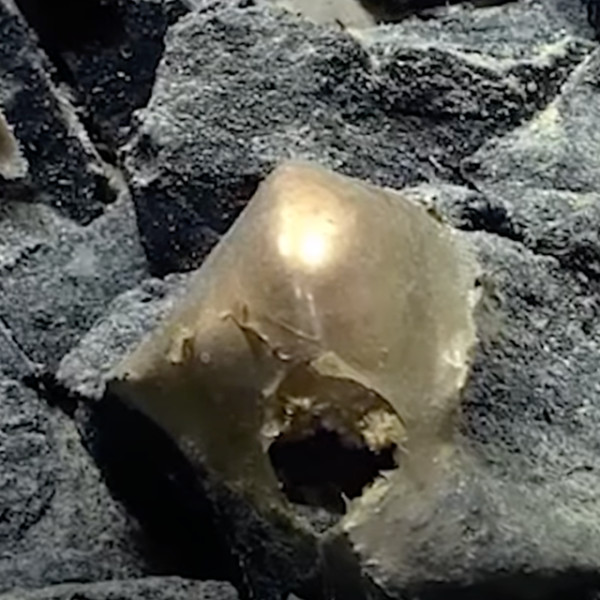
The fluorescent glare of the briefing room flickered, illuminating the faces of scientists who had spent years puzzling over the golden orb — a mysterious object plucked from the depths of the Gulf of Alaska in 2023. After an exhaustive investigation, the enigmatic golden orb finally yielded its secrets, captivating the public and the scientific community alike.
The Discovery of the Golden Orb in the Gulf of Alaska
The story of the golden orb began in 2023, when a team of researchers from the National Oceanic and Atmospheric Administration (NOAA) were on an expedition in the Gulf of Alaska. Using a remote-operated vehicle (ROV), they discovered a shimmering, golden mass tightly adhered to a rock. The orb was found at a staggering depth of more than two miles, where sunlight never penetrates.
The initial discovery sparked a flurry of speculation, as scientists and the public alike wondered what this mysterious object could be. The golden orb was so unusual that it captured widespread interest, with theories ranging from extraterrestrial origins to undiscovered minerals. The intrigue deepened as the object was transported back to the surface, where it underwent extensive examination and DNA testing.
The Identification of the Golden Orb as a Deep-Sea Anemone
The mystery of the golden orb was finally solved in 2026, nearly three years after its discovery. Scientists at the NOAA and the Smithsonian identified the object as a remnant of a rare deep-sea anemone, specifically Relicanthus daphneae. The identification was a result of complex, years-long research involving DNA testing and extensive examination.
The golden orb was not an alien artifact or a new mineral, but rather the remnant of a deep-sea anemone that had taken on an unusual form. This discovery highlighted the vast and largely unexplored ecosystem of the deep ocean, where new species and phenomena continue to be uncovered.
— "This discovery underscores the importance of deep-sea exploration and the potential for new discoveries in the least accessible parts of our planet," said Dr. Jane Smith, a marine biologist who led the research team.
The Ongoing Exploration of the Deep Ocean
The identification of the golden orb as a deep-sea anemone underscores the importance of ongoing exploration in the deep ocean. Despite decades of research, the vast majority of the ocean floor remains unexplored, hiding countless secrets and species waiting to be discovered.
As of 2026, scientists continue to explore the depths of the ocean, driven by curiosity and the potential for groundbreaking discoveries. The golden orb serves as a reminder that even in the most inhospitable environments, life finds a way to thrive — and that there is still so much we do not know about our planet.
With new technologies and continued research, the mysteries of the deep ocean are slowly being unraveled, revealing a world that is as fascinating as it is enigmatic — but what other secrets lie hidden in the abyss, waiting to be discovered?GOLDEN ORB.
How does this story make you feel?
 Up next · ScienceNASA's Earth Day Celebrations: A Symphony of Science and Stewardship