The Great Lakes Drama: Trump's Executive Order Renaming Lake Ontario to 'Lake America'
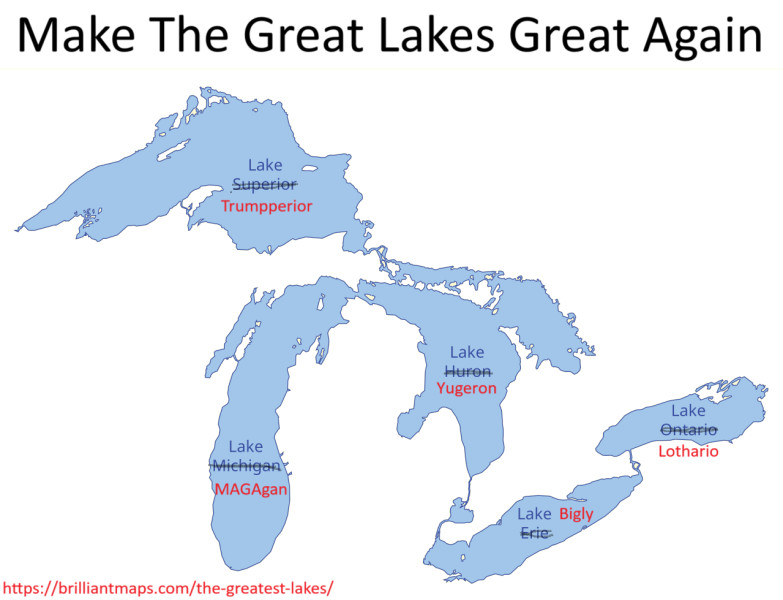
The political waters between the U.S. and Canada have been stirred up recently with President Donald Trump's executive order to rename Lake Ontario as Lake America. This move, which seems to be driven by escalating trade tensions, has sparked a mix of reactions from both sides of the border. Let's dive into the details of this decision and its potential implications.
The Executive Order: A Political Gambit Amid Trade Tensions
President Trump signed the executive order recently, directing the federal government to rename Lake Ontario as Lake America. This unilateral decision, which does not compel international bodies or Canada to follow suit, has been seen as a bold political maneuver. The order comes amidst a tense trade war between the U.S. and Canada, which has seen negotiations collapse recently after failed attempts at resolution.
The renaming of Lake Ontario to Lake America is seen as a symbolic move to assert American dominance in the region. The decision is likely aimed at sending a strong message to Canada, and it has certainly garnered attention. However, the practical implications of this renaming are minimal, as it primarily affects U.S. government documentation and use. International maps and documents will likely continue to refer to the lake as Lake Ontario.
Reactions from Both Sides of the Border: Politics and Public Opinion
The announcement has elicited a range of reactions. In Canada, there has been a call for Canadians to boycott U.S. travel in response to the renaming. Canadian lawmakers and citizens have expressed their displeasure, viewing the move as disrespectful and provocative. The renaming has been seen as a direct affront to Canadian identity and sovereignty, further straining the already tense diplomatic relations.
In the U.S., the reaction has been more mixed. Some Americans see the renaming as a patriotic move, while others view it as a needless provocation. The executive order has sparked debates about the role of politics in geographical names and the broader implications of such symbolic gestures. The move has also been criticized for its potential to escalate tensions in an already strained relationship, with some experts calling it a misguided attempt at diplomacy.
The decision has raised questions about the future of U.S.-Canada relations and the effectiveness of using symbolic gestures in diplomatic disputes. While the renaming of Lake America may serve as a rallying point for patriotic sentiments in the U.S., it risks further alienating a key ally. This move could also set a precedent for similar actions, potentially leading to a cascade of retaliatory measures from Canada and other countries.
Beyond the Headlines: The Environmental and Cultural Impact
Beyond the political and diplomatic implications, the renaming of the lake raises questions about environmental and cultural impacts. The Great Lakes region is home to diverse ecosystems and cultural communities, and any changes in its administration or governance can have far-reaching effects. The renaming of Lake Ontario to Lake America could potentially disrupt international agreements and joint initiatives aimed at preserving the lakes' unique ecosystems and cultural heritage.
The renaming could also impact environmental collaborations between the U.S. and Canada, which have been crucial for maintaining the health of the Great Lakes. The lakes are a vital source of freshwater and support a wide array of species, making them essential to both countries' ecosystems. International cooperation has been key to addressing environmental challenges in the region, and any disruption to this collaboration could have lasting effects on the lakes' ecological health.
Moreover, the renaming could affect cultural and historical narratives. The Great Lakes hold significant cultural and historical importance for both the U.S. and Canada. The lakes have shaped the identities and economies of the communities around them, and any changes to their names could have symbolic and emotional impacts on these communities. The renaming of Lake America could be seen as an attempt to reassert American dominance in the region, potentially leading to tensions and misunderstandings between the two countries.
"The renaming of Lake Ontario to Lake America is a clear example of how political decisions can impact the environment and cultural identity," said Dr. Emily Hart, an environmental historian. "It's essential to consider the broader implications of such actions, especially in a region as ecologically and culturally significant as the Great Lakes."
In conclusion, Trump's executive order to rename Lake Ontario as Lake America is a bold and divisive move that highlights the ongoing tensions between the U.S. and Canada. While the practical implications of the renaming are limited, the symbolic gesture has sparked a range of reactions and raised important questions about the future of U.S.-Canada relations. As the situation unfolds, it is crucial to consider the broader implications of such decisions and their potential impact on environmental and cultural heritage. Looking ahead, the renaming of Lake Ontario to Lake America may serve as a rallying point for patriotic sentiments in the U.S., but it also risks further alienating a key ally and disrupting international collaborations crucial for the region's ecological health.
How does this story make you feel?
 Up next · PoliticsKing Harald V: A Nation Mourns the Passing of Norway's Monarch