Alberta holds historic referendum on independence and autonomy
Alberta residents vote on ten questions regarding provincial autonomy, immigration, and independence, with results expected to guide future policy despite the non-binding nature of the ballot.
Key points
- Alberta is conducting a non-binding referendum featuring ten questions on independence, immigration, and public services.
- Over 1.3 million advance and special votes have been cast ahead of the official results announcement.
- Premier Danielle Smith emphasizes the vote allows Albertans to express views on governance and services.
- Recent polls indicate a majority of decided voters favor remaining in the Canadian Confederation.
- Official results are scheduled to be released on October 29 to clarify the public stance.
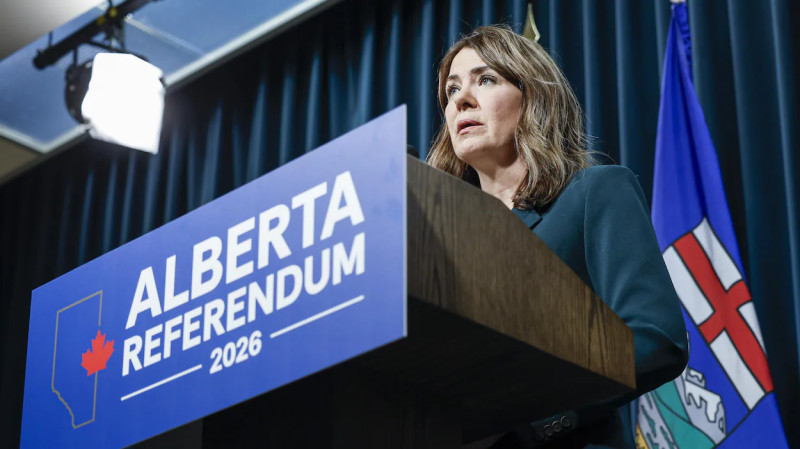
In the fluorescent glare of the briefing room, Premier Danielle Smith's face was stern as she addressed the media. This was no ordinary referendum; this vote could redefine the future of Alberta within Canada. The province of Alberta, nestled in the heart of Western Canada, is currently grappling with a historic referendum that has captured national attention. The questions at stake range from immigration controls to provincial autonomy and, most crucially, the prospect of independence. The referendum, a non-binding vote, represents a pivotal moment in Alberta's political landscape, as residents weigh the merits of staying within Canada or initiating a potential separation. To date, over 1.3 million advance and special votes have been cast.
Ten Questions, One Decision: The Scope of the Referendum
Alberta's referendum is not a simple yes-or-no vote on independence. Instead, it presents ten comprehensive questions that delve into various aspects of the province's relationship with Canada. These questions encompass everything from immigration policies to the provision of public services. Voters are asked to decide on matters such as proof of citizenship for voting, restrictions on federally funded public services, and the implementation of stricter immigration controls. These questions aim to assess the public's sentiment on Alberta's governance and its future within Canada. The stakes are high; the referendum's outcome could set the stage for future policy changes, particularly if a significant portion of the electorate supports greater autonomy or outright independence.
Premier Danielle Smith's government has placed a strong emphasis on the importance of this vote. "This referendum is about more than just independence," Smith recently stated in a press briefing. "It's about Albertans having a say in their future, in the services they receive, and in how their province is governed. The results will guide us in the decision-making process over the coming years.
The Political Climate: Leadership and Public Opinion
The political climate surrounding the referendum is charged with tension. Premier Danielle Smith, who has been a vocal proponent of Alberta's interests, has been at the forefront of this debate. Smith, who was sworn in as Alberta's 19th premier in October 2022, has repeatedly called for a stronger provincial voice in federal affairs. Under her leadership, the province has pushed for greater control over immigration, healthcare, and education. Her stance has garnered both support and criticism, with some arguing that Alberta's demand for more autonomy is a step towards eventual secession. — Recent polls, however, indicate that a majority of decided voters favor remaining in the Canadian Confederation.
Despite the strong sentiments on both sides, the referendum remains a non-binding vote. This means that while the results will be significant, they do not automatically trigger a change in Alberta's constitutional status. The outcome will likely guide future policy decisions and negotiations with the federal government. It remains crucial for both supporters and opponents of separation to engage in constructive dialogue, ensuring that Alberta's voice is heard clearly and coherently.
"The referendum is a democratic exercise that allows Albertans to express their views on key issues. It's a moment for unity and reflection, not division," commented a political analyst during a live broadcast on Global News.
The Future of Alberta: What Lies Ahead?
The referendum's results, which are expected to be officially announced in the coming weeks, will shape Alberta's political trajectory. Preliminary returns and updates from the Alberta Election website indicate a high voter turnout, with some polling stations extending their hours to accommodate the influx of voters. This enthusiasm underscores the importance Albertans place on this vote and their desire to influence their province's future. The official results, scheduled to be released on October 29, will provide a clearer picture of the public's stance on the ten questions posed.
The referendum is not just about Alberta's future within Canada; it is also about the province's relationship with its own citizens. As the votes are tallied and the results begin to emerge, one thing is clear: Alberta's voice is stronger than ever, and its future is in the hands of its people. The outcome of this referendum will undoubtedly shape the political landscape of the province and possibly the entire country. It is a moment of reckoning, a turning point in Alberta's history where the voices of its citizens will decide the path forward. With the stakes so high, it is crucial to keep an eye on the evolving narrative as Alberta navigates this pivotal moment in its political journey. The referendum is a bold statement of Alberta's aspirations and its determination to chart its own course, whatever the outcome may be.
The final outcome of the referendum, set to be released in the coming weeks, will reveal whether Alberta will remain a part of Canada or take steps towards greater autonomy or even independence. Regardless of the results, this referendum is a testament to the power of democracy and the enduring spirit of Alberta's citizens. As the province awaits the official announcement, the world watches with bated breath, knowing that the decisions made today will shape Alberta's future for generations to come.
Alberta's referendum is a moment of truth for the province, and the world will be watching to see what the future holds for this vibrant and resilient part of Canada.
Your questions, answered
Is the Alberta referendum binding on independence?
No, the referendum is a non-binding vote. The results will guide future policy decisions but do not automatically change Alberta's constitutional status.
When will the results of the Alberta referendum be announced?
The official results are scheduled to be released on October 29.
Quick poll
What is the primary purpose of the Alberta referendum?
0 votes
How does this story make you feel?
Topics
 Up next · PoliticsTexas early voting for 2026 midterms begins with high turnout