Robinhood earnings spark mixed investor reaction
Robinhood reported record revenue of $1.42 billion and an EPS of $0.62, but heavy insider selling and falling profitability have raised concerns about the stock’s future.
Key points
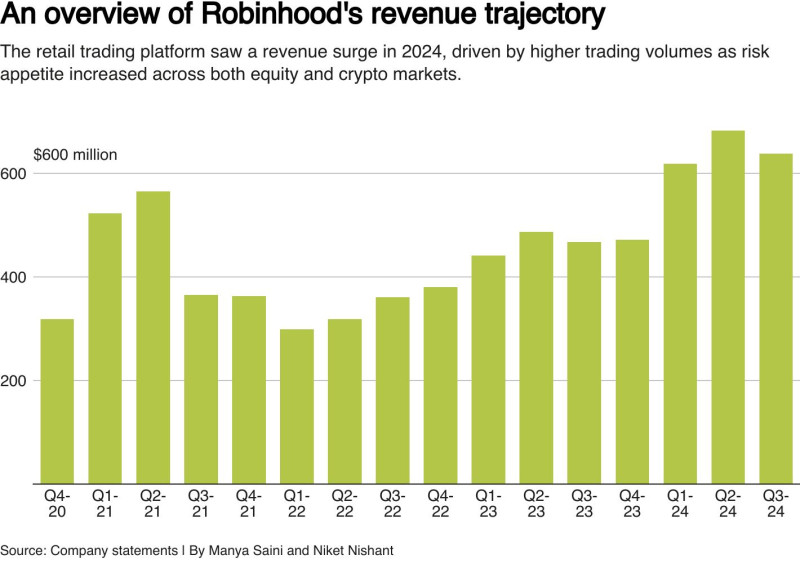
- Revenue rose 12% to $1.42 billion, driven by customer growth and new products.
- EPS of $0.62 beat estimates but profitability fell year‑over‑year.
- Insider selling was significant, adding volatility to the stock price.
- The stock moved up 3.72 points in recent days amid uncertainty.
- Analysts debate whether insider sales signal profit taking or strategic diversification.
Robinhood Markets, Inc. (HOOD) stock has seen a rollercoaster ride recently, driven by unexpected quarterly earnings results. On the surface, the company reported record revenue of approximately $1.42 billion, a 12% increase year over year. However, the landscape is more complex.
The Mixed Bag of Robinhood's Latest Earnings Report
The latest earnings report from Robinhood Markets, Inc. (HOOD) has left investors with a mix of optimism and caution. Revenue surged to $1.42 billion, marking a 12% increase from the previous year. This growth is a testament to the company's expanding customer base and innovative product offerings. Customer acquisition and engagement remain robust, with strong indications of continued growth in the near future.
Despite the promising revenue figures, the company's profitability took a hit. Year-over-year profitability dropped significantly, which has sparked concerns among investors. The earnings per share (EPS) of $0.62, which beat the estimated $0.41, did not entirely mitigate the overall financial picture.
The Impact of Heavy Insider Selling on HOOD Stock
Adding to the complexity, the earnings report was accompanied by heavy insider selling, which raised eyebrows and triggered market volatility. Insider selling is a common practice, but its scale in this case could indicate that key stakeholders are hedging their bets amidst uncertain market conditions. This has fueled speculation about the future trajectory of the company, pushing the stock price into a state of flux. In recent times, Robinhood (HOOD) stock prices have seen significant fluctuations, moving upwards by 3.72 points in recent days.
This dynamic has investors carefully monitoring the stock, as the combination of record revenue and insider selling introduces an element of unpredictability. Will the strong customer growth continue to drive the stock higher, despite the profitability concerns and insider activity, or will the tide turn in the face of these challenges? Think again.
The insider selling trend has also been a focal point for market analysts, who are scrutinizing the motives behind these transactions. Some analysts suggest that insiders might be taking profits due to concerns about the stock's valuation, while others see it as a strategic move to diversify their holdings. Regardless of the underlying reasons, the selling has undeniably influenced the stock's performance, creating a climate of heightened uncertainty. Investors are now left to ponder the longer-term implications of this insider activity and what it reveals about the company's strategic direction.
What Lies Ahead for HOOD Stock?
Hood stock volatility is nothing new. In recent times, Robinhood has faced a series of challenges, from regulatory scrutiny to market turbulence. The company has navigated these storms with a mix of resilience and adaptation, but the latest earnings report raises crucial questions. Is the current growth sustainable, or are these gains fleeting? Will the insider selling continue, and if so, what does it signal for the company's future? What role will regulatory changes and market conditions play in shaping the stock's performance? How will Robinhood's leadership address the profitability concerns? Nobody saw this coming.
Despite the uncertainties, some investors remain optimistic about the company's prospects. They point to Robinhood's innovative approach to retail investing and its ability to attract a younger demographic. The company's user-friendly platform and commission-free trading model have made it a popular choice among individual investors, and this appeal could continue to drive growth in the long term. But investors should keep an eye on the upcoming quarters to gauge the true impact of the recent developments on the company's financial health and stock performance.
"The market's reaction to Robinhood's earnings underscores the delicate balance investors are trying to strike between short-term volatility and long-term growth potential. The company's future will likely be characterized by continued innovation and regulatory adaptation, but the path forward is fraught with challenges." – Market Analyst
One thing is clear: the story of HOOD stock is far from over. As the company continues to evolve, so too will the narrative around its stock. Investors are keenly watching, hoping to decipher the signals amidst the noise. What will be the next chapter for Robinhood Markets, Inc.?
Your questions, answered
What was Robinhood’s revenue in the latest quarter?
Robinhood reported revenue of approximately $1.42 billion, a 12% increase from the previous year.
How did insider selling affect Robinhood’s stock?
Heavy insider selling coincided with the earnings report, contributing to market volatility and raising investor concern.
Quick poll
Do you think Robinhood’s stock will rise or fall in the next quarter?
0 votes
How does this story make you feel?
Topics
 Up next · BusinessU.S. stocks rise as Dow gains 500 points, oil prices pull back