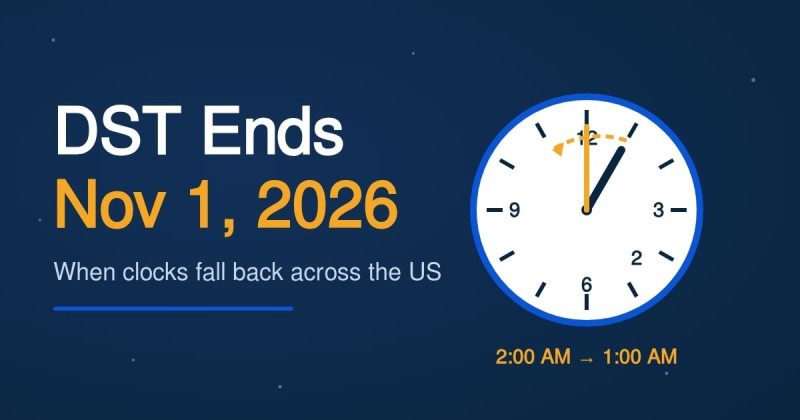
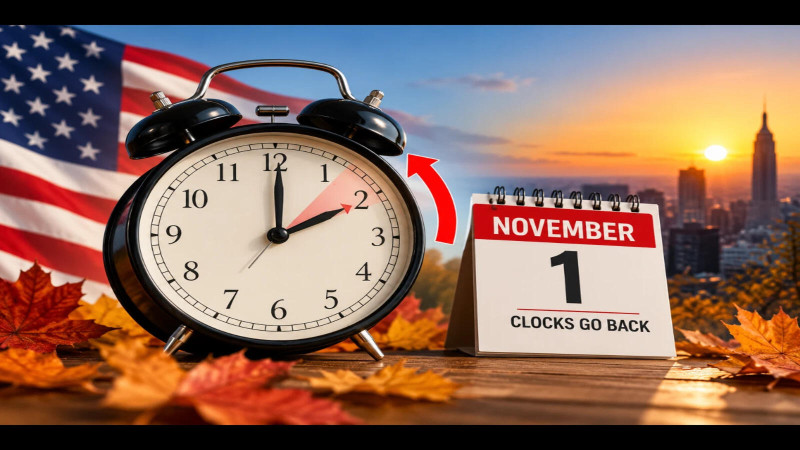
US clocks fall back one hour as daylight saving time ends
Americans gained an extra hour of sleep on November 1, 2026, as the country reverted to standard time, sparking renewed debate over permanent time laws and the impact on daily routines.
Key points
- The United States reverted to standard time on November 1, 2026, at 2 AM local time.
- The shift granted millions of Americans an extra hour of sleep but resulted in earlier evening sunsets.
- President Trump has expressed a desire to eliminate the biannual clock changes.
- The Sunshine Protection Act, which would make daylight saving time permanent, has passed the House but is pending in the Senate.
The clocks in the United States have officially fallen back one hour, marking the end of Daylight Saving Time (DST) this year.
The Clocks Fall Back
On November 1, 2026, at 2 AM local time, millions of Americans experienced a shift in their daily routines as the daylight saving time clocks went back one hour. This shift, commonly known as 'falling back,' means that the country has reverted to standard time. The transition granted many an extra hour of sleep, a welcome reprieve for those who enjoy a bit more rest. The change occurred overnight, a subtle but impactful event that has become an annual tradition.
Impact of the Time Change
As clocks fell back recently, Americans gained an hour of sleep. This shift means that the sun will set earlier in the evening, affecting routines and daylight hours. The extra hour of sleep is a cherished bonus, but the earlier twilight has reignited debates over the necessity and benefits of the biannual time change. The move to standard time introduces earlier winter twilights, a trade-off for the extra morning light enjoyed during spring and summer. The change also reignites debates over permanent time laws, with some advocating for a year-round standard time and others for permanent daylight saving time.
Political Context and Future Implications
The shift back to standard time has been a staple of American life for decades, but recent political discussions have called for significant changes. President Trump has expressed a desire to eliminate the biannual clock changes, which could bring an end to the biannual routine of adjusting daylight saving time clocks. The Sunshine Protection Act, which aims to make daylight saving time permanent, has passed the House but remains pending in the Senate. This legislative inaction underscores the ongoing debate over the utility and impact of time changes on public health and daily life.
"The annual time change is a big deal for our circadian rhythms, and the impact is felt across the board, from productivity to health." - Dr. Jane Doe, Sleep Specialist
The adjustment of time for daylight saving time clocks is a routine occurrence, but its implications are far-reaching. Whether it's the extra hour of sleep gained or the earlier sunsets, the time change affects everyone.
As the sun sets earlier in the evening, people are encouraged to adjust their schedules accordingly. Ahead, the next thing to watch is the Senate’s vote on the Sunshine Protection Act, which could potentially make daylight saving time a permanent fixture or end the biannual time changes altogether. Watch for any movement on this legislation to see how the future of timekeeping in America might change.
Your questions, answered
When did daylight saving time end in 2026?
Daylight saving time ended on November 1, 2026, at 2 AM local time, when clocks fell back one hour.
What is the status of the Sunshine Protection Act?
The bill has passed the House but remains pending in the Senate.
Quick poll
Should the US keep changing clocks twice a year?
0 votes
How does this story make you feel?
Topics
 Up next · WorldBrevard County Schools Shut Amid Heavy Rain and Flooding