North Carolina's Historic Senate Flip: Michael Whatley's Defeat and the Emergence of Roy Cooper
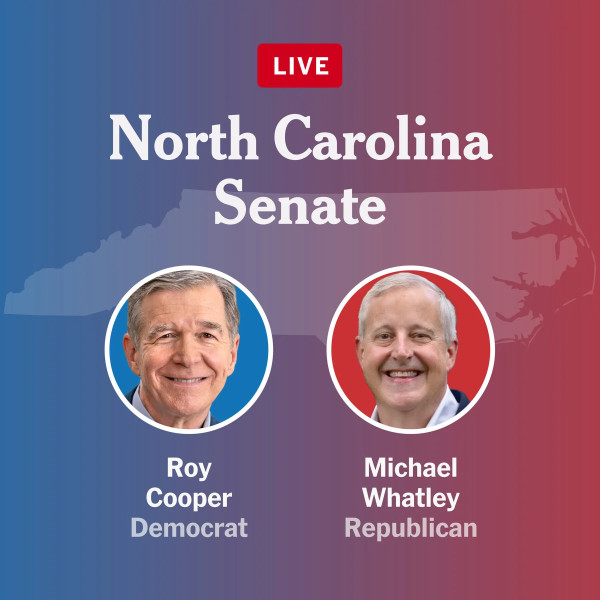
In the heart of North Carolina, the political landscape has shifted dramatically. Inside a bustling election headquarters, volunteers huddled around screens, their eyes fixed on the live updates. The atmosphere was electric, charged with a sense of anticipation and uncertainty. The North Carolina Senate race had been a closely watched contest, and the outcome was about to transform the state's political dynamics. The focus was on Michael Whatley, the Republican candidate, and his Democratic challenger, Roy Cooper. The race, which has been the focus of national attention, has seen a series of twists and turns, culminating in a historic moment for Democrats. Michael Whatley, a formidable opponent with a strong political pedigree, had been defeated by Roy Cooper, marking a significant shift in North Carolina's political landscape.
The Lead-Up to the Election
Michael Whatley, a well-known figure in North Carolina's political scene, had served as the chair of the Republican Party of North Carolina from 2019 until his election as the Republican National Committee (RNC) chair in 2024. His political career had been marked by a series of high-profile appointments and strategic moves that positioned him as a key player in the state's Republican Party. However, his tenure as a candidate for the Senate seat was relatively brief. His defeat by Roy Cooper signals a significant shift in the state's political dynamics, one that has national implications for the Republican Party's future in North Carolina.
The Victory of Roy Cooper
Roy Cooper, a two-term governor of North Carolina, had a well-established reputation as a strong leader who had never lost an election. His victory in the Senate race not only marked a significant milestone for Democrats but also highlighted the growing polarization of the state's politics. Cooper's victory was hailed as a major win for Democrats, who had been struggling to gain a foothold in the state's legislative landscape. His election to the Senate also marked the first time a Democrat had represented North Carolina in the Senate in a decade, a testament to the shifting political tides in the state.
"We've seen a groundswell of support for Roy Cooper, a testament to his leadership and the trust he has built with the people of North Carolina," said one political analyst. "His victory is a clear indicator of the changing political landscape in the state, where voters are increasingly looking for leaders who can bridge divides and bring about real change."
"I am deeply honored to have the opportunity to serve North Carolina in the U.S. Senate," Cooper said in his victory speech. "This election is a testament to the power of unity and the strength of our shared values. Together, we can build a brighter future for all North Carolinians."
Aftermath and Implications
The Senate race in North Carolina has had profound implications for the state's political landscape. The defeat of Michael Whatley has sparked a wave of speculation about the future of the Republican Party in North Carolina. Analysts are now looking at the potential for a broader shift in the state's political dynamics, with Democrats poised to make further gains in future elections. This victory has also highlighted the strategic importance of North Carolina in the national political landscape, where every seat counts in the increasingly polarized Senate.
"The defeat of Michael Whatley by Roy Cooper is a stark reminder of the volatility of North Carolina's political landscape," said a political expert. "The state's voters are increasingly looking for leaders who can bring about real change, and Roy Cooper's victory is a testament to his ability to connect with the people of North Carolina."
The victory of Roy Cooper in the North Carolina Senate race marks a significant moment in the state's political history. It signals a shift in the political landscape, with Democrats poised to make further gains in future elections. The defeat of Michael Whatley, a well-known figure in the Republican Party, has sparked a wave of speculation about the future of the Republican Party in North Carolina. This race has had profound implications for the state's political landscape, highlighting the strategic importance of North Carolina in the national political landscape. The victory of Roy Cooper is a testament to his leadership and the trust he has built with the people of North Carolina, a trust that will continue to shape the state's political future as Democrats and Republicans alike look to the next election cycles.
How does this story make you feel?
 Up next · PoliticsKalshi Predicts a Democratic Sweep in the 2026 Midterms