Japan Earthquake Shakes Chiba Prefecture: Latest Updates and Resilience Efforts
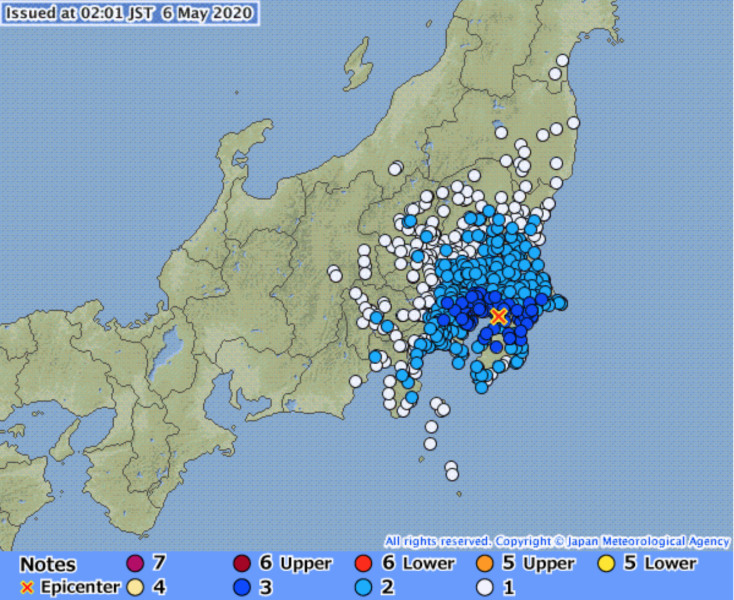
Japan earthquakes are again in the spotlight as a magnitude 5.4 tremor struck northeastern Chiba Prefecture recently. The seismic activity, typical in Japan's earthquake-prone landscape, has left authorities and residents on high alert
.Seismic Activity in Chiba Prefecture: A Recent Earthquake and Its Impact
A magnitude 5.4 earthquake recently struck northeastern Chiba Prefecture, Japan. The tremor, though powerful, did not result in a tsunami warning. This event underscores Japan's ongoing vulnerability to seismic activity, given its location on the Pacific 'Ring of Fire' where four tectonic plates converge. The Japan Meteorological Agency (JMA) provides crucial earthquake information, including hypocenter data, magnitude, seismic intensity, and tsunami potential. Following recent seismic activity, the JMA issued no tsunami warnings, but the region remains under close watch. The JMA’s Earthquake Early Warning system is instrumental in mitigating disaster damage by providing timely alerts to the public. The JMA's early warning system is a cornerstone of Japan's disaster preparedness. It quickly disseminates alerts to minimize potential damage and loss of life, especially in densely populated areas like Chiba. The magnitude 5.4 earthquake did not result in significant damage, but it did highlight areas of concern. Liquefaction, a phenomenon where soil loses its strength and stiffness, reappeared at 96% of sites hit by strong tremors. Damage was minimal or nonexistent at reinforced locations, emphasizing the importance of building codes and infrastructure resilience.
Japan's Seismic Landscape: Earthquakes and Preparedness
Japan earthquakes are a frequent occurrence due to its location on the highly active Pacific 'Ring of Fire'. The country experiences frequent tremors, making real-time monitoring and preparedness essential. The live earthquake tracker from the USGS and EMSC provides up-to-date information on magnitude, depth, location, and tremors. This data is critical for understanding the seismic activity and its potential impact. Japan's public broadcaster, NHK, offers live video, alerts, and feature stories about earthquakes, ensuring the public remains informed. The Japan Meteorological Agency’s (JMA) role in monitoring and reporting seismic activity cannot be overstated. The JMA provides comprehensive data on hypocenter, magnitude, seismic intensity, and tsunami potential, which is crucial for disaster management. In recent times, Japan has recorded significant seismic activity. The latest data shows that over 118 earthquakes have been recorded in the past 30 days, with the most recent being a magnitude 5.5 near Hamakita. Live seismic maps and alerts from sources like SeismoWatch help track these events in real-time, providing crucial information for both residents and authorities.
Resilience and Preparedness: Japan's Approach to Earthquake Mitigation
Japan's resilience in the face of frequent earthquakes is a testament to its advanced preparedness and infrastructure. The country's building codes and construction methods are designed to withstand significant seismic activity, minimizing damage and loss of life. Japan's approach to earthquake preparedness involves a multi-faceted strategy that includes robust infrastructure, early warning systems, and public education. The country’s public broadcaster, NHK, plays a crucial role in disseminating timely information, ensuring that residents are well-prepared for seismic events. The JMA’s Earthquake Early Warning system is a critical component of Japan's disaster preparedness. It provides real-time alerts, allowing authorities to take swift action and minimize potential damage. The next significant milestone to watch is the continuous monitoring and response to seismic activity. With Japan's location on the Pacific 'Ring of Fire', the potential for further earthquakes remains high. The ongoing efforts to enhance infrastructure and public awareness will be crucial in mitigating future risks.
How does this story make you feel?
 Up next · WorldSeattle Braces for High Winds in Latest Advisory