Big Walk: House House Confirms Limited AI Use
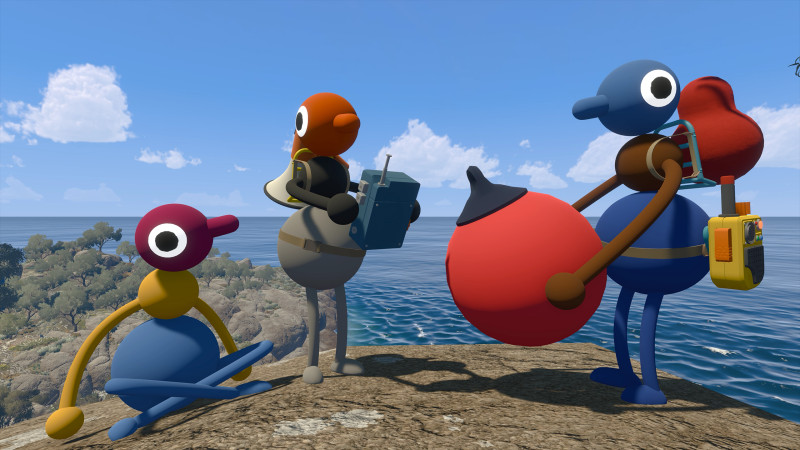
House House, the Australian indie studio behind the indie hit Big Walk, has confirmed the use of AI tools in the game’s final stages of development. This disclosure has reignited a debate about AI in gaming and its impact on industry awards.
House House's AI Disclosure
Big Walk, released recently, has been praised for its cooperative gameplay and player engagement. However, the game’s developers, House House, recently clarified that a small portion of the game’s code was generated using large language models (LLMs) and chatbots. The studios used these AI tools to address difficult technical challenges and bugs during the final stretch of development.
House House maintained that the AI usage was minimal, affecting only a tiny fraction of the game's code, well under 0.1%. This disclosure came after the Independent Games Festival (IGF) highlighted that some jurors would not vote for games that used generative AI in their development, which affected Big Walk’s eligibility for the Game of the Year nomination.
The Impact on the IGF Awards
The IGF, a prestigious event in the gaming world, has strict policies on AI usage. The festival’s rules state that games developed with generative AI are ineligible for certain awards, including the Game of the Year. According to IGF, generative AI could cost games votes, and this has sparked a larger debate about the role of AI in game development.
House House's statement prompted the IGF to clarify its stance on AI. The festival emphasized that while AI can be a valuable tool, its use must be disclosed transparently, and its impact on the game's development process must be minimal.
According to House House, “LLMs were used sparingly by House House to help work through difficult technical challenges and bugs.”.
The Future of AI in Game Development
The debate over AI in game development is far from over. House House’s disclosure has led to discussions about the ethical use of AI and the potential for more rigorous regulations in the industry.
House House’s statement did not specify the exact purpose of the AI tools used, but it did acknowledge that the tools were used to address technical challenges and bugs. This has raised questions about the extent to which AI can be used in game development and whether it should be considered a form of cheating.
The use of AI in game development is a complex issue. On one hand, AI can be a powerful tool for developers, allowing them to create more immersive and engaging games. On the other hand, it raises ethical questions about the role of human creativity in game development and the potential for AI to replace human developers.
Some industry experts believe that AI could revolutionize game development, allowing for faster and more efficient production processes. Others, however, are concerned about the potential for AI to devalue human creativity and the unique contributions that human developers bring to the table.
“The use of AI in game development is a complex issue. On one hand, AI can be a powerful tool for developers, allowing them to create more immersive and engaging games. On the other hand, it raises ethical questions about the role of human creativity in game development and the potential for AI to replace human developers,” said an industry expert.The industry will have to grapple with these questions as AI becomes more prevalent in game development. House House’s disclosure has sparked a necessary conversation about the role of AI in gaming and the need for transparency in its use. It remains to be seen how this debate will unfold and whether the industry will adopt new regulations governing the use of AI in game development.
How does this story make you feel?
 Up next · TechThe Unexpected Twist: Big Walk's AI Usage and Its Impact on the Gaming World