Big Walk's AI Controversy: House House's Game of the Year Ambitions Stumbled
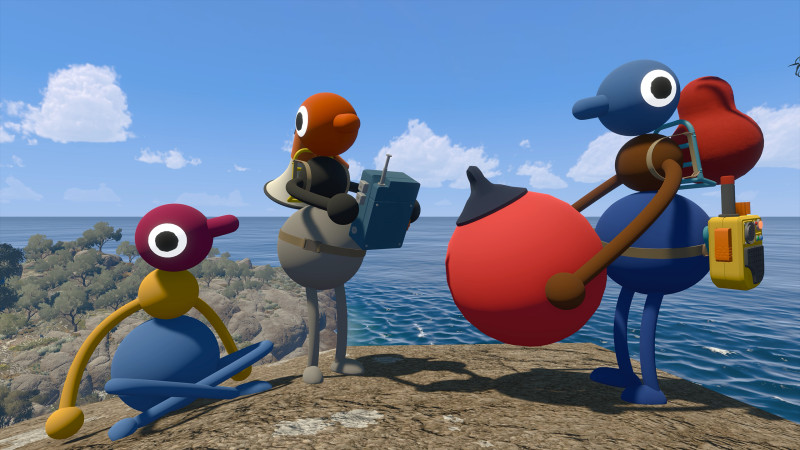
The indie gaming scene is abuzz with the recent revelation from House House, the Australian development team behind the acclaimed game Big Walk. The controversy stems from the studio's admission of using AI in the final stages of the game's development, leading to its disqualification from the coveted Game of the Year award at the Independent Games Festival or IGF games
Big Walk's Game of the Year Aspirations, AI Disqualification
House House announced that a small portion of the game's code, estimated to be less than 0.1%, was generated using Large Language Models (LLMs) and chatbots during the closing stages of development. According to House House, the AI tools were primarily used to address technical issues and were not integral to the core gameplay or storytelling elements. The studio released a statement via its FAQ page, detailing the AI usage and apologizing to those concerned about the impact of generative AI in gaming.
Despite the small percentage, the revelation has sparked significant debate. The Independent Games Festival (IGF) has a strict stance on the use of generative AI in game development. A portion of the IGF's jury has publicly stated they will not vote for any game that utilizes AI, making Big Walk ineligible for the Game of the Year.
Industry Reaction and the Future of AI in Gaming
The AI controversy surrounding Big Walk has divided opinions within the gaming community. Some argue that the use of AI, even in small amounts, compromises the authenticity of the creative process, while others view it as a necessary tool to enhance efficiency and innovation.
Seven-time IGF judge SlyDante noted that Big Walk was a dominant topic of discussion during the festival's voting process. The game's AI usage overshadowed its artistic and technical achievements, highlighting the polarizing nature of AI in game development.
In a broader context, the debate over AI in gaming reflects a larger conversation in the tech industry. As AI continues to evolve, so do the ethical and creative implications of its use. The controversy surrounding Big Walk serves as a reminder that while AI can be a powerful tool, it also raises significant questions about originality, creativity, and the future of game development. Although House House's use of AI was minimal, the fallout has been substantial, indicating that the industry is still grappling with how to integrate AI responsibly and ethically.
Look, the crux of the matter is this: While Big Walk may have missed out on the IGF's Game of the Year, the controversy has certainly made an impact. The game's AI usage has sparked a much-needed conversation about the role of AI in creative industries and how it should be regulated. Remind you of anything? Sound familiar? It's a debate that we might continue to see as AI technology becomes more sophisticated and widely used in the gaming world and beyond. Here's the thing: the future of AI in gaming is uncertain, and this controversy is just the beginning of what could be a long and complex journey. What's next for House House?
“The most-discussed game this year during IGF's voting process almost entirely involved its AI usage.” - SlyDante
Big Walk's AI usage has brought the IGF games controversy to the forefront, sparking debates about the ethics and future of AI in game development. Will this controversy lead to more stringent regulations on AI use in gaming, or will it pave the way for greater acceptance and integration of AI tools? The gaming community is left to ponder what this means for the future of their craft.
How does this story make you feel?
 Up next · TechNima Momeni Sentenced to 16 Years to Life for Killing Cash App Founder Bob Lee