Winter solstice 2025 marks shortest day in Northern Hemisphere
The 2025 winter solstice occurred on December 21, marking the shortest day and longest night in the Northern Hemisphere. This astronomical event signals the start of winter and a gradual increase in daylight hours.
Key points
- The winter solstice occurred on December 21, 2025, at 9:03 AM Central Standard Time.
- This event marks the shortest day and longest night for the Northern Hemisphere.
- In the Southern Hemisphere, the solstice marks the start of summer with the longest day.
- Daylight hours will gradually increase following the solstice until the summer solstice.
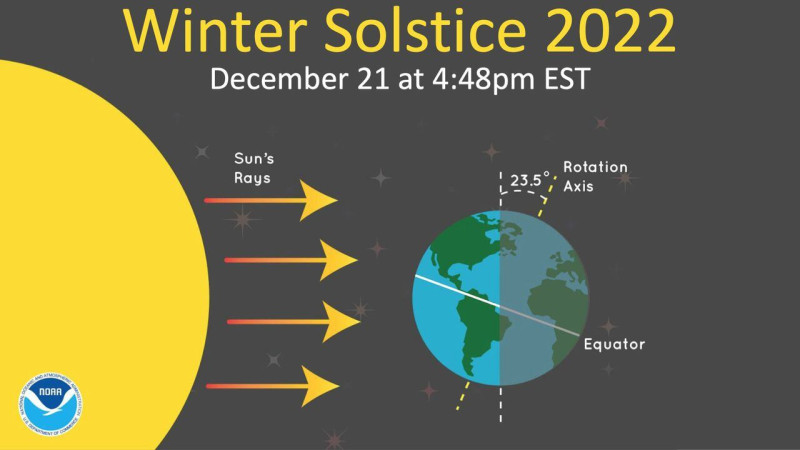
As of 2025-12-22, the winter solstice has just passed, and today marks the end of the shortest day of the year. This annual astronomical event, occurring on the winter solstice 2025, brings the longest night and shortest day of the year for those in the Northern Hemisphere. This pivotal moment happens when the Earth's axial tilt is at its maximum angle away from the Sun, leading to the shortest period of daylight and the longest period of darkness.
Understanding the winter solstice involves recognizing its astronomical significance. This event is marked by the Sun reaching its southernmost point in the sky, directly above the Tropic of Capricorn, a key milestone in the Earth's yearly orbital journey around the Sun. The first day of winter in the Northern Hemisphere officially begins on this day. Conversely, in the Southern Hemisphere, the winter solstice marks the start of summer, with the longest day and shortest night of the year.
Historically, the winter solstice has been a time of profound cultural and spiritual significance. For instance, ancient cultures celebrated this event with rituals and festivals that celebrated the return of longer days and the promise of renewed life and growth. Today, many traditions and celebrations continue to honor this astronomical event, reflecting its enduring importance in human history.
In 2025, the exact time of the winter solstice occurred on December 21 at 9:03 AM Central Standard Time (CST). At this precise moment, the Northern Hemisphere experienced its shortest day and longest night, marking the astronomical start of winter. Following the solstice, daylight hours will gradually increase, culminating in the summer solstice, which brings the longest day of the year.
As we move forward from the 2025 winter solstice, it's interesting to note that this event serves as a reminder of the cyclical nature of our planet's seasons. The shifting of daylight hours and the dance of the seasons offer a profound connection to the natural world, prompting reflection and celebration. Understanding the winter solstice and its astronomical and cultural significance enriches our appreciation for the Earth's dynamic and ever-changing environment.
In conclusion, today, December 22, 2025, is not the shortest day of the year, as the winter solstice has already occurred, marking the beginning of the longest night and the shortest day of the year. As we move forward, the days will gradually lengthen, offering a welcome return to longer daylight hours and the promise of warmer weather in the coming months.
Your questions, answered
When is the winter solstice in 2025?
The winter solstice occurred on December 21, 2025, at 9:03 AM Central Standard Time.
What does the winter solstice signify?
It marks the shortest day and longest night in the Northern Hemisphere and the start of summer in the Southern Hemisphere.
How does this story make you feel?
Topics
 Up next · ScienceUnderstanding sleet and its impact on Philadelphia weather