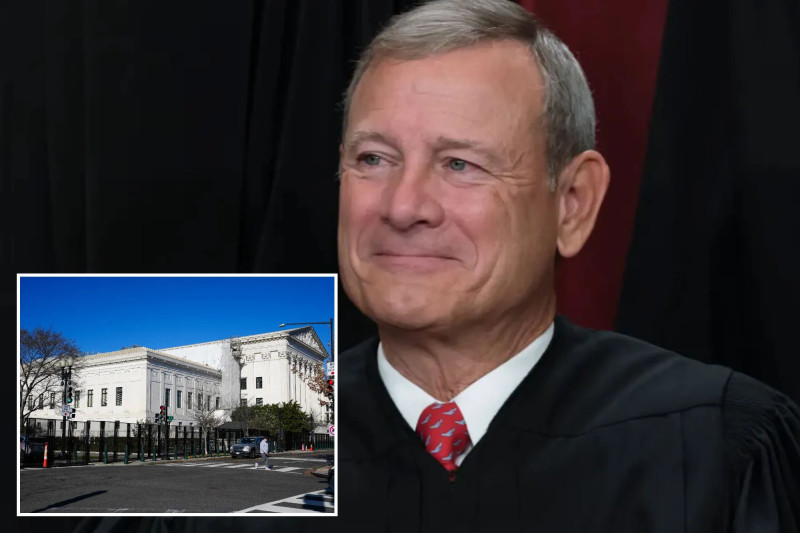
Chief Justice John Roberts has solidified his legacy as an unwavering defender of judicial independence, a theme that has dominated his recent speeches and reports. As the new year 2026 dawns, Roberts' emphasis on the judiciary's role as a "counter-majoritarian check" continues to resonate, especially in light of ongoing political tensions.
In his 2025 Supreme Court report, Roberts praised the Constitution as "firm and unshaken," a sentiment that echoes his public statements throughout the year. Despite growing concerns about attacks on judges and the rule of law, Roberts has repeatedly asserted that the nation's legal foundation remains robust. This stance is not merely a rhetorical defense but a call to action, urging Americans to maintain faith in the constitutional principles that underpin the judiciary's independence.
Roberts' defense of judicial independence has been particularly salient in the context of executive overreach. While he has not directly addressed specific conflicts, such as those between the Trump administration and federal judges, his messages have been clear: the judiciary must remain a separate and equal branch of government, free from political influence. This view is crucial as the nation grapples with potential constitutional crises and the erosion of trust in democratic institutions.
In a rare public appearance in Buffalo, New York, Roberts emphasized the importance of an independent judiciary, defending judges against calls for impeachment. He underscored that judicial independence is essential to check the excesses of other branches of government, a principle that has been tested in recent years. This defense was not just a reaction to immediate conflicts but a broader philosophical stance on the role of the judiciary in a democratic society.
Roberts' 2025 report, while avoiding direct references to contemporary conflicts, made a compelling case for judicial independence. He stressed the need for the judiciary to remain insulated from both legislative and executive pressures, a stance that underscores his commitment to upholding the rule of law. This perspective is particularly relevant in a political climate where the judiciary's role is often scrutinized and sometimes challenged.
As we move into 2026, Roberts' calls for judicial independence are more timely than ever. With the nation's legal foundation under scrutiny, his leadership serves as a beacon of stability and a reminder of the judiciary's critical role in safeguarding democratic principles. For Chief Justice John Roberts, judicial independence is not just a legal doctrine but a cornerstone of American democracy, ensuring that the rule of law remains unshaken and the Constitution continues to guide the nation through tumultuous times.