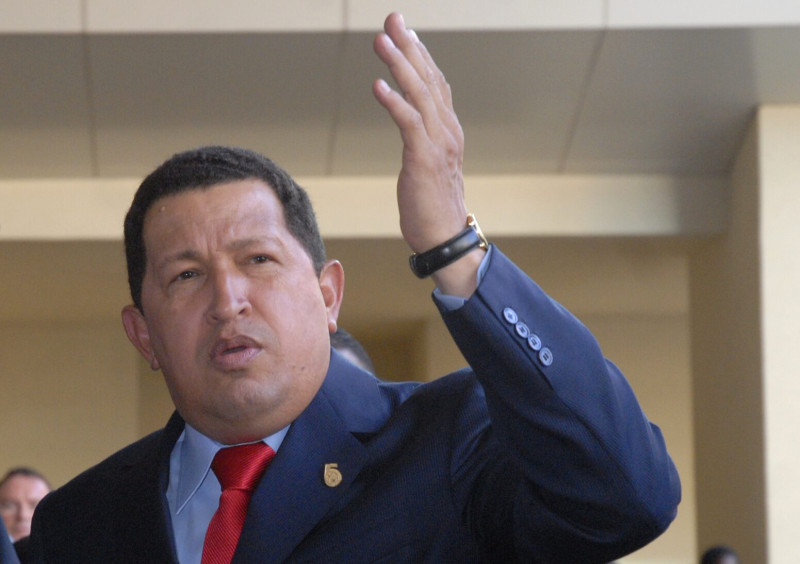
Hugo Chávez, a name that continues to evoke strong emotions across Venezuela and the world, was a figure of both admiration and controversy. Born in a small Venezuelan village on July 28, 1954, Chávez's rise to power marked a pivotal moment in the country's political history, shaping a decade and a half of governance .
Chávez's background was far from typical for a Latin American president. Born into a humble family of school teachers, his upbringing was marked by struggle and hardship, a stark contrast to the elite backgrounds of many of his predecessors. This unique background played a significant role in shaping his political ideology and his connection with the Venezuelan people .
Chávez first gained national prominence in 1992 when he led a failed coup against the government of Carlos Andrés Pérez. Although the coup was unsuccessful, Chávez's charismatic personality and his ability to articulate the frustrations of the Venezuelan people made him a household name. This event set the stage for his eventual rise to the presidency in 1998, where he secured a resounding victory with 56% of the vote. Chávez's election marked the end of four decades of domination by Venezuela's traditional two-party system and ushered in a new era of Bolivarian Revolution and socialist reform .
As president, Chávez sought to implement a range of social and economic reforms aimed at reducing poverty and inequality. He nationalized key industries, including oil, and used the revenues to fund social programs such as education, healthcare, and housing. Chávez's policies, while popular among the poor, were highly controversial and led to significant opposition from the Venezuelan elite and the international community. Critics argued that his policies led to economic instability, corruption, and the erosion of democratic institutions .
Chávez's legacy is complex and multifaceted. On one hand, he is remembered for his efforts to improve the lives of Venezuela's poorest citizens and his advocacy for Latin American integration and anti-imperialism. On the other hand, his rule was marked by authoritarian tendencies, human rights abuses, and the deterioration of Venezuela's democratic institutions. Chávez's death in 2013 left a vacant power struggle, and Venezuela has since grappled with political instability, economic crisis, and social unrest .
Hugo Chávez's life and presidency continue to be a subject of intense debate and analysis. Whether viewed as a revolutionary hero or a divisive authoritarian, there is no denying that Chávez's impact on Venezuela and Latin America is profound and enduring. Understanding his legacy requires a nuanced examination of his achievements, failures, and the broader context in which he operated .