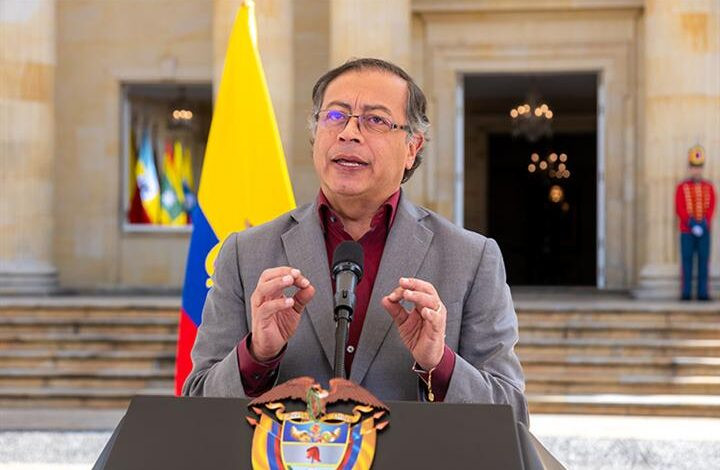
Gustavo Petro, the President of Colombia, has been at the center of a diplomatic storm following a series of military actions by the United States in neighboring Venezuela. Petro has made several claims and issued statements that have raised concerns and drawn international attention, highlighting the complex geopolitical dynamics in the region.
Gustavo Petro has been actively involved in responding to the recent US military actions in Venezuela, which have sparked a flurry of diplomatic activity. Petro's statements have been pivotal in shaping the narrative around these actions, particularly his claims that the US targeted a facility operated by the ELN (Ejército de Liberación Nacional), a left-wing guerrilla group, in Venezuela. According to Petro, the bombing occurred at a factory in Maracaibo, although the targeted company denies any attack and the information does not match the White House’s account.
Petro has taken a strong diplomatic stance, calling for emergency meetings of the United Nations (UN) and the Organization of American States (OAS) to address the situation. His call to these international bodies underscores the gravity with which he views the US actions, which he believes require immediate diplomatic intervention. Petro's call for these meetings was made through a series of posts on social media platform X, where he emphasized the need for a coordinated international response to the attacks. These diplomatic efforts are part of a broader strategy to address the humanitarian and political fallout from the strikes, which Petro fears could lead to further instability in the region.
In a recent development, Petro ordered the deployment of Colombian troops to the Venezuelan border, citing concerns over the potential for increased conflict and unrest in the region. This move comes after the US strikes in Venezuela, which have raised tensions and prompted a series of precautionary measures from the Colombian government. Petro's decision to send troops to the border is aimed at ensuring the safety of Colombian citizens and preventing any potential spillover of violence from the ongoing US military operations in Venezuela.
One of the most controversial claims by Petro is that the US bombing in Venezuela targeted a suspected cocaine factory in Maracaibo, a port city in the country. This claim has sparked speculation and debate, as it suggests a direct link between the US military actions and drug trafficking operations in the region. Petro's accusation adds another layer of complexity to the already tense situation, as it implicates the US in direct military intervention against drug-related activities in Venezuela.
Petro's statements have also sparked a debate over the US's military operations in the region, particularly concerning allegations that a recent US military boat attack off Venezuela killed Colombian citizens. This claim, if true, would have significant implications for bilateral relations between the US and Colombia, as well as for the broader diplomatic landscape in Latin America. Petro's accusations have been met with both support and criticism, reflecting the polarizing nature of the issue and the differing views on the US's military actions in the region. Petro has expressed his concerns over the lack of transparency in the US operations, which he believes could have resulted in the deaths of innocent civilians, including Colombians.
Petro's recent diplomatic efforts, including his call for emergency meetings of the OAS and the UN, reflect his commitment to a multilateral approach to addressing the crisis in Venezuela. By calling for these meetings, Petro aims to leverage international support and pressure to address the humanitarian concerns arising from the US military actions. His efforts also underscore the importance of regional cooperation in maintaining stability and security in Latin America, particularly in the face of external interventions.