Caster Semenya and the IOC's Latest Stance on Gender in Sports
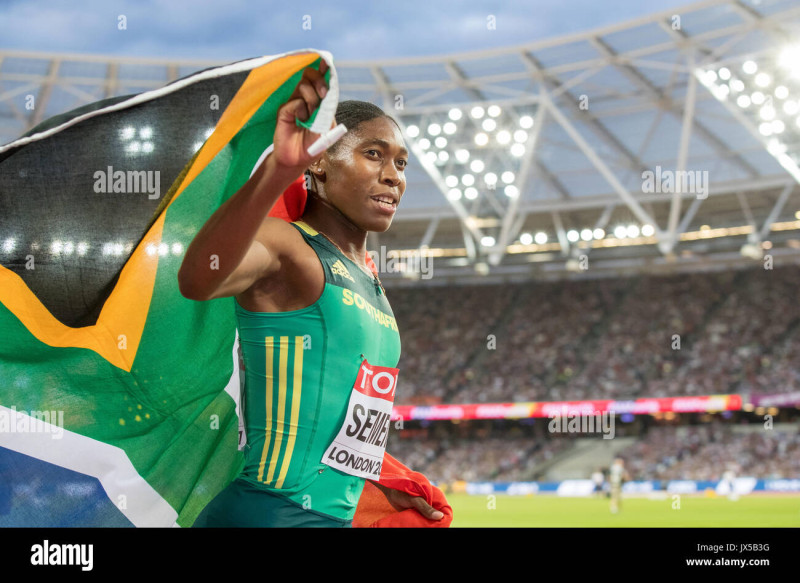
Look, here we are again, talking about the Olympics, Caster Semenya, and the ongoing debate about transgender athletes, differences in sex development, and inclusion in women's sports. The International Olympic Committee (IOC) has just announced a new policy that's set to stir up even more controversy. So, let's dive in and see what's going on.
IOC's New Policy: A Deep Dive into the Controversy
The IOC has published a 10-page policy document that restricts not only transgender women but also athletes like Caster Semenya, who have differences in sex development (DSD). This decision affects a range of athletes who have been competing in women's sports for years, sometimes even winning gold medals, only to be suddenly excluded from the 2028 Los Angeles Olympics. The policy specifically targets athletes with variations in sex characteristics, such as Semenya, who won gold in the 800 meters at the 2016 and 2012 Olympics.
Here's the thing: the IOC's new policy defines eligibility for female categories based on a one-time SRY gene screening, claiming it's a "science-based step to protect fairness, safety, and integrity in the female category." But Semenya, among other athletes, has criticized the IOC's inconsistent gender rules, arguing that the lack of clear leadership has led to a mess of controversies. For instance, the boxing gender controversy at the 2024 Paris Olympics was overshadowed by the disqualification of Algeria's Imane Khelif and Taiwan's Lin Yu-ting due to failing gender eligibility tests at the 2023 World Championships.
Sound familiar? This isn't the first time Semenya has been at the center of a gender eligibility storm. Back in 2009, she exploded into the public consciousness when she won gold in the 800 meters at the World Championships and was subject to gender testing. This led to a long legal battle, which she ultimately lost, and restrictions on her participation in women's events.
Caster Semenya's Response: Calling for Consistency and Clarity
Semenya has been outspoken about the IOC's handling of gender issues, calling for consistent policies that protect all athletes, including those with DSD. In an exclusive interview, she reflected on her transition to coaching and family life, emphasizing that the current rules are unfair and discriminatory. She argues that the IOC's policies are inconsistent and lack the necessary clarity to support athletes with DSD, despite their biological differences having been present since birth.
And then—get this—Semenya has even offered to help the IOC develop more comprehensive and inclusive policies. She’s suggested that the IOC should consider the unique challenges faced by athletes with DSD and work towards a more nuanced and understanding approach. After all, the goal should be to create an inclusive environment where everyone can compete fairly, regardless of their biological variations.
“I’m not against fair play, but I think the IOC has to acknowledge that there are different types of athletes and that we all deserve a fair chance to compete. The current rules are outdated and don’t reflect the diversity of our athletes,” Semenya stated.
The Future of Gender Inclusion in Sports: What Lies Ahead?
As we move forward, the debate around gender inclusion in sports remains as hot as ever. The IOC's new policy has certainly sparked a firestorm, with many athletes and advocates calling for a more inclusive approach. And then—get this—the IOC’s decision to implement a one-time SRY gene screening has raised serious questions about what it means to be a female athlete in the modern era.
The policy's impact on Semenya and other athletes with DSD is profound. It excludes them from competing in the female category without a fair and transparent process. Critics argue that the policy fails to recognize the complexity of gender and biological variations, leading to a rigid and exclusionary framework. This is particularly troubling given the IOC’s stated commitment to inclusivity and fairness.
So, what does this mean for the future of gender inclusion in sports? Well, it’s a complex issue with no easy answers. The IOC’s decision to enforce such stringent regulations has sparked a broader conversation about how to balance fairness, safety, and integrity in sports while also promoting inclusivity. Athletes, advocates, and sports organizations are calling for a more nuanced approach, one that recognizes the diversity of human biology and creates opportunities for all athletes to compete fairly. For those of us who follow sports, this is more than just a policy change—it’s a reflection of the broader societal debate over identity, inclusion, and fairness.
For now, the debate rages on, and Semenya continues to fight for the right to compete on her terms, reminding us all that the world of sports is always evolving, and sometimes, the most unexpected athletes can lead the way.
How does this story make you feel?
 Up next · SportsPirates vs. Mets: A Clash of Titans on Opening Day 2026