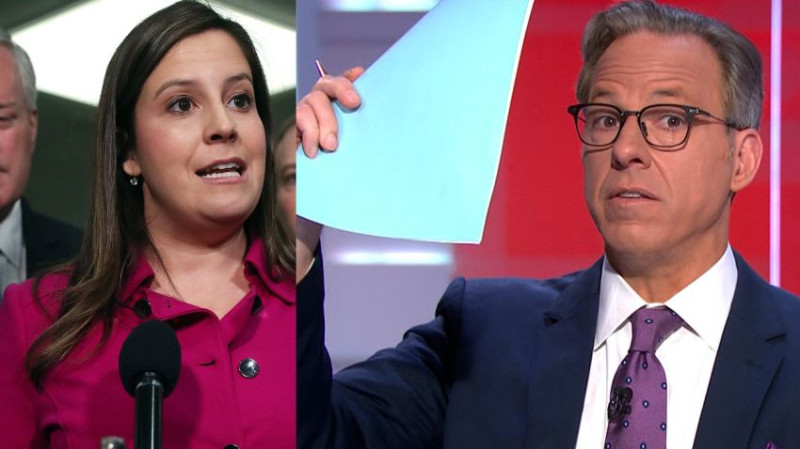
Elise Stefanik is back in the headlines, under a barrage of scrutiny amidst her latest appearance on CNN's "State of the Union." The Republican Congresswoman for New York's 21st district has often found herself in the eye of the storm, but recent debates have escalated tensions to unprecedented levels. Her clashes with CNN anchor Jake Tapper over controversial statements by President Trump and her controversial book, Poisoned Ivies have sparked heated discussions. The question remains: where does Elise Stefanik stand and how does she navigate these contentious issues?
The Clash with Jake Tapper: Iran and Beyond
On a Sunday morning, the air crackled with tension as Tapper and Stefanik faced off over Trump's statements on Iran. Trump had declared that a "whole civilization will die" in Iran, a statement that Tapper framed as a “call for genocide.” Stefanik, however, fiercely defended Trump, asserting that the media had misrepresented his words. The heated exchange left viewers questioning the true intent behind Trump's remarks and Stefanik's steadfast defense.
The Book that Stirred the Pot: Poisoned Ivies
Stefanik's controversial book, Poisoned Ivies, has become a flashpoint in the debate over campus politics. The book delves into allegations of antisemitism and radicalization on college campuses, positioning Stefanik as a champion against what she perceives as academic rot. The book has been met with both praise and scorn, with critics accusing her of oversimplifying complex issues and stirring division.
The Spin and the Counterspin
Elise Stefanik has consistently stood by her views, often clashing with media outlets like CNN. When asked about the "genocide" accusation, Stefanik sharply replied, "Shame on CNN for saying that," emphasizing her belief in the misinterpretation of Trump's words. This defended stance has polarized public opinion, with supporters hailing her as a voice of reason and critics decrying her as a controversial figure.
CNN anchor Jake Tapper repeatedly insisted that President Donald Trump had openly called for "genocide" in Iran, prompting a quick response from his Sunday morning guest, Rep. Elise Stefanik (R-NY).
The question that lingers is: How will Stefanik's recent stances on controversial topics shape her political future? Will she continue to be a polarizing figure, or will her views gain broader acceptance? The dynamics of her relationship with the media and her constituents will be crucial in determining her trajectory.
The implications of Elise Stefanik's latest controversies are far-reaching, impacting not only her political career but also the broader conversation about media bias, political rhetoric, and the state of American universities. As the dust settles from her latest appearances, the reverberations of her words and actions will continue to ripple through the political landscape, shaping the narrative and perhaps altering the course of future debates.
Think again about the intricate dance of politics and media. How does a single interview ignite a firestorm?