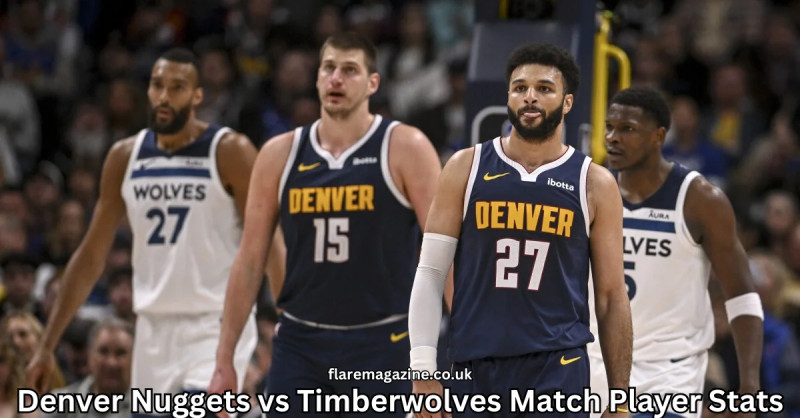
As the buzzer sounded and the crowd began to disperse, the atmosphere at the Ball Arena was electric. The Denver Nuggets, fresh off a dominant 118-104 victory over the Minnesota Timberwolves, had once again flexed their muscle in the Western Conference.
Nuggets' Offensive Prowess: A Statistical Deep Dive
Nikola Jokic, the reigning two-time MVP, was the central figure in the Nuggets’ triumph. He finished with an impressive 30 points and 12 rebounds, showcasing his unmatched versatility and court awareness. Jokic’s ability to orchestrate the offense, facilitate scoring opportunities, and dominate the paint is a testament to his elite status. “Jokic is just on another level,” said a local sports analyst.
Jokic’s playmaking was complemented by a balanced offensive effort from his teammates. Jamal Murray, Bruce Brown, and Michael Porter Jr. all contributed significantly, ensuring that the Timberwolves' defense was stretched thin. Murray, in particular, was a standout performer, scoring 22 points and dishing out 8 assists while maintaining a 60.0% field goal percentage.
Timberwolves' Defensive Struggles: Key Metrics
The Timberwolves, despite their valiant efforts, struggled to keep pace with the Nuggets’ offensive firepower. Anthony Edwards, who has been a standout performer all season, managed to score 23 points but was less efficient, shooting a mere 39.1% from the field. Edwards’ teammates also faced difficulties, with the overall team shooting percentage hovering around 42.9%. This discrepancy in shooting efficiency played a crucial role in the Nuggets’ victory, as they capitalized on the Timberwolves' misses to extend their lead.
Defensively, the Timberwolves failed to contain Jokic and Murray, who dominated both the paint and the perimeter. The Nuggets' offensive rebounding and second-chance opportunities were a significant factor, with Jokic pulling down 12 rebounds, many of which were offensive. The Timberwolves' inability to secure defensive rebounds allowed the Nuggets to maintain a high offensive rebound rate, which was pivotal in their victory.
“The Nuggets' ability to convert second-chance points and maintain a high offensive rebound rate was a game-changer,” said a veteran NBA coach.
Key Matchups and Tactical Nuances
The matchup between Edwards and Jamal Murray was a highlight reel in itself, with both players showcasing their offensive prowess. Murray’s relentless drive to the basket and his ability to create scoring opportunities for his teammates were critical in maintaining the Nuggets’ lead. In contrast, Edwards struggled to find his rhythm, often relying on isolation plays and failing to involve his teammates.
The Nuggets' tactical adjustments, particularly in the second half, proved crucial. Coach Michael Malone’s decision to switch to a zone defense in the second half forced the Timberwolves into difficult shots and disrupted their offensive flow. This strategic change, combined with the Nuggets' tenacity on the boards, ensured that the Timberwolves could not mount a comeback.
“Malone’s strategic adjustments and the Nuggets’ relentless defense in the second half were the difference-makers,” noted an NBA analyst.
As the final seconds ticked away, the Nuggets’ bench erupted in celebration. The players exchanged high-fives and hugs, basking in the glory of a hard-fought victory. The Timberwolves, meanwhile, trudged off the court, their heads down, contemplating what might have been. The Nuggets' 10-2 recent dominance over the Timberwolves underscores their superior performance, despite a 2-2 split in the 2025-26 season. In the next game, the Timberwolves face a critical matchup against the Denver Nuggets as they strive to regain their form and secure a playoff spot.