Hantavirus Concerns in Georgia Following Cruise Ship Scare
In the quiet town of Savannah, Georgia, residents were jolted out of their routine by news of a hantavirus scare. Two locals have returned home from a cruise on the MV Hondius, a ship currently at the center of a hantavirus outbreak in the North Atlantic. The Georgia Department of Public Health is closely monitoring the pair, ensuring they show no signs of the virus.
Understanding Hantavirus and Its Spread
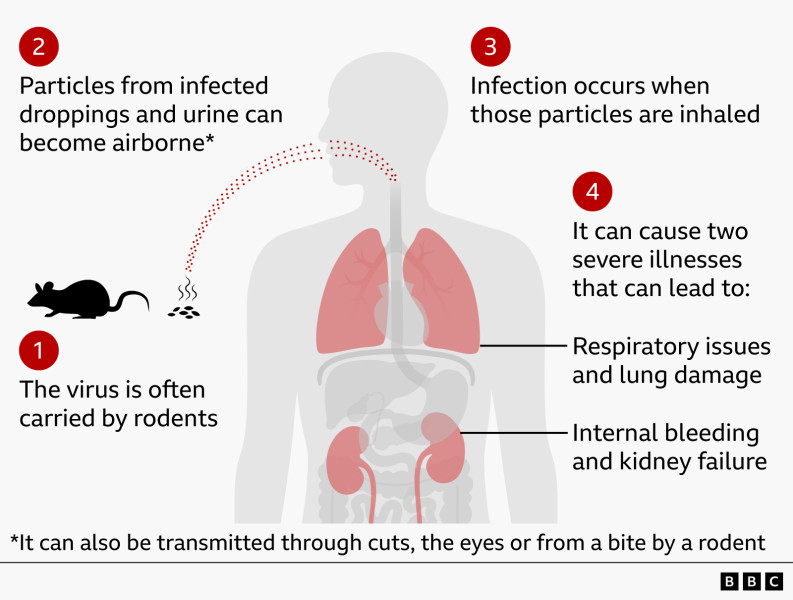
The hantavirus is not a new threat, but its current resurgence has sparked concern. This virus is primarily spread through rodents, particularly deer mice, which can transmit it to humans via their droppings, urine, or saliva. The virus is most commonly found in rural and semi-rural areas, where rodents thrive. "The most common way people contract hantavirus is by inhaling dust contaminated with rodent droppings or urine," says Dr. Emily Thompson, a virologist at the Centers for Disease Control and Prevention (CDC). "It's crucial to avoid contact with rodent-infested areas and to thoroughly clean any rodent droppings or urine found in living spaces."
The Current Hantavirus Outbreak and Cruise Ship Connections
The recent hantavirus outbreak on the MV Hondius cruise ship has raised questions about how the virus spreads in confined spaces. Passengers from the cruise have been monitored in several states, including Georgia, California, and Arizona. The ship's confined environment likely exacerbated the situation, making it easier for the virus to spread. "The cruise ship scenario is very different from typical hantavirus cases," explains John Parker, an infectious disease specialist at the CDC. "The close quarters and shared spaces make it easier for the virus to spread, even when it's not the typical rodent-to-human transmission." This outbreak has highlighted the need for enhanced monitoring and safety measures on cruise ships.
Monitoring and Management: The Current Response in Georgia
Georgia's Department of Public Health is taking the situation seriously. The two monitored individuals have shown no signs of infection, but the department is keeping a close eye on their health. Health officials are emphasizing the importance of vigilance and early detection. "We are monitoring the situation closely and will take immediate action if any signs of infection appear," said a spokesperson for the Georgia Department of Public Health. "Our priority is to ensure the safety of our residents and to prevent the spread of the virus."
As of now, the hantavirus death rate remains a concern, though it's relatively low. According to the CDC, the fatality rate for hantavirus pulmonary syndrome (HPS), the most severe form of the illness, is around 38%. Early detection and proper treatment can significantly improve survival rates. The Georgia Department of Public Health is taking no chances, emphasizing that early detection and monitoring are key to managing the outbreak. "Our priority is to ensure the safety of our residents and to prevent the spread of the virus," said the spokesperson. "We are monitoring the situation closely and will take immediate action if any signs of infection appear."
The hantavirus outbreak on the MV Hondius cruise ship is a stark reminder of the virus's potential to spread in unexpected settings. As the monitored individuals in Georgia continue to show no signs of infection, the state's health officials remain vigilant. The current situation underscores the importance of continued monitoring and enhanced safety measures to prevent further spread of the virus. "We're not out of the woods yet," said Dr. Thompson. "This virus is a serious threat, and we need to remain vigilant."
“We’re doing everything we can to ensure the safety of our residents,” said the spokesperson for the Georgia Department of Public Health. “Our priority is to prevent the spread of the virus and to protect our community.”
How does this story make you feel?
 Up next · HealthUnraveling the Mystery: How Did Kyle Loftis Pass Away?