Maryland's Question 3: A Pivotal Moment for Congressional Redistricting
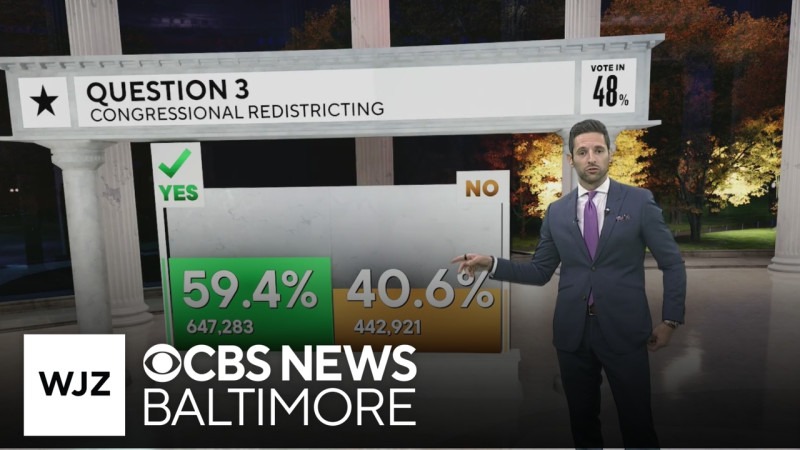
In a political landscape akin to watching a chess grandmaster make a decisive move, Maryland's voters have recently made a significant decision that could reshape the state's political boundaries. Maryland's Question 3, a measure that seeks to clarify guidelines for redrawing congressional districts, has been a hot topic of conversation. The ballot initiative, if passed, would have profound implications for the redistricting process.
The Implications of Question 3 on Congressional Redistricting
The approval of Question 3 means that the guidelines in the Maryland Constitution requiring legislative districts to respect natural boundaries and political subdivisions would no longer apply to congressional districts. This change could lead to a more flexible and potentially more partisan redistricting process. The measure, introduced and passed by Democratic leadership in the General Assembly during a special session this summer, is a bold move that has sparked both praise and criticism
The Controversy Surrounding Question 3
The passage of Question 3 has been met with a mix of reactions. Supporters argue that the new guidelines would allow for more efficient and fair redistricting, better aligning districts with current population and demographic data. However, opponents contend that the change could lead to gerrymandering, potentially giving one party an unfair advantage in future elections. The debate has intensified recently, with both sides presenting their cases vigorously
Cultural and Political Reflections
Maryland, a state rich in cultural diversity and historical significance, has always been a political battleground. The passage of Question 3 adds another layer to this complex tapestry. The state's political environment is a microcosm of the nation's broader struggles over representation and fairness in elections. As Maryland navigates this new terrain, it will be interesting to see how the state adapts and whether the new guidelines will lead to more equitable representation or further polarize the political landscape.
One thing is clear: the passage of Question 3 is a watershed moment for Maryland's political future. As the state moves forward, the impact of this decision will be closely watched, much like the historic battles fought over redistricting in the past. The echoes of these debates may well resonate for generations, shaping the political landscape and the lives of Maryland's citizens in ways yet to be fully understood
Maryland's decisions have often echoed in the halls of history, from its pivotal role in the Civil War to its status as a cultural hub today. Whether this latest chapter in the state's political saga will be remembered as a triumph of democratic principles or a cautionary tale of partisan maneuvering remains to be seen
How does this story make you feel?
 Up next · PoliticsLouisiana Primary Election Results: A Historic Shift