Madison Shooting: Community in Turmoil After Fatal Encounter

On Wednesday, July 22, 2026, tension gripped the bustling streets of Madison, Wisconsin, as a routine police encounter turned deadly. Corey Ruiz, a 38-year-old man with a complex past, was fatally shot by Madison police officers in broad daylight, sparking an outpouring of grief and outrage among the community.
Who is Corey Ruiz, and How Did the Shooting Unfold?
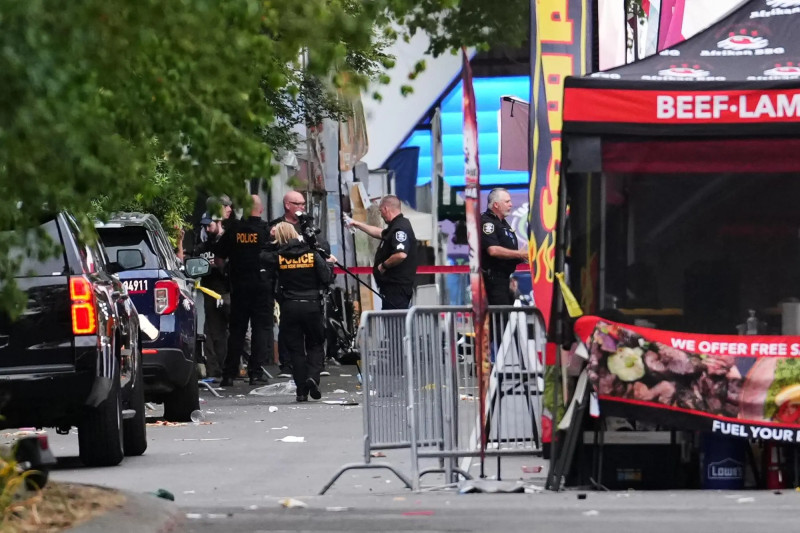
Corey Ruiz, 38, was identified as the man shot by police on Williamson Street, a bustling intersection known for its vibrant street life and close-knit community. The incident occurred in the heart of the Willy Street neighborhood, where residents and pedestrians were forced to watch in horror as the events unfolded. Ruiz, identified as a violent ex-con with a lengthy criminal record, was reportedly armed with a knife during the confrontation with police.
The shooting took place in broad daylight, an hour before the sunset, as the bustling streets of Madison were alive with the evening's energy. Witnesses reported seeing officers respond to a disturbance, and the situation escalated rapidly. Despite the chaotic scene, Ruiz was killed in front of a growing crowd of onlookers, who were left to grapple with the aftermath.
Madison Police Chief John Patterson held a press conference shortly after the incident, urging residents to keep the Willy Street neighborhood and the "historical trauma" that arises from officer-involved shootings in mind. Patterson acknowledged the pain and confusion within the community, calling for unity and understanding during this difficult time. Police have yet to disclose the names of the officers involved in the shooting, citing an ongoing investigation.
Community Reaction and the Call for Justice
In the immediate aftermath of the shooting, the community erupted in a chorus of grief and anger. Protests quickly formed along Williamson Street and South Baldwin Street, with crowds of hundreds of people chanting Corey Ruiz's name, demanding answers, and calling for justice.
At the heart of the community's outcry is a deep-seated frustration with the lack of transparency and accountability in police actions. The shooting of Corey Ruiz is not an isolated incident; it echoes a pattern of police violence that has left deep scars in Madison's neighborhoods, particularly in communities of color. Protesters, led by local leaders and activists, demanded immediate action, determined to ensure that Ruiz's death would not be another statistic in a growing list of police-involved shootings.
“Justice for Corey Ruiz” became a rallying cry, resonating through the streets and social media platforms. Many took to the streets to honor his memory, calling on officials to disclose more details about the shooting and to hold those responsible accountable.
“Madison has always been a community of activists, and this is our response to injustice. We will not be quiet. We will not sit back. We will not let this happen again,” said a local activist during the protest.
The Road to Accountability and Healing
A crucial question remains: can Madison heal from this wound, and can the community trust that justice will be served? Madison Mayor, in a recent press conference, called for calm, acknowledging the pain and frustration within the community. She identified Corey Ruiz as the man who was shot by police and urged a peaceful resolution to the growing tensions.
In the coming weeks, the Division of Criminal Investigation (DCI) will conduct a thorough review of the incident, a process that could take several weeks or months to complete. This review will be crucial in shedding light on the circumstances surrounding Ruiz's death and in addressing the community's calls for transparency and accountability. Previous investigations by the DCI have taken anywhere from weeks to months, with the most high-profile shooting, involving Tony Robinson in 2015, taking over two months to conclude.
Community leaders and activists are already urging the DCI to expedite the investigation and release its findings as soon as possible. The impending release of the DCI report, expected in the coming weeks, will be a pivotal moment for the community, offering a chance for answers and for healing to begin. For now, Madison stands at a crossroads, grappling with a tragic loss and the weight of a community's collective pain. The city braces for the imminent release of the report, hoping for clarity and justice for Corey Ruiz, the man whose life ended on Williamson Street.
How does this story make you feel?
 Up next · WorldTropical Depression Bertha: The Storm's Lingering Impact on Houston