US and France Clash at United Nations Security Council
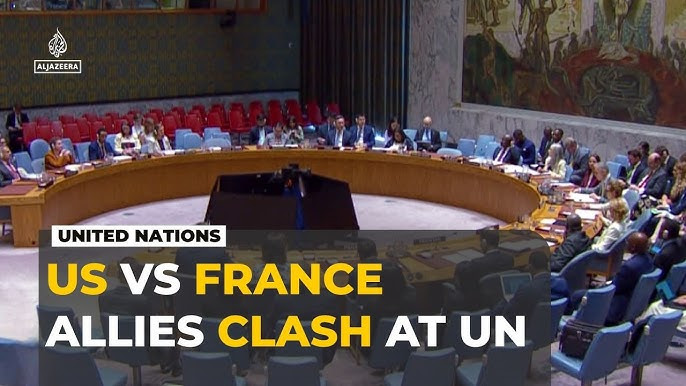
The lights flickered on in the UN Security Council chamber, casting a tense glow as the US delegation abruptly rose and exited the room during a heated exchange. The atmosphere was thick with tension, the air heavy with the weight of diplomatic relations straining under the spotlight. At the center of this storm were the US and France, two historically allied nations now locked in a public dispute over human rights.
The Spark That Ignited the Diplomatic Fire
On a sweltering July day, the diplomatic row between the US and France came to a head during a UN Security Council meeting. The session, initially focused on Ukraine, quickly devolved into a clash of ideologies and public criticism. The US walked out of the meeting in response to comments made by France, which likened Washington's voting behavior on human rights to that of authoritarian states.
"It was a shock," remarked one UN official who wished to remain anonymous. "The US delegation's walkout was a stark reminder that even the closest allies can have profound disagreements. This incident underscored the fragility of international cooperation." The dispute was not just about a single vote but a broader disagreement over the direction and priorities of the UN Security Council.
The Underlying Tensions
The discord between the US and France at the UN Security Council extends beyond the immediate controversy. The recent escalation is part of a deeper rift between President Donald Trump and French President Emmanuel Macron, a tension that has been growing for years. The strain touches on multiple issues, including the reappointment of the UN human rights chief and broader disagreements over global human rights policies.
At the heart of the dispute is the reappointment of Volker Türk, the UN human rights chief. France has been a vocal critic of the US's stance on human rights, arguing that Washington's voting behavior aligns more with authoritarian regimes than with democratic principles. The US, on the other hand, has defended its position, insisting that its actions are rooted in a commitment to human rights and democratic values.
Unraveling the Tie That Binds
The walkout by the US delegation sent shockwaves through the international community, highlighting the fragility of alliances even among the closest of friends. The move was seen as a dramatic escalation of tensions, a public display of discord that had long been brewing below the surface. The incident has raised questions about the future of US-France relations and the broader implications for international cooperation.
"We need to understand that this is not just about a single vote or a single comment," explained a seasoned diplomat who has worked closely with both nations. "It’s a symptom of a deeper issue—one that goes to the heart of how we define and uphold human rights in a global context."
"This is not just about a vote; it’s about the soul of the United Nations," said an unnamed UN official. "If we can’t agree on the basics of human rights, what does that say about our ability to address more complex issues?"
The meeting ended as abruptly as it had begun, with the USA delegation's departure leaving a palpable silence. The room buzzed with whispers and speculative glances, the weight of the day's events settling heavily on the shoulders of those present. The implications of this dispute linger, casting a shadow over the future of international diplomacy and human rights in the global arena. The dispute over human rights and the walkout at the UN Security Council is a stark reminder of the complexities and challenges that lie ahead for the UN Security Council and its member states. As the world watches, the US and France must navigate these treacherous waters, balancing their differences with the need for unified action on the global stage.
How does this story make you feel?
 Up next · PoliticsA Senator’s Farewell: Lindsey Graham's Memorial in Washington, D.C.