Bitter Dispute: US Walks Out of UN Meeting as France Criticizes Human Rights Record

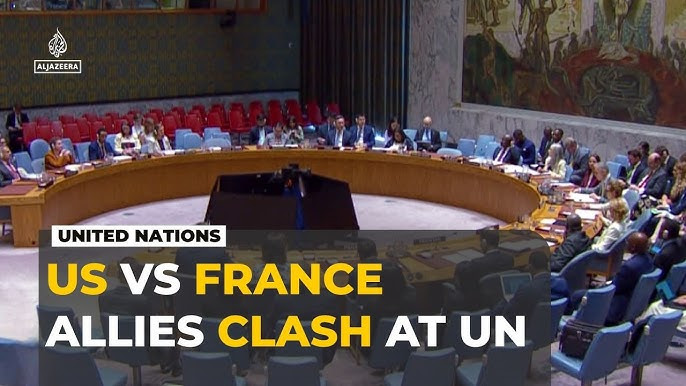
The diplomatic landscape was rocked this morning when the US delegation abruptly walked out of a UN Security Council meeting. The reason? Criticism leveled at the US by France, who compared Washington's stance on human rights to that of authoritarian regimes. The tense encounter has not only strained relations between the US and France but also underscored the growing divide within the international community over human rights standards and diplomatic protocols. Let's dive into the details of this unprecedented move, its implications, and the broader context surrounding this escalating dispute.
US Walks Out: The Immediate Context and Diplomatic Fallout
The US delegates' walkout was a direct response to France's sharp critique of the US's voting behavior on human rights issues in a UN Security Council meeting. France's ambassador drew a parallel between the US and authoritarian states, asserting that Washington's stance on human rights was akin to regimes known for their repression. The US delegation, visibly offended, promptly exited the meeting, leaving in its wake a palpable tension and a diplomatic breach that has reverberations beyond the immediate incident. This was an unprecedented move by the US, and it highlights the mounting strains between traditional allies amid evolving global dynamics.
The US delegation's departure was as dramatic as it was symbolic. Deputy U.S. ambassador Dan Negrea, in a subsequent statement, accused France of "disingenuous grandstanding" and "feigning moral outrage." Negrea's remarks underscored the depth of the rift, suggesting that the issue was more than just a verbal spat but a reflection of deeper disagreements over global governance and the role of human rights in international policy. The incident, coming at a time of heightened global tensions, is seen as a major setback in US-French relations, which have been fraught with disagreements over various international issues.
Broader Implications: A Rift in the Western Alliance
The walkout is indicative of a broader shift in the geopolitical landscape, where traditional allies find themselves on opposing sides of critical global issues. The US-French disagreement is not just about human rights; it is a symptom of a deeper divide over NATO, the role of the UN, and Europe's security. This incident comes at a time when the global community is grappling with issues ranging from climate change to regional conflicts, all of which require a unified and concerted approach. The US's decision to walk out signals a potential realignment of alliances, one where traditional Western partners are increasingly at odds.
The irony is that the walkout occurred during a discussion on Ukraine, where the US has been a staunch supporter of France and other European nations. The US has historically stood by France in conflicts where their "freedom has been imperiled," as Negrea pointed out. However, the current friction suggests that even the most steadfast allies can find themselves on opposite sides of the table when fundamental values and policies diverge. This incident raises questions about the future of the Western alliance and the effectiveness of multilateral institutions in addressing global crises.
The Enduring Dispute: What Nobody's Asking
A counter-argument to this narrative might suggest that such diplomatic spats are a routine part of international relations and do not necessarily indicate a fundamental rift. However, let's not overlook the significance of this particular incident. The fact that the US, one of the most influential members of the UN Security Council, chose to walk out in protest of criticism from a fellow Western ally, is a clear indication of the depth of the divide. It's not just about the words exchanged but about the underlying tensions that have been simmering for years. This walkout is a wake-up call, a signal that the international community needs to reassess its priorities and find common ground on critical issues before disputes escalate further.
One important question that remains unanswered is whether this diplomatic incident will lead to a rethinking of alliances and partnerships. Will the US and France be able to bridge this gap, or will their disagreement continue to fester, further straining the Western alliance? Only time will tell, but one thing is clear: the international community is at a crossroads, and the decisions made today will have far-reaching consequences for global stability and cooperation.
The US walkout reflects not only the more strained relations between President Donald Trump and his French counterpart, Emmanuel Macron, but also wider tensions between the US and Europe.
How does this story make you feel?
 Up next · WorldSpider-Man: Brand New Day is Set to Swing into Theaters