My Pillow Guy’s Political Ambitions Deflated in Minnesota GOP Primary
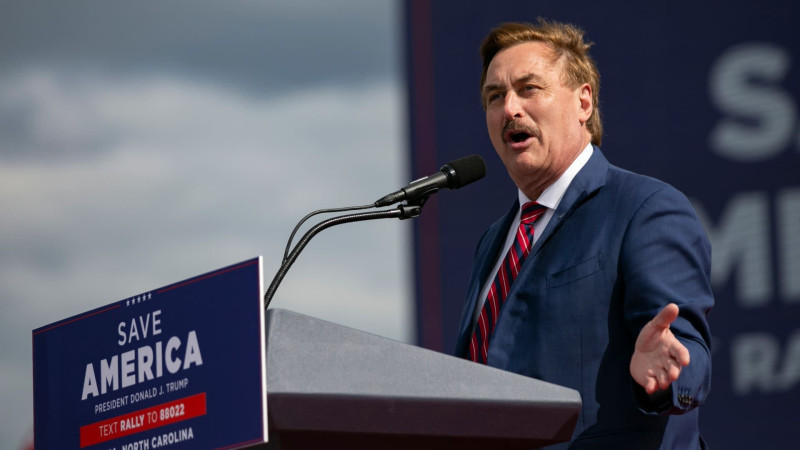
The political dreams of Mike Lindell, the man famously known as the "My Pillow Guy," were dealt a crushing blow as he lost the Minnesota GOP gubernatorial primary to Lisa Demuth, the state House Speaker. In a significant defeat for Donald Trump, whose endorsement often proves decisive, Lindell's loss reveals the complexities of the Mike Lindell election saga.
The Primary Battle and Its Implications
Mike Lindell’s campaign for the Minnesota governorship, which had garnered significant national attention, was marked by his staunch support for former President Trump and his outspoken stances on election integrity.
Lisa Demuth emerged victorious, securing a substantial lead over Lindell and Army veteran Kendall Qualls, who also contested the race.
Despite his loss, Lindell has refused to concede the primary, alleging widespread "anomalies" and "fraud" in the election process, a stance that echoes his long-standing views on election integrity.
Lindell’s refusal to accept the results underscores the broader controversy surrounding election denialism, which has become a defining feature of modern political discourse. His claims, however, have been widely dismissed by election officials and experts as baseless.
This refusal to concede is not unprecedented for Lindell, who has consistently questioned the legitimacy of election outcomes, both in his own bids and in broader national elections.
An Election Denier’s Legacy and Political Future
The loss marks a pivotal moment in Lindell’s political aspirations, which have been closely tied to his business empire and his outspoken support for Trump.
As the founder of MyPillow, Lindell has leveraged his business acumen and national platform to promote his political views and products, often blurring the lines between business and politics.
However, despite his efforts, the double-digit defeat he faced in the primary underscores the limitations of his political influence, particularly in the face of more traditional political figures like Demuth.
Demuth’s victory is a testament to her political acumen and her ability to rally support within the Republican Party, even in the face of a high-profile challenger like Lindell.
It also highlights the evolving dynamics within the Republican Party, where traditional candidates are increasingly competing with outsiders who leverage their business success and national recognition for political gain.
“The results show that while Lindell has a significant following, he doesn’t have the broad appeal within the Republican Party that he might have hoped for,” said political analyst Sarah Johnson.
Looking Ahead: The Future of Election Denialism in Politics
Lindell’s defeat, however, does not mean the end of election denialism in American politics.
Throughout the Mike Lindell election saga, the broader cultural impact of his claims cannot be overlooked. His persistent allegations of election fraud have fueled a broader movement, often leading to significant distrust in the democratic process.
This movement, particularly in the GOP, continues to shape the discourse around election integrity and has become a rallying point for many conservatives.
It’s a reminder of how deeply entrenched these beliefs are within certain segments of the population and how they continue to influence political outcomes, even when those outcomes are based on widely accepted and verified processes.
As the Minnesota race underscores, candidates who question the integrity of elections can find themselves at odds with a political establishment that values transparency and accountability.
The larger question looming over all of this is whether the Mike Lindell election loss will be a wake-up call for the Republican Party, compelling it to address the divisive issue of election denialism more seriously and openly, or if it will continue to be a contentious and polarizing force within the party.
How does this story make you feel?
 Up next · PoliticsThe Underdog Upset: David Crowley's Surprising Victory in Wisconsin's Democratic Primary Election