Steam Catapults on Aircraft Carriers: A Sea Change in Naval Technology?
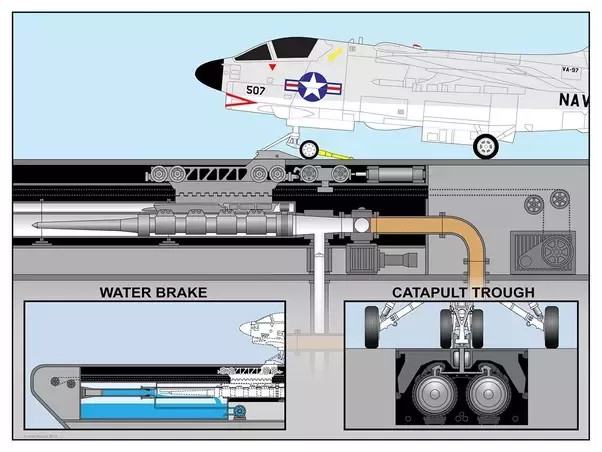
Imagine a colossal, floating runway, thrusting fighter jets into the sky with the raw power of steam. That's the image conjured by the recent directive from the highest levels of U.S. defense, where tradition and nostalgia collide with modern technology. The White House has ordered the U.S. Navy to return to steam-powered catapults on its aircraft carriers, a decision that has sent ripples through the defense community and sparked debates about the future of naval aviation.
A Reversal of Technological Progress: From Electromagnetic to Steam Power
Steam catapults on aircraft carriers were once the gold standard, propelling planes off the deck with a burst of pressurized steam. The U.S. Navy, however, had been transitioning to the Electromagnetic Aircraft Launch System (EMALS), a state-of-the-art technology that uses electromagnetic energy to launch aircraft. This system, while more efficient and less maintenance-intensive, has now been directed to be replaced by the older steam-powered catapults, a shift that has surprised many in the defense community.
The decision to revert to steam catapults comes amid a broader directive to reduce costs and streamline operations. The EMALS system, installed on the Ford-class carriers, is being phased out in favor of the more traditional steam catapults. This change is particularly significant for the USS Doris Miller, the fourth Ford-class carrier, which was slated to feature the advanced EMALS system. The transition is seen as a move to reduce complexity and personnel needs, but it also raises questions about the long-term viability of modern naval technology.
The Strategic Implications of Naval Shipbuilding and Catapult Technology
Beyond the technical details, the decision to return to steam catapults has broader strategic implications. The U.S. Navy is also exploring the possibility of building ships overseas, a move that could have significant implications for domestic shipbuilding industries. The shift to steam catapults and the potential for foreign shipbuilding are part of a broader strategy to reduce costs and increase efficiency, but they also raise questions about national security and industrial policy.
The Human and Technological Cost of the Decision: From Defense Funds to Personnel Needs
One of the key arguments for the return to steam catapults is the potential cost savings. The EMALS system, while technologically advanced, is also more expensive to operate and maintain. The transition to steam catapults is seen as a way to reduce these costs, although it comes at the expense of technological advancement. The decision also increases personnel needs, as steam catapults require more manpower to operate and maintain. This raises questions about the long-term sustainability of the move and its impact on defense budgets.
The debate over steam catapults versus EMALS highlights the broader tension between tradition and innovation in military technology. While steam catapults offer a proven, reliable system, they also represent a step back from the cutting-edge technology that defines modern naval warfare. The decision to revert to steam catapults, coupled with the potential for foreign shipbuilding, signals a new direction for the U.S. Navy, one that prioritizes cost-efficiency over technological advancement. Only time will tell if this shift will strengthen or weaken the Navy's capabilities in an ever-evolving geopolitical landscape.
“This decision is about more than just technology; it's about the future of naval warfare and the strategic choices we make as a nation. The move to steam catapults and the potential for foreign shipbuilding are part of a broader strategy to adapt to the challenges of the 21st century while honoring the traditions of the past.” - Defense Analyst, Anonymous.
How does this story make you feel?
 Up next · TechPC Gamers Left in the Lurch as GTA 6 Release Date Confirmed Without PC