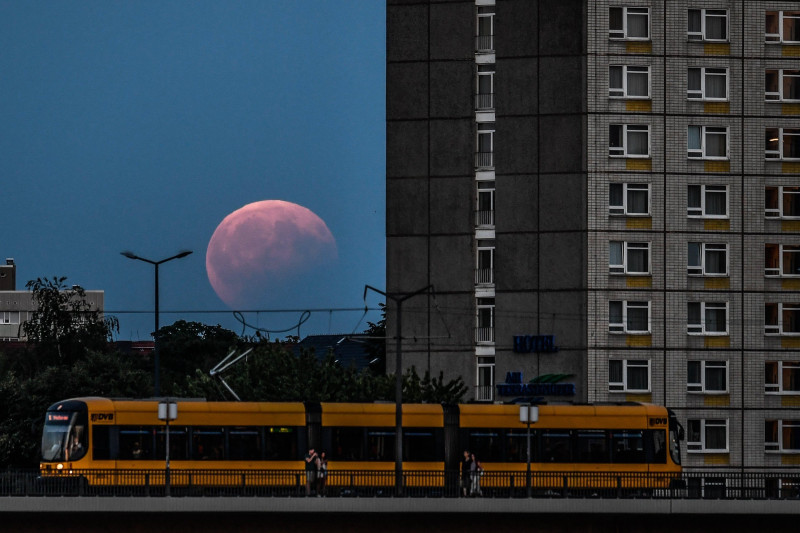
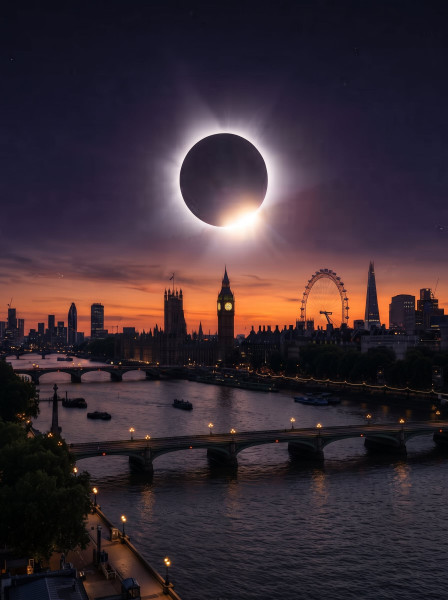
Witnessing the Celestial Dance: The Blood Moon Eclipse Tonight
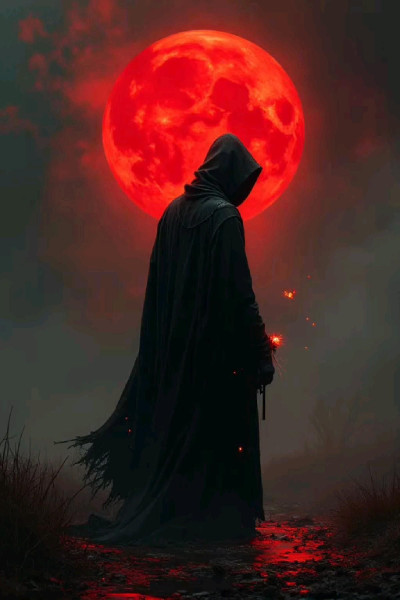
The night sky is about to put on a breathtaking show as a lunar eclipse unfolds, turning the full moon into a blood moon in a dramatic display of celestial mechanics.
The Celestial Phenomenon: A Deep Partial Lunar Eclipse Tonight
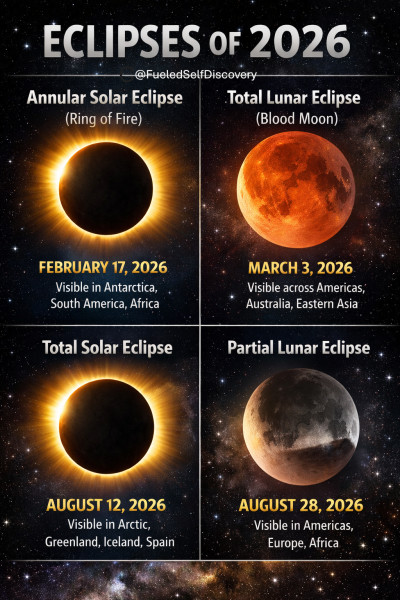
The lunar eclipse tonight will be a deep partial one, with 96% of the moon passing through Earth's shadow. This extraordinary event, an almost blood moon, will be visible across the Americas, offering a stunning sight for both professional and amateur astronomers.
Michael Thompson, an astronomer at the Royal Observatory, describes the spectacle as a moment of celestial wonder. "This eclipse is a unique chance to witness the moon turning a deep shade of red, almost a blood moon, which is a rare and beautiful sight," he notes. "It's a celestial dance that has captivated humans for millennia, and tonight, we get to see it unfold once again."
Why the Moon Turns Red: The Science Behind the Blood Moon
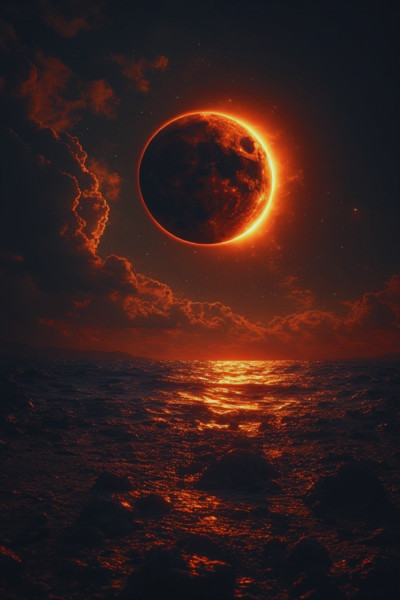
The mesmerizing red hue of the blood moon is a result of a fascinating interplay of light and shadow. During the lunar eclipse, the moon moves into the Earth's umbral shadow, and the sunlight that reaches the moon is refracted by the Earth's atmosphere, scattering the shorter blue and green wavelengths. This leaves the longer red wavelengths, which are then reflected back to us, giving the moon its distinctive red glow.
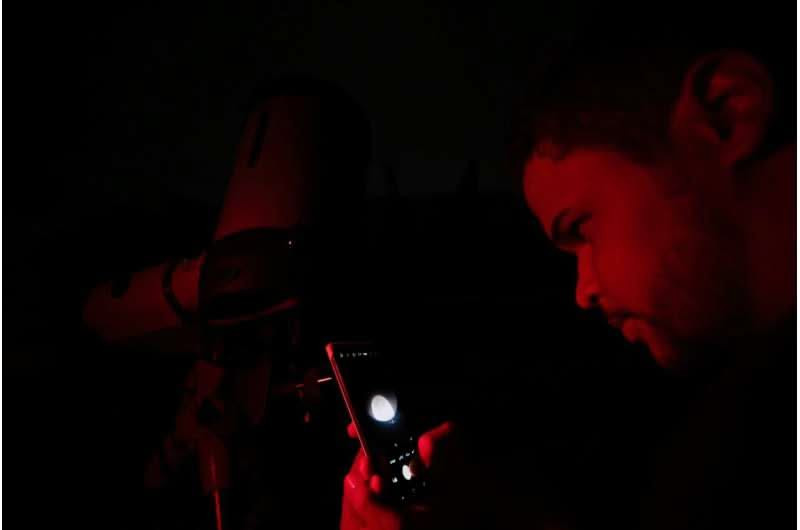
In a recent observation, the timeanddate mobile observatory captured this stunning phenomenon, showcasing how the blood moon can appear during a partial lunar eclipse.
Where to See It: The Best Places to Witness the Eclipse Tonight
The best place to observe this celestial event tonight is in the Americas, where the moon will be perfectly positioned in the night sky. The partial lunar eclipse will begin at 3:33 a.m. BST (02:33 UTC) and will be visible until early morning. The deep partial lunar eclipse will turn the moon a striking shade of red, a sight not to be missed.
For those in North America, this is the best lunar eclipse viewing opportunity until the New Year's Eve 2028.
“It's a unique chance to witness the celestial dance between the Earth, the Sun, and the Moon, and see the Moon turn a deep shade of red, almost a blood moon, which is a rare and beautiful sight.” — Michael Thompson, Astronomer, Royal Observatory.
This lunar eclipse is a testament to the wonders of our universe and a reminder of the beauty that can be found in the night sky. As we gaze up at the blood moon, we are reminded of the timeless dance of celestial bodies that have captivated humans for generations.
How does this story make you feel?
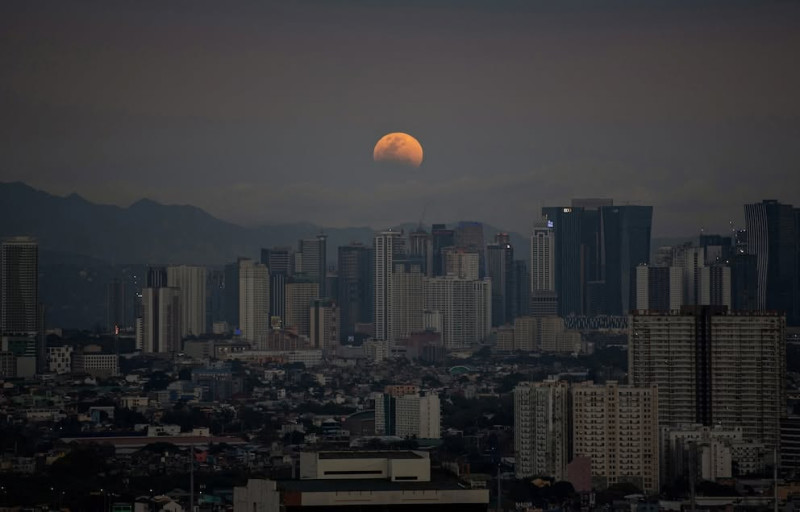 Up next · SciencePartial Lunar Eclipse Creates 'Blood Moon' Across the Americas