Witness the Celestial Spectacle: The Latest on the August 2026 Lunar Eclipse
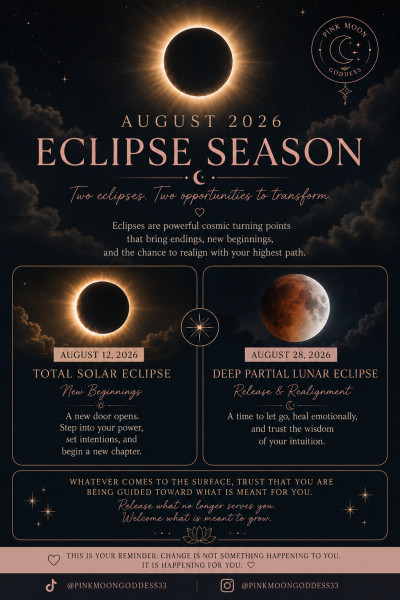
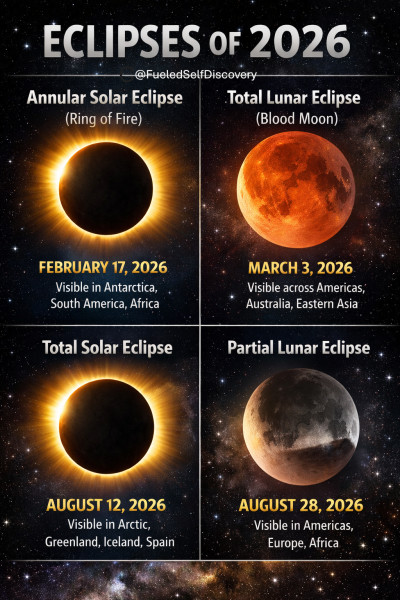
The celestial dance of the Earth, Moon, and Sun is about to put on a dazzling show, with the upcoming lunar eclipse in August 2026. This event, a partial lunar eclipse, is expected to cover about 96% of the Moon, creating a stunning visual display that will captivate skywatchers worldwide. The Moon, our celestial neighbor, will undergo a transformation as it moves into the Earth's shadow, offering a spellbinding view of the cosmos this August.
Understanding the August 2026 Lunar Eclipse
A lunar eclipse occurs when the Earth moves directly between the Sun and the Moon, casting a shadow on the lunar surface. This astronomical phenomenon will happen on the night of the full moon, making it a particularly captivating sight. The eclipse will be a deep partial one, with 96.3% of the Moon's disk within Earth's umbra, the darkest part of the Earth's shadow.
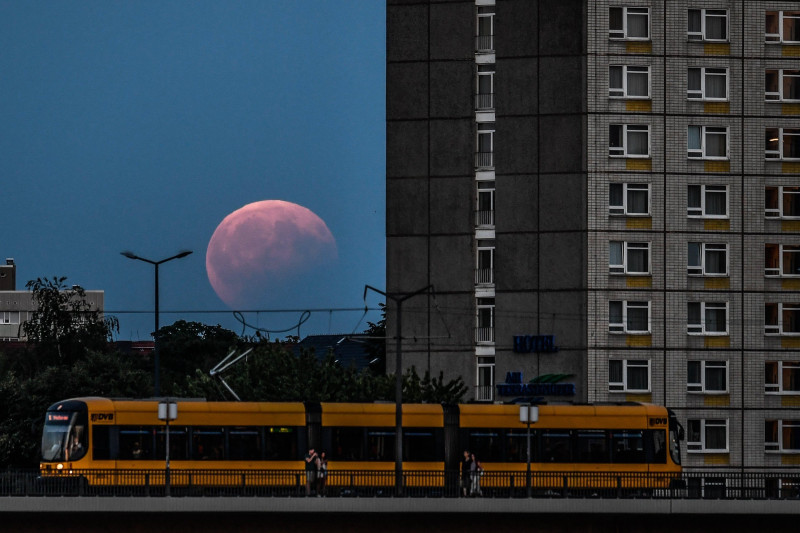
The eclipse is expected to peak during the early hours of August 28, 2026, with the maximum eclipse occurring at 4:13 a.m. Universal Time. During this event, the Moon will appear dramatically darkened, with a rusty red hue visible across much of the western hemisphere, western Europe, and Africa. This unique phenomenon is often referred to as a "Blood Moon" due to the striking red coloration.
Viewing Tips and Times for the August 2026 Lunar Eclipse
For those eager to witness the August 2026 lunar eclipse, planning is essential. The eclipse will be best viewed in the Americas, where the event will be centrally located for optimal observation. The Americas are centrally located for observing this eclipse.
In the Central Time Zone, the full moon, known as the Sturgeon Moon, will reach its peak at 11:18 p.m., when the Moon is opposite the Sun. Across the western hemisphere, the eclipse will be visible overnight, with the Moon near the zenith above the Brazilian rainforest at maximum eclipse. This position will offer a particularly dramatic view for viewers in South America.
To enhance the viewing experience, it is recommended to find a location with minimal light pollution, such as a dark-sky reserve or a rural area. Binoculars or a telescope can also provide a closer look at the lunar surface during the eclipse, revealing details that are otherwise hard to see.
Expert Insights on the August 2026 Lunar Eclipse
A lunar eclipse is a remarkable display of the mechanics of our solar system, where the Earth, Moon, and Sun align in a straight line. The partial eclipse in August 2026 will be particularly noteworthy as it covers 96% of the Moon, creating a stunning visual spectacle. For those in the Americas, this is an event not to be missed.
The deep partial lunar eclipse, with 96.3% of the Moon's disk within Earth's umbra, will be most dramatic until the next major eclipse in 2028. The event is expected to cover 96% of the Moon, making it the most dramatic eclipse until 2028.
For those interested in the specific timeline of the eclipse, detailed maps and local times are available to help viewers plan their observing sessions. Whether using a mobile app or consulting a calendar, the key is to be in the right place at the right time to fully appreciate this celestial event.
Many of us will be glued to our screens or telescopes to see the Moon’s dance through the Earth’s shadow. But what we should be considering, is the way our technological advancements impact our view of the night sky.
How does this story make you feel?
 Up next · ScienceStargazers Prepare for Lunar Eclipse Tonight