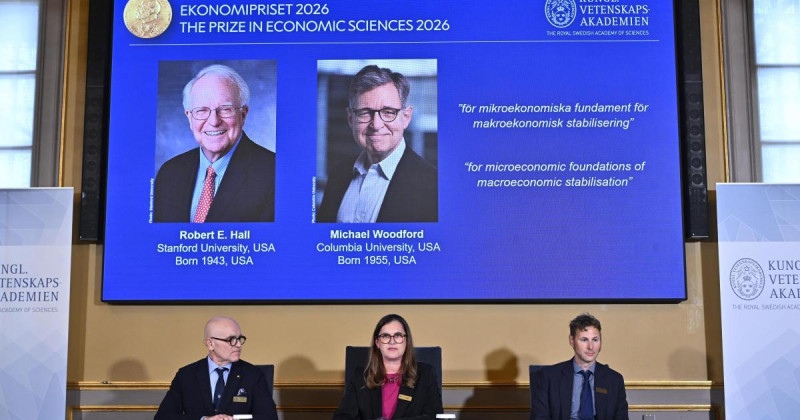
Robert E. Hall awarded Nobel Prize in Economic Sciences
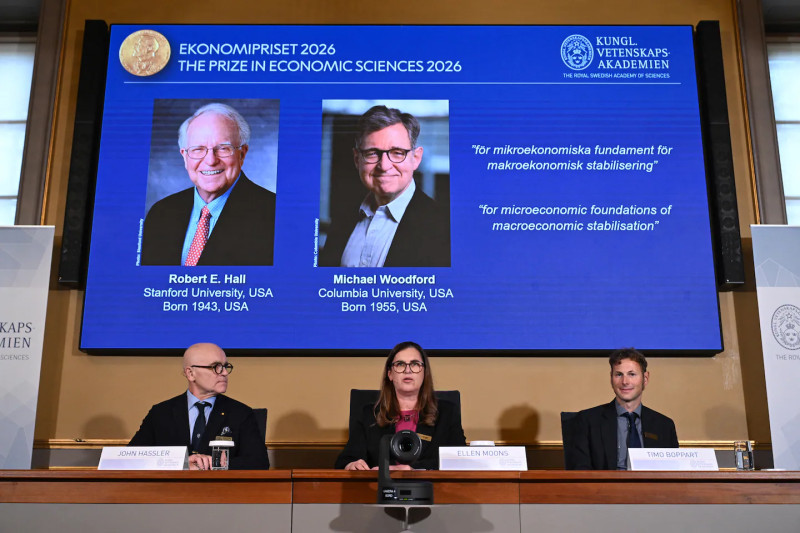
Economist Robert E. Hall received the Nobel Memorial Prize in Economic Sciences, sharing it with Michael Woodford for models that help governments and central banks manage economic volatility.
Key points
- Robert E. Hall won the Nobel Memorial Prize in Economic Sciences.
- He shares the award with economist Michael Woodford.
- Their models give policymakers tools to handle shocks such as energy crises and inflation.
- Hall is a professor at Stanford University and senior fellow at the Hoover Institution.
In the realm of economics, a name that has been trending globally is that of Robert E. Hall. The renowned economist has recently been awarded the Nobel Memorial Prize in Economic Sciences for his seminal work on models that assist governments and central banks in navigating economic volatility. This recognition underscores Hall's profound impact on economic theory and policy, particularly in the face of challenges like energy crises and inflation.
The Nobel Prize and Its Significance
The Nobel Memorial Prize in Economic Sciences, also known as the Sveriges Riksbank Prize in Economic Sciences in Memory of Alfred Nobel, is one of the most prestigious awards in the field of economics. This year, Hall shares the honor with Michael Woodford, another esteemed economist. Their work has been instrumental in developing models that help policymakers manage economic shocks, ensuring stability during periods of turbulence.
The models developed by Hall and Woodford provide a microeconomic foundation for macroeconomic stabilization. This means that their research has equipped policymakers with tools to better understand and respond to economic fluctuations, thereby stabilizing the economy. The Nobel committee highlighted that their insights have "better equipped" governments and central banks to deal with economic shocks.
Robert E. Hall's Career and Contributions
Robert E. Hall is a distinguished economist who has made significant contributions to the field over the years. He is currently affiliated with Stanford University as the Robert and Carole McNeil Endowed Professor in Economics and Senior Fellow at the Hoover Institution, Emeritus. His work has focused on various aspects of economic theory, including labor economics, monetary policy, and economic dynamics.
Hall's research has been particularly influential in the area of economic volatility. His models have provided a framework for understanding how various economic shocks, such as energy crises and inflation, can impact the economy. This has enabled policymakers to develop more effective strategies for managing these challenges.
Hall's contributions are not confined to theoretical work; he has also played a crucial role in developing practical tools for economic analysis. These tools have been widely adopted by central banks and governments around the world, helping them to navigate complex economic landscapes.
Despite the acclaim, some critics argue that the models developed by Hall and Woodford may be too complex for general application. They point out that while these models are advanced, they might not always translate seamlessly into real-world economic policies. This counterargument underscores the need for continuous refinement and adaptation of economic theories to meet the evolving demands of global economies.
The Impact on Global Economics
The work of Hall and Woodford has had a profound impact on global economic policy. Their models have been adopted by central banks and governments worldwide, providing a robust framework for managing economic shocks. This has been particularly relevant in recent times, as economies have faced unprecedented challenges due to factors like the COVID-19 pandemic, geopolitical tensions, and climate change.
The recognition of Hall and Woodford with the Nobel Prize is a testament to the importance of their work in stabilizing the global economy. Their contributions have not only enriched economic theory but have also provided practical solutions for policymakers, helping to mitigate the impact of economic shocks.
As we reflect on the legacy of Robert E. Hall and Michael Woodford, it is worth considering how their work complements other significant figures in the field. Like Adam Smith, whose groundbreaking work "The Wealth of Nations" laid the foundation for modern economics, Hall and Woodford have built on this legacy to provide innovative solutions for contemporary economic challenges. Their models offer a microeconomic lens through which we can better understand and manage the macroeconomic landscape, ensuring stability and growth in an ever-changing world.
Your questions, answered
Who won the Nobel Prize in Economic Sciences in 2026?
Robert E. Hall and Michael Woodford were awarded the Nobel Memorial Prize in Economic Sciences.
What are Hall and Woodford’s Nobel‑winning contributions?
They developed micro‑founded models that help governments and central banks stabilize economies during shocks.
Quick poll
Do you think Nobel‑winning economic models will improve policy responses to shocks?
0 votes
How does this story make you feel?
Topics
 Up next · BusinessKroger announces plan to cut 3,000 corporate jobs over three years