KOSPI index drops over 7% as AI bubble fears hit semiconductors
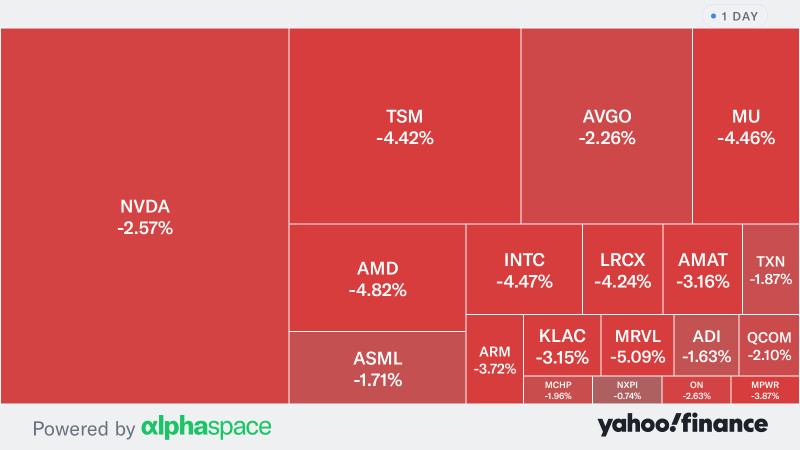
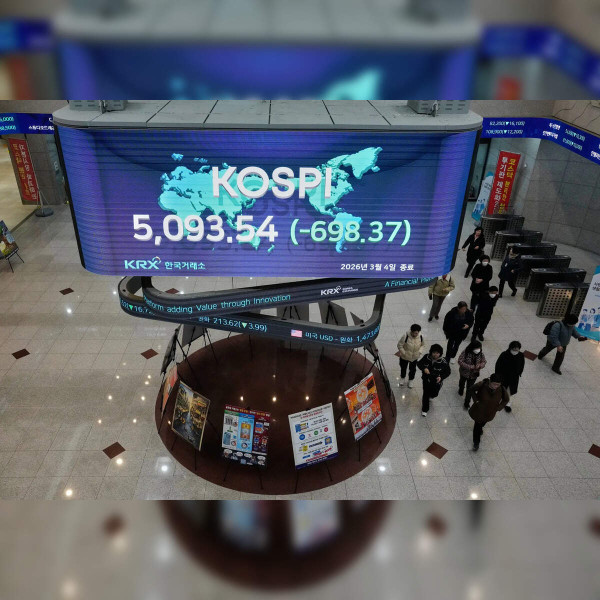
South Korea's KOSPI index triggered circuit breakers after a sharp decline driven by global semiconductor sell-offs and concerns over AI market sustainability.
Key points
- The KOSPI index dropped more than 7% at one point, triggering trading halts.
- Global semiconductor stocks faced a sell-off due to AI overheating concerns.
- Nasdaq and S&P 500 indices also showed significant volatility during the period.
- Analysts cited caution regarding the overvaluation of tech stocks as a key factor.
The KOSPI index, South Korea's primary stock market benchmark, has plunged dramatically in recent times. The downturn, attributed to a global sell-off in semiconductor stocks, has sent shockwaves through the financial world. The steep decline is not an isolated event but part of a broader trend affecting major indices worldwide, with the Nasdaq and S&P 500 also showing significant volatility.
Global Market Turmoil: AI Overheating and Chinese Competition
The recent slide in the KOSPI index is deeply intertwined with the global semiconductor market, which has been a hotbed of investment, particularly in the AI sector. However, concerns about AI overheating and increased Chinese competition have led to a massive sell-off. Semiconductor stocks, which are crucial for AI development, have been hit hard, with the Nasdaq 100 and other key indices experiencing similar declines. The overarching sentiment is one of caution as investors reassess the sustainability of AI-driven growth.
In South Korea, the KOSPI's plunge is particularly severe, with the index dropping more than 7% at one point. This dramatic fall triggered circuit breakers, a mechanism designed to halt trading temporarily to prevent further panic selling. The heavy sell-off in chipmakers, a critical sector for the South Korean economy, has been the primary driver of this market turmoil.
“The current volatility in the KOSPI index reflects broader concerns about the sustainability of high-tech investments, particularly in the AI sector,” said a market analyst. “Investors are becoming more cautious about the overvaluation of tech stocks and the potential for a market correction.”
The current volatility in the KOSPI index reflects broader concerns about the sustainability of high-tech investments, particularly in the AI sector. Investors are becoming more cautious about the overvaluation of tech stocks and the potential for a market correction.
Meanwhile, the Nasdaq futures have also seen a significant drop, indicating that the market turmoil is not confined to South Korea. The AI trade, which has been a major driver of stock market growth in recent times, is now unwinding rapidly. This global phenomenon is causing a ripple effect across various markets, with the S&P 500 showing little movement, but the Nasdaq and KOSPI both experiencing notable declines
The KOSPI Index: A Bellwether of Asian Market Sentiment
The KOSPI index serves as a critical bellwether for Asian market sentiment, given South Korea's significant role in the global semiconductor industry. The recent sell-off underscores the interconnectedness of global markets and the far-reaching impact of sector-specific turbulence. The index's performance is closely watched by investors and analysts worldwide, offering insights into broader market trends and investor sentiment. The KOSPI's sharp decline is a stark reminder of the market's volatility and the risks associated with high-tech investments
The KOSPI index, introduced in 1983 with a base value of 100 as of January 4, 1980, is the representative stock market index of South Korea, similar to the S&P 500 in the United States. The index tracks all common stocks listed on the Korea Exchange, making it a comprehensive measure of the South Korean stock market's performance. The recent volatility has prompted analysts to reassess the KOSPI's role as a reliable indicator of market health, given the unprecedented nature of the current sell-off.
What Lies Ahead for the KOSPI and Global Markets?
As the KOSPI index continues to fluctuate, the broader question remains: what does this mean for the future of global markets, especially in the tech and semiconductor sectors? The current sell-off is a stark reminder of the market's sensitivity to geopolitical and economic factors. How will investors react to the shifting landscape? Will the AI bubble burst, or will it find new equilibrium? And what role will regulatory measures play in stabilizing the market? These are the questions that haunt investors and analysts as they navigate the unpredictable waters of the global market.
Your questions, answered
Why did the KOSPI index drop significantly?
The decline was attributed to a global sell-off in semiconductor stocks and concerns about AI overheating and Chinese competition.
Did other global markets experience similar declines?
Yes, the Nasdaq and S&P 500 also showed significant volatility, with Nasdaq futures seeing a significant drop.
Quick poll
How do you view the current volatility in semiconductor stocks?
0 votes
How does this story make you feel?
Topics
 Up next · BusinessHome Depot launches holiday sweater bundle with tool belt