Florida Amendment 3 Approved: Historic Property Tax Changes Ahead
Florida residents are bracing for historic changes to their property tax system. The state's voters recently approved Amendment 3, a constitutional amendment that will significantly alter how property taxes are assessed and exempted across the state. The measure, which passed with an overwhelming majority, is set to take effect in 2027 and will bring substantial relief to homeowners while potentially impacting the funding for vital public services —.
New Property Tax Exemptions and Caps
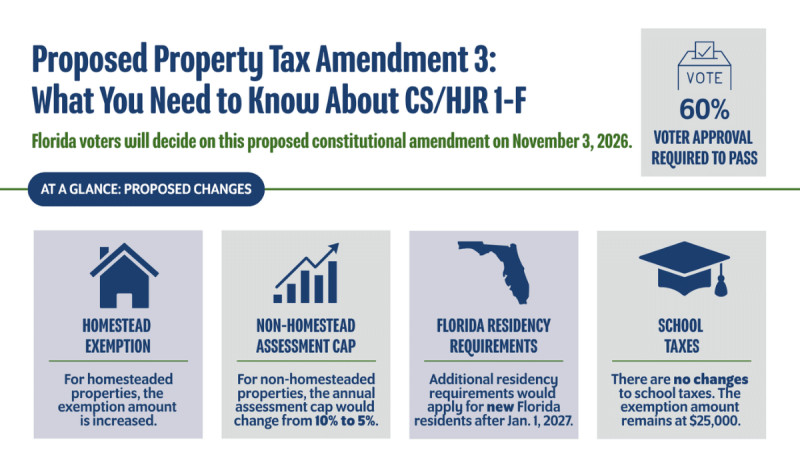
The approval of Florida Amendment 3 signifies a major overhaul of the state's property tax structure. The amendment will increase the homestead exemption for primary residences, which is the amount by which the value of a person's home is reduced for tax purposes. Currently, the exemption is set at a specific amount, but under the new changes, it will be significantly higher, providing homeowners with considerable tax relief. This adjustment is expected to take effect by 2027, aligning with the amendment's passage.
In addition to expanding homestead exemptions, Amendment 3 will also lower the cap on how much the assessed value of non-homestead properties can increase each year. This cap, currently set at 10% annually, will be reduced to 5%. This measure is particularly impactful for business owners, second homeowners, and landlords, as it limits the extent to which their property taxes can increase year over year. The cap reduction ensures predictable and manageable tax increases for these property owners.
The Financial Impact on Local Governments
While the new property tax exemptions and caps are a boon for homeowners, the financial implications for local governments and public services are a cause for concern. The measure is expected to significantly reduce the revenue that local governments receive from property taxes. This could lead to budget cuts, reduced public services, and potential layoffs in vital areas such as education, public safety, and healthcare. The state's local governments, which rely heavily on property taxes to fund essential services, will need to find alternative revenue sources or make significant budget adjustments to accommodate the changes.
One of the critical concerns raised by critics of Amendment 3 is the potential impact on education funding. With property taxes being a significant source of revenue for schools, a reduction in these taxes could lead to a decrease in educational funding. School districts may need to cut programs, increase class sizes, or even close schools to balance their budgets. This has led to a debate about whether the tax relief for homeowners is worth the potential educational cuts. —For now, it remains unclear how local governments and school districts will manage the financial strain.
The Political and Economic Landscape
Florida's recent approval of Amendment 3 reflects a broader trend in the state's political and economic landscape. The measure's passage signifies a growing demand for tax relief among voters, who have been grappling with rising property taxes in recent years. The approval of Amendment 3 also highlights the power of grassroots campaigns in shaping policy changes, as advocates for the measure rallied support through local communities and social media.
The Florida Amendment 3 results are part of a broader trend in the state's political and economic landscape. Florida has long been known for its complex and often contentious tax policies. The state's voters have historically shown a willingness to support measures that promise economic relief, even if they come at the cost of reduced public services. This time, the relief is targeted at homeowners and business owners, who have seen their property taxes rise significantly in recent years.
- Critics argue that the measure is a short-sighted solution to a long-term problem, and that the state should focus on broader tax reform rather than piecemeal changes. Supporters, however, point to the immediate relief that the measure will provide to those struggling with high property taxes. — The debate is likely to continue as the state grapples with the financial implications of the amendment.
One of the most significant implications of Amendment 3 is the potential for increased inequality in property tax assessments. While homeowners and small businesses will see their taxes reduced, those who own multiple properties or larger commercial enterprises may not see the same level of relief. This could lead to a two-tiered property tax system, where smaller property owners benefit more than larger ones, exacerbating existing economic disparities within the state.
"This is a historic moment for Florida homeowners. The passage of Amendment 3 will provide much-needed relief to those struggling with high property taxes, but it also raises important questions about the future of public services and the state's financial stability." — State Representative
The final leg of the Amendment 3 journey will be its implementation. With the measure set to take effect in 2027, local governments and property owners alike are preparing for the changes ahead. The upcoming months will be crucial as state officials work to finalize the details of the new tax structure and address any potential challenges that may arise. As Florida navigates this significant shift, the state's future will be shaped by the delicate balance between tax relief and public service funding. The story of Amendment 3 is far from over, and the lessons learned from this historic change will undoubtedly echo through future policy debates. —
How does this story make you feel?
 Up next · PoliticsMark Warner Secures Fourth Senate Term in Virginia Win