Florida's Amendment 3: A Property Tax Shift with Far-Reaching Implications

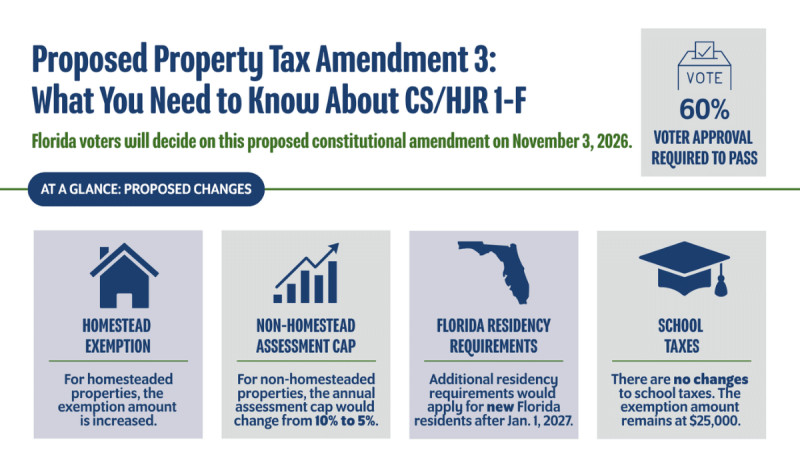
The fate of Florida's Amendment 3, a high-stakes referendum that could reshape property tax exemptions, has been a hot topic of debate and speculation for months. The amendment, which sought to expand the non-school property tax exemption for qualifying homeowners, passed with a decisive margin, marking a significant turning point in the state's fiscal landscape. Florida voters' decision to approve Amendment 3 with 62% of the vote means the state will see a notable shift in property tax allocations beginning in 2027.
The Impact of Amendment 3 on Property Tax Exemptions
The amendment aims to enhance the homestead property tax exemption for non-school taxes, increasing the exemption to $150,000 in 2027 and $250,000 in 2028. This significant increase in the exemption threshold will translate to substantial savings for homeowners, particularly those with higher property valuations. However, this fiscal relief comes at a cost to local government services, which will face a reduction in property tax revenue. Local officials, who had previously warned about the potential cuts to public services, are now tasked with navigating the financial challenges that lie ahead.
The Political and Financial Landscape
The passage of Amendment 3 underscores the complex interplay between voter sentiment and public policy. The measure required a supermajority of 60% to pass, a threshold it met comfortably with 62% of the vote. The narrow victory also highlights the divisive nature of the ballot measure, with opponents arguing that the tax cuts would compromise essential public services. According to available reports, the reduced tax revenue will impact a wide range of public services, from healthcare to infrastructure, prompting local governments to reassess their budgets and potentially implement cost-cutting measures.
Suncoast leaders, representing a region heavily reliant on public services, are already grappling with the implications of Amendment 3. The local officials have expressed concerns about the potential for deep cuts to public services, which could affect everything from public safety to education. Despite these challenges, the passage of Amendment 3 represents a victory for homeowners who will benefit from the expanded exemptions.
The Practical Implications for Homeowners
For many Floridians, the passage of Amendment 3 brings a sense of financial relief. Homeowners can expect to see a reduction in their property tax bills, with the exemption increase set to take effect in 2027. The savings will be particularly significant for those with higher property values, who will see a notable decrease in their annual tax burden. However, the financial benefits for some may come at the expense of others, as local governments grapple with reduced revenue.
The passage of Amendment 3 is a double-edged sword, offering both benefits and challenges. For homeowners, the increased exemption means lower property taxes, a welcome respite in an era of rising living costs. Yet, the broader implications for the state's budget and public services remain a critical concern. Local governments across Florida are now tasked with balancing the books while ensuring that essential services are maintained. The coming months will reveal the true impact of Amendment 3, as officials work to implement the changes and navigate the financial landscape.
Amidst the excitement and trepidation, one question lingers: How will local governments adapt to the new fiscal realities, and what will the future hold for public services in Florida following the passage of Amendment 3?
How does this story make you feel?
 Up next · PoliticsTense Standoff in Los Angeles Mayor’s Race as Votes Continue to Roll In